
Ancient Agora Museum Athens: Tickets, Opening Hours & What to See
A practical guide to the Ancient Agora Museum in Athens: tickets, opening hours, the Stoa of Attalos, the best objects to see, and how to pair it with the archaeological site.
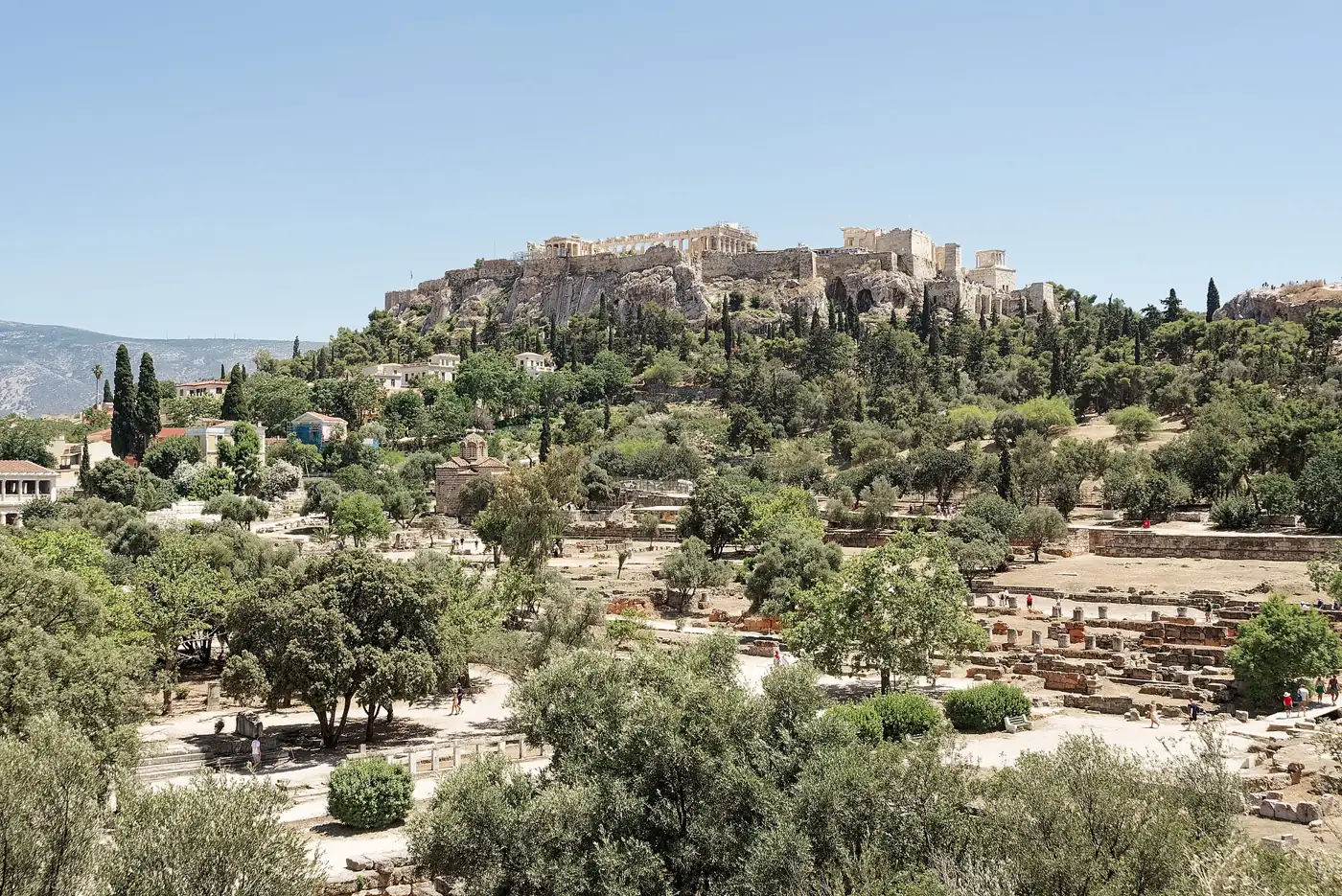
Photo: Jakub Hałun, CC BY 4.0
Ancient Agora Museum Athens: what you are actually visiting
The Ancient Agora Museum is not a separate modern building with a grand entrance. It occupies the reconstructed Stoa of Attalos inside the archaeological site of the Ancient Agora, the civic centre of classical Athens.
That distinction matters when you book. You are visiting the open-air Agora as well as the museum. The site contains the foundations of the political, commercial and social city; the museum gives those stones names, faces and objects. Allow time for both. The museum is compact, but the Agora is a broad landscape of shaded paths, broken buildings and long views towards the Acropolis.
The Stoa itself is a reconstruction of the two-storey colonnade built in the second century BC by King Attalos II of Pergamon. The original building was almost 120 metres long. Its modern reconstruction, completed in the 1950s, makes an unusually clear museum: objects sit in the same architectural setting that once framed shops, meetings and public movement.
Tickets and opening hours
The Ancient Agora is a ticketed archaeological site, and the museum is included in the site visit. Prices, seasonal hours, reduced admission and free-entry days can change. Check the official Hellenic Heritage ticket platform for your date before travelling, especially if you are visiting outside the main summer season.
If you prefer a digital booking option, you can check Ancient Agora entry tickets on Tiqets. Read the product details carefully: third-party tickets can differ in cancellation terms, inclusions and collection or entrance instructions.
The site is generally easiest in the first part of the day or during the final hours before closing. Summer heat builds quickly on the exposed paths, while winter rain can make the uneven ground slippery. The museum provides shade and a pause, but it is not a substitute for water, sun protection and sensible shoes.
What to see in the Ancient Agora Museum
The ostraka
Look for the fragments used as voting pieces in ostracism. An ostrakon was a broken piece of pottery bearing a person's name. In the right political circumstances, enough votes could send a citizen into exile for ten years. These are small objects, but they make Athenian democracy feel physical rather than abstract: political decisions were written by hand on whatever pottery was available.
The voting tokens
The museum's bronze voting devices and tokens show how civic decisions were administered. Athens did not leave democracy as a philosophical idea. It built procedures, juries and mechanisms around it. The objects are useful precisely because they are unheroic: little pieces of a system that had to work day after day.
Everyday pottery and household objects
The Agora was not just a place for famous speeches. It was a market, workshop district, administrative centre and meeting place. Ceramics, weights, lamps and small domestic objects restore the mundane life that monumental ruins tend to erase. Spend time with the ordinary pieces; they explain how the grander buildings were used.
The official measures
Weights and measuring equipment are among the most revealing objects in the collection. A market cannot function on atmosphere alone. Standard measures show the practical infrastructure behind trade and remind you that the Agora was a working economic space as much as a symbolic one.
The sculptures and portraits
The museum includes sculpture connected to the civic life of the Agora, including portraits and figures that once stood in public spaces. They are not as visually overwhelming as the Parthenon sculptures, but they belong to a different story: who was represented, who was remembered, and how public identity was constructed.
The view from the upper colonnade
Do not rush out of the Stoa after the galleries. Walk along the upper level and look back across the Agora. The view clarifies the relationship between the museum, the open site, the Temple of Hephaestus and the Acropolis. It is one of the best places in Athens to understand the scale of the ancient civic centre without needing a map.
The Temple of Hephaestus and the open site
The museum makes the Agora legible; the archaeological site gives it atmosphere. Follow the paths towards the Temple of Hephaestus, one of the best-preserved ancient Greek temples. Its survival is partly explained by later use as a Christian church, but the important visitor experience is simpler: stand back and see how a complete temple relates to the lower civic landscape.
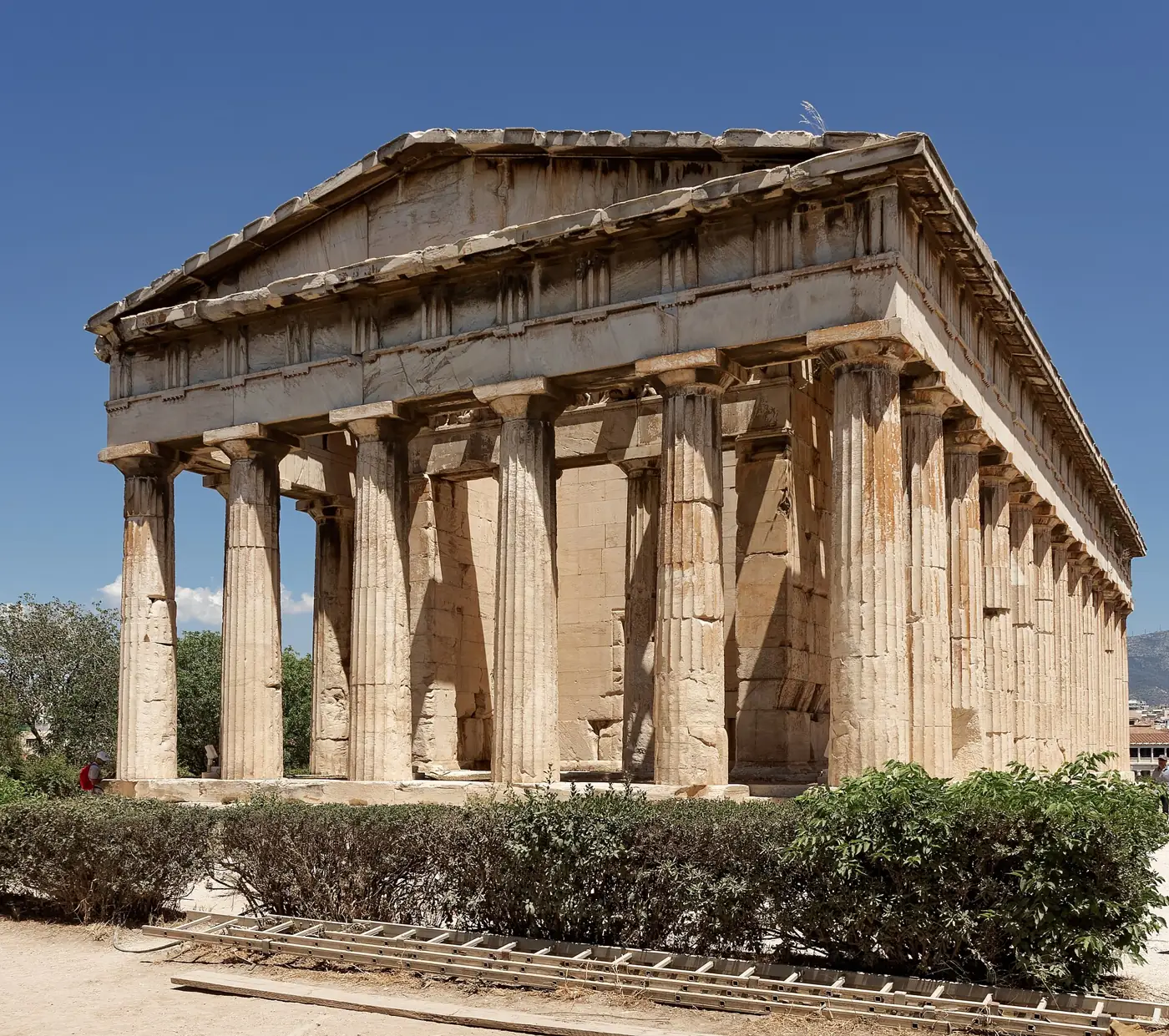
The Agora also contains the remains of the Bouleuterion, where the council prepared business for the Assembly, the Tholos, where officials worked, and the foundations of streets and public buildings. You will not understand every wall. You do not need to. Use the museum first, then return outside with a sense of what kinds of activity each space supported.
How long do you need?
Allow 90 minutes to two hours for a focused visit. Add another hour if you want to walk the site slowly, sit beneath the trees, study the Temple of Hephaestus and stop for photographs.
For a first visit, the best sequence is:
- Enter the archaeological site and walk directly to the Stoa of Attalos.
- Spend 30–45 minutes in the museum, looking for the ostraka, voting objects, measures and everyday ceramics.
- Walk the open Agora with the museum's civic vocabulary in mind.
- Finish at the Temple of Hephaestus and look back towards the Acropolis.
Ancient Agora or Acropolis first?
If you have a full day for ancient Athens, visit the Acropolis early and come to the Agora afterwards, when you want a less vertical and less crowded landscape. If you have already climbed the Acropolis, the Agora is a good second site: it is quieter, more spacious and more concerned with how ordinary civic life worked.
If history is the reason you came to Athens, consider a guided visit rather than treating the Agora as a quick add-on. Context Travel's Ancient Agora tour focuses on daily life, law, ritual and the transition into Plaka. It is the better choice when you want the scattered remains to become a coherent city.
Getting there
The Agora is walkable from Monastiraki, Plaka and Thissio. From Monastiraki Square, follow the pedestrian routes towards the western side of the site. The area is easy to combine with the Flea Market, Psirri and the Acropolis archaeological promenade, but do not stack it between two fixed-time bookings unless you have left room for the ticket entrance and a slow walk.
The most rewarding version of the visit is not a race through every surviving stone. Start with the Stoa of Attalos, let the small objects explain the system, then go outside and imagine the noise: traders, jurors, officials, worshippers, animals, arguments and the constant movement of a city deciding what it was.
Follow along
More Athens, beyond the page
Daily places, views and ideas for your next visit.
Plan your visit
Choose the right way in
Some of these are affiliate links, so Todo Athens may earn a commission if you book. They are independent booking options: check what each price includes, especially admission, meeting point, group size and cancellation terms.
Book This Experience
Vetted options across every price point and travel style.
Ancient Agora Tour: Daily Life and Plaka
Read the Agora as a living city: markets, law courts, rituals, Socrates' courthouse, the Temple of Hephaestus, and a walk into Plaka.
Ancient Agora of Athens Entry Ticket
A flexible entry option for exploring the archaeological site and the museum in the Stoa of Attalos at your own pace.