
Athens Acropolis Guide 2026: Tickets, Hours, Entrances & What to See
The practical Athens Acropolis guide: check 2026 tickets, opening hours, timed entry, entrances, what to see, heat and access advice, and whether a tour is right for you.
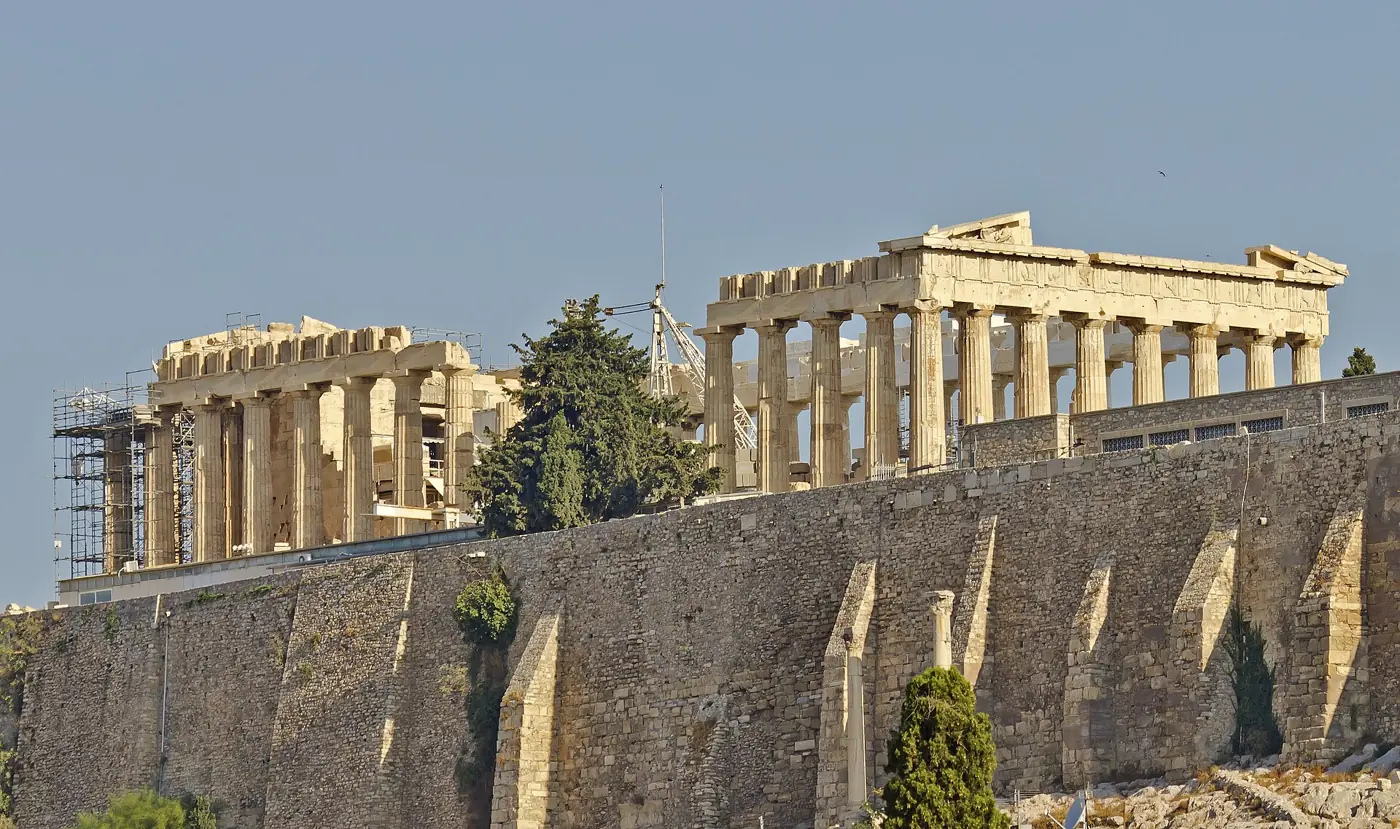
Photo: A.Savin, CC BY-SA 3.0
Athens Acropolis: The Short Answer
The Acropolis is a timed-entry archaeological site, not a monument you can simply turn up and enter whenever you like. For 2026, buy your ticket before you arrive, choose the date and one-hour entry window carefully, and plan to be at the entrance early. The current adult standard ticket is €30, but always confirm the live price, ticket category, availability, and opening hours on the official Hellenic Heritage ticket platform before paying.
For most first-time visitors, the best plan is an early morning visit followed by the Acropolis Museum. Wear shoes with real grip, bring water and sun protection, and do not underestimate the polished marble. If the official ticket you want is sold out or you want the ancient buildings to make sense as you walk, compare a guided tour rather than buying an unverified “skip-the-line” promise from a reseller.
This is the main Athens Acropolis overview. Use it for the decisions every visitor needs to make, then continue to the focused guides for a particular version of the day:
- Acropolis entrances guide for the best approach from Plaka, Monastiraki, Koukaki or the Acropolis Museum;
- Acropolis tickets vs tours guide if you are choosing between official admission, a guide, audio or a combination experience;
- Acropolis and Acropolis Museum in one day for the route order, walking time and a realistic full-day plan;
- Acropolis afternoon timing and tour guide if a later entry is your workable option;
- Athens Museums Guide for the museum choice that pairs best with the hill.
Acropolis Athens Tickets & Timed Entry in 2026
The €30 standard
The old all-in-one multi-site combination ticket should not be treated as the default Acropolis purchase. The current standard adult admission for the Acropolis archaeological site is €30 at the time of this guide's last check. Ticket categories, reductions, free-entry days and prices can change, so use the official platform for the final amount rather than relying on an old blog post or a screenshot.
Your Acropolis admission is not the same thing as admission to the Acropolis Museum. They are separate institutions with separate tickets and opening hours. If you want to visit both, schedule and pay for both.
Timed entry is the important part
Tickets on the official ticket platform are bought for a chosen date and time slot. We could not open that platform on 11 October 2026 to re-check the exact validity window, so follow the slot and conditions printed on your own ticket and treat the arrival window as narrow, not a suggestion.
As a planning habit, aim to reach the area around the entrance well before your booked time; 30 minutes is our suggestion, not an official figure. Allow extra time for:
- finding the correct gate;
- walking uphill from the Metro or your hotel;
- toilets and water;
- security screening;
- a group member who is slower on uneven ground;
- summer traffic and taxi delays.
Missing the window can mean losing the ticket. Do not book a slot that depends on a flight landing, a long-distance bus, or a tight restaurant reservation.
How far ahead should you book?
Book as soon as your dates are reasonably fixed for June through September, weekends, public holidays, and the first entry windows of the day. Early summer inventory is especially attractive because it is cooler, and it is therefore the first inventory many visitors seek.
If your preferred official slot has gone, check later official times before panicking. Then compare a reputable guided option whose entry arrangement is explicit. A tour can solve logistics, but it is not automatically cheaper, quieter, or “official”; read what is actually included.
Where to buy
Start with the official Hellenic Heritage ticket platform. It is the right place to check the current price, available dates, timed slots and ticket conditions.
Guided tours and reseller products can be useful when they include a confirmed entry ticket, but check:
- whether the price includes admission or only guiding;
- which entrance and meeting point are used;
- whether the tour is actually inside the Acropolis;
- how cancellation and late-arrival rules work;
- whether “skip the line” means a reserved entry time or merely a guide meeting you near the queue.
Which visit is right for you?
Official ticket, self-guided
Choose this if you like moving at your own pace, already know the history, or want to spend time photographing details. The site signage is not enough for every visitor, so download a reliable guide or audio tour before arriving. Do not depend on mobile reception on the rock.
Small-group guided tour
A good guide earns their place here. The Acropolis is a landscape of buildings, later alterations, missing sculptures, reconstruction work and competing historical stories. Without context, many visitors see “columns and a view” and miss why the Propylaea is asymmetrical, why the Parthenon appears so visually perfect, or why the Erechtheion occupies the most complicated sacred ground on the hill.
This is the best fit for a first visit when the cost is acceptable and you want the site to become legible quickly. Confirm the group size, start time, ticket inclusion and end point.
Private or family tour
Private guiding makes sense for families, older travellers, photographers, or anyone with a specific interest in architecture, mythology, conservation or ancient religion. A private guide can stop when children need water, avoid rushing an older visitor over the approach, or spend longer on the details that interest you.
Audio guide
An audio guide is the middle ground: more interpretation than a bare ticket, less commitment than a group. Download it, charge your phone and bring headphones before entering. Test the route offline; the Acropolis is not the place to discover that an app requires a new login.
Best Time to Visit the Acropolis
Early morning: the strongest all-round choice
The first available windows are usually best for heat, light and concentration. In summer, the exposed plateau becomes uncomfortable quickly, and the marble reflects rather than absorbs the sun. Early light also gives the Parthenon and surrounding columns more modelling than flat midday light.
Arrive early enough to be calm at the gate, not sprinting to it at 08:00. The best morning is the one you can actually reach on time.
Late afternoon: cooler and more atmospheric
After 17:00 can be a good alternative in summer: the light warms, some day visitors have left, and the temperature becomes easier. Check the current closing time for your date. Do not assume that “summer opening” means the same final entry time every day, and do not plan an Acropolis Museum visit after the site without checking both calendars.
Midday: possible, but plan for the exposure
Midday is not forbidden; it is simply the least forgiving window in hot weather. If it is your only option:
- carry water;
- wear a hat and high-factor sunscreen;
- cover your shoulders if you burn easily;
- take the route slowly;
- do not schedule another demanding outdoor sight immediately afterwards;
- be especially cautious with children, older visitors and anyone affected by heat.
There is no dependable shade across the summit. A café at street level is not a substitute for water in your bag.
Seasonal hours
Opening hours change through the year. The Hellenic Heritage Acropolis page listed these on 11 October 2026, with last admission 20 minutes before closing:
| Period | Hours |
|---|---|
| 1 April – 31 August | 08:00–20:00 |
| 1–15 September | 08:00–19:30 |
| 16–30 September | 08:00–19:00 |
| 1–15 October | 08:00–18:30 |
| 16–31 October | 08:00–18:00 |
| 1 November – 31 March | 08:00–17:00 |
The same page lists adult admission at €30 and reduced at €15, and free admission on 6 March, 18 April, 18 May, the last weekend of September, 28 October, and the first and third Sunday of each month from 1 November to 31 March. It lists the site as closed on 1 January, 25 March, 1 May, Orthodox Easter Sunday and 25–26 December.
Check again shortly before the visit for strike days, heat closures and special events. Summer hours are not a guarantee for autumn or winter, so plan a sunset Acropolis visit around the closing time for your date, not around 20:00.
Which Acropolis Entrance Should You Use?
The Acropolis has more than one approach, and the gate you choose affects the beginning of the experience.
The south-side approach
The entrance by Dionysiou Areopagitou is often the most comfortable choice for visitors coming from the Acropolis Museum, Koukaki or the pedestrian archaeological promenade. It can also be less stressful than arriving at the main western approach with a large tour crowd.
Queue conditions are dynamic. Do not promise that one gate is always faster: school groups, tour departures, staffing and timed inventory can change the picture on any morning. Follow the gate shown on your ticket or tour instructions, and arrive early enough to change course if staff direct you elsewhere.
The main western approach
The western route by the Propylaea is the classic processional approach and the route many visitors imagine. It is visually rewarding, but it can feel busy and exposed. If your ticket, tour meeting point or mobility needs point you here, allow extra time for the uphill approach.
Getting there
From Monastiraki, Plaka or Syntagma, walking is often straightforward but includes sun and uphill sections. The Acropoli Metro station is close to the south-side pedestrian route. Taxis can drop you near the lower streets, but they cannot take you onto the archaeological plateau.
Wear the shoes you intend to use on the site. Changing into “nicer” shoes for photographs is an excellent way to discover that ancient marble is polished, uneven and unforgiving.
What to See at the Acropolis
The Acropolis is a fortified plateau rather than one isolated building. The route is more satisfying when you understand the sequence.
1. The approach and slopes
The climb is part of the visit. Look back at the changing view of Athens, but keep your attention on the ground as well as the skyline. Uneven paving, exposed edges and crowds make stopping in the middle of a narrow route inconsiderate and occasionally unsafe.
2. The Propylaea
The Propylaea is the monumental gateway to the summit, built in the fifth century BC. It is not merely an entrance hall: its scale, geometry and incomplete elements communicate how ambitious the Periclean building programme was.
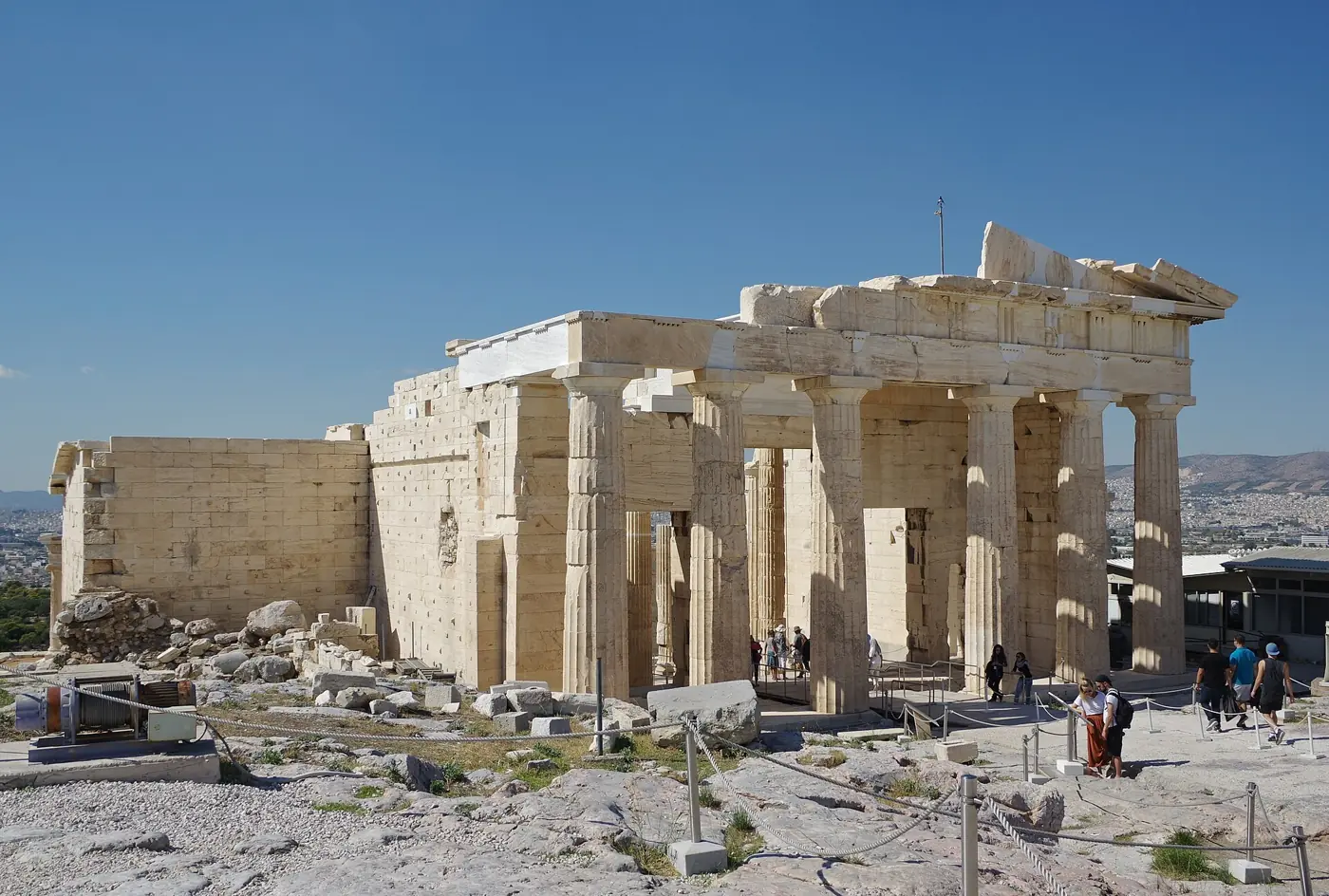
Pause before walking through. The approach makes more sense when you see the gateway as a threshold between the city and the sacred plateau.
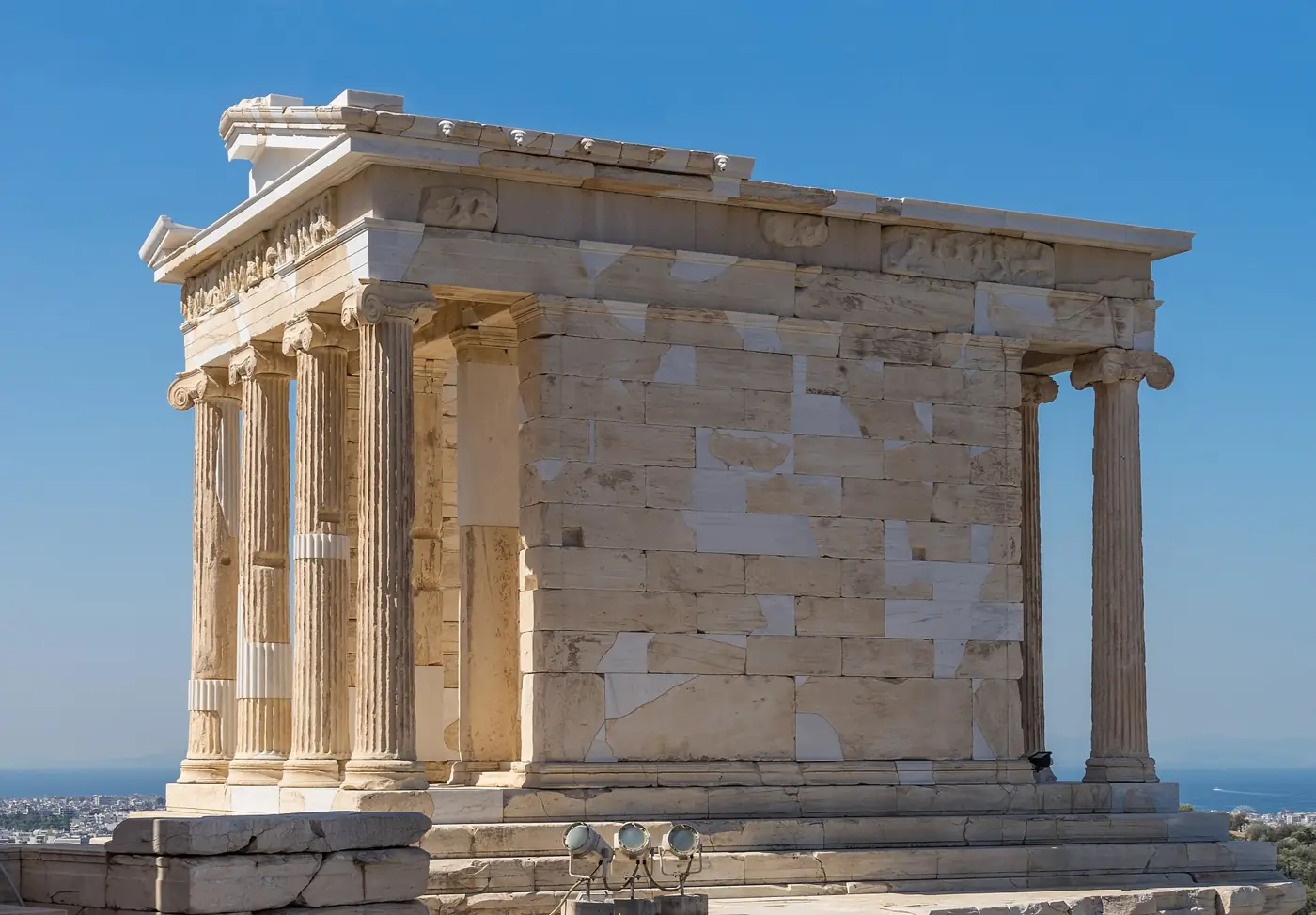
3. The Temple of Athena Nike
The small Ionic temple sits on a projecting bastion beside the approach. It is easy to overlook when a crowd is moving toward the Parthenon, but its position gives it a dramatic relationship with the landscape and the sea-facing horizon.
4. The Parthenon
The Parthenon was dedicated to Athena and built between 447 and 432 BC. It is a temple, a political statement, a triumph of optical design and a damaged historical object, not a blank symbol of “ancient Greece.”
Look for the details that photographs flatten:
- the subtle curvature of the stylobate;
- the slight inward inclination of the columns;
- the difference between Doric structure and sculpted decoration;
- the ongoing conservation work;
- the contrast between the building’s idealised reputation and its complicated survival.
The Parthenon was used and altered across centuries, including as a church, mosque and store for gunpowder. The 1687 explosion caused catastrophic damage during the Venetian siege of Athens.
5. The Erechtheion and Caryatids
The Erechtheion has an unusually complex plan because it brought together several sacred traditions. Its north porch, the uneven ground and the Porch of the Caryatids reward a slower look than the usual “photo stop.”
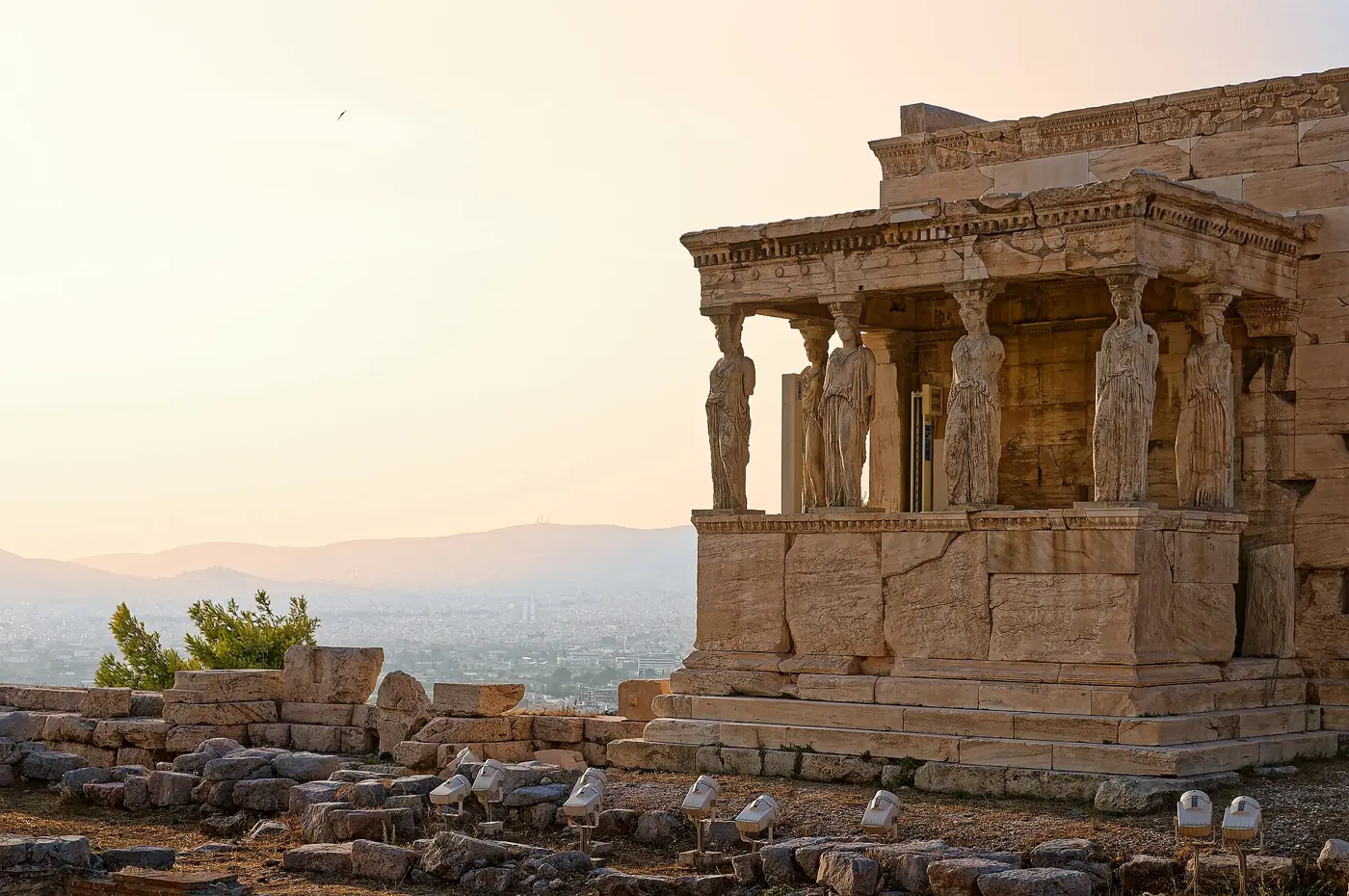
The figures visible on the Acropolis are copies. The original Caryatids are conserved and displayed at the Acropolis Museum, with one famously removed by Lord Elgin now in the British Museum.
6. The view
The view is not a bonus after the ruins; it explains the Acropolis’s power. From the summit you can read the relationship between the ancient city, the modern urban grid, the hills and the sea. Take photographs, but leave time to look without a screen.
Acropolis and Acropolis Museum: How to Combine Them
Treat the Acropolis and the Museum as two halves of one visit, not as a single ticketed attraction.
The Museum is downhill, air-conditioned in many galleries and much easier to study after you have seen the hill. Its top-floor Parthenon Gallery lets you examine sculptures and architectural elements at close range, while the glass floor reveals excavations below the building.
The best order depends on the weather and your tickets:
- Acropolis first, Museum second: best for most visitors; you see the buildings before examining their sculpture and context.
- Museum first, Acropolis second: useful if your museum slot is fixed early or the forecast suggests heat later.
- Separate days: better for children, older visitors, serious museum-goers or anyone who dislikes rushing.
The Museum publishes its own opening hours, last-entry times and ticket conditions. Friday evening hours and winter schedules differ from ordinary weekday hours, so check the official page rather than assuming the site and museum close together.
Practical survival guide
Shoes
Grip-heavy footwear is non-negotiable. Ancient marble has been polished by weather and millions of footsteps. It can be slippery even when completely dry, and wet conditions make it worse. Flat sandals with a smooth sole are a poor choice; high heels are inappropriate.
Water and sun
Bring water before you start climbing. Add a hat, sunglasses and sunscreen. The summit has no reliable shade, and the stone radiates heat back at you.
Toilets and food
Use facilities before entering and carry a small snack for children if needed. The summit is not a picnic area and food availability inside is limited. Plan your post-visit café or lunch at street level.
Bags and security
Expect screening and possible restrictions on large luggage. Leave oversized bags at your accommodation or use a suitable locker service before arriving. Keep your ticket accessible offline.
Children
The Acropolis can be fascinating for children when the visit is framed as a story rather than a list of dates. Set expectations about the climb, bring water, and keep the visit short enough that the final third is not a negotiation. A family-format tour can be worth the premium for children who need narrative and pauses.
Older visitors and mobility
Ask the official site about current accessible routes and lift operation before booking. The accessible route is not the same as a general promise that every surface is easy: the approach, crowds, paving and summit conditions still matter. Do not make a tight timed reservation after an unrelated appointment.
Photography
Morning gives clearer, cooler light and a better chance of an uncluttered composition. Late afternoon brings warmer colour and a softer city view. Tripods, drones and professional equipment may be restricted; check current rules before bringing specialist gear.
A sensible two-part itinerary
If you have one morning
- Arrive near the entrance 30 minutes before your slot.
- Enter, then move through the Propylaea, Athena Nike, Parthenon and Erechtheion without trying to photograph everything immediately.
- Return downhill before the heat peaks.
- Visit the Acropolis Museum only if you have a separate ticket and enough time to enjoy it.
- Eat and rest in Koukaki or Plaka rather than scheduling another summit or hill.
If you have a full day
Book the Acropolis for the morning, take a proper lunch break, then give the Museum a separate block in the afternoon. Alternatively, visit the Museum first and the Acropolis late in the day if the official slots and closing times line up.
Do not fill every hour with ancient sites. Athens is more enjoyable when the Acropolis is followed by a neighbourhood walk, a long meal or a shaded pause.
Official ticket or guided tour?
Use the official ticket when you want control and are comfortable preparing your own context. Choose a guided option when you value guaranteed logistics, interpretation, or an early/late format that fits your day.
The most useful comparison is not simply “cheap versus expensive.” Ask:
- Does the price include the Acropolis admission?
- Is the entry time reserved?
- Is the guide licensed or otherwise clearly described?
- How many people are in the group?
- Is the Acropolis Museum included, and is its ticket separate?
- What happens if you arrive outside the meeting window?
- Is cancellation possible?
The booking cards on this page are affiliate links. Todo Athens may earn a commission if you book through them, at no additional cost to you. That does not change the official-ticket advice above.
Acropolis FAQs
How much is an Acropolis ticket in 2026?
The current standard adult ticket is €30 at the time of this guide's last check. Confirm the live price, ticket category and reductions on the official Hellenic Heritage platform before booking.
Is the old Acropolis combo ticket still available?
Do not rely on the old €30 multi-site combination-ticket advice found in older guides. The Acropolis and other archaeological sites should be checked as current, separate products on the official platform.
Do I need to choose a time for the Acropolis?
Yes. Official entry is organised around a selected date and one-hour arrival window. The ticket platform states that entry is valid from 15 minutes before to 15 minutes after the selected slot. Arrive early.
What happens if I am late?
Late entry is not something to gamble on. The published window is narrow and a missed slot may mean forfeiting the ticket. Build in time for transport, the uphill approach and security.
What is the best entrance to the Acropolis?
The Dionysiou Areopagitou south-side approach is often convenient from Koukaki, the Museum and the pedestrian archaeological promenade. Queue patterns change, and your ticket or tour instructions take priority. The main western approach is the classic route through the Propylaea.
Can I visit the Acropolis Museum with the Acropolis ticket?
No. The Museum is a separate institution with its own ticket and opening hours. Plan both visits with enough time between them.
What is the best time to visit the Acropolis?
Early morning is usually the best all-round choice for temperature, light and crowds. Late afternoon can be excellent in summer if the official closing time gives you enough margin.
Is the Acropolis suitable for children?
Yes, with preparation. Choose a cooler time, bring water, explain that the climb is part of the visit, and consider a family-focused guide. Avoid turning the hottest part of the day into a forced history lesson.
Is the Acropolis accessible by wheelchair?
Some accessible routes and facilities exist, but conditions and lift operation can change. Check the official accessibility information before booking and allow extra time. The accessible route does not make every part of the ancient summit equally easy to navigate.
What should I wear to the Acropolis?
Wear closed or secure shoes with strong grip, light clothing, a hat and sunscreen. Smooth soles, loose flip-flops and heels are unsafe on the polished marble.
Can I buy tickets at the entrance?
Availability and queues vary. When timed inventory is in demand, buying at the gate is a poor strategy. Check the official platform first and book ahead whenever your dates are fixed.
How long do I need at the Acropolis?
Allow around two hours for the archaeological site itself, plus transport, the entrance approach and time for photographs. Add at least two hours for the Museum if you want to see it properly.
Should I visit the Acropolis or the Parthenon?
The Parthenon is one building on the Acropolis plateau. Your Acropolis ticket is for the wider archaeological site, which includes the Propylaea, Temple of Athena Nike, Erechtheion and the summit views as well as the Parthenon.
Is a guided tour worth it?
For a first visit, often yes. The value is not just queue handling; it is understanding what you are seeing. Compare group size, ticket inclusion, meeting point and cancellation terms rather than trusting “skip-the-line” wording alone.
Choose your next Athens Acropolis guide
This page is the parent overview. For a day-by-day route, continue to the 2-day Athens itinerary, 3-day Athens itinerary or 4-day Athens itinerary. For the exact order, buffers and meal break when you want both attractions on one day, use the Acropolis and Acropolis Museum one-day guide. If your only workable slot is later in the day, use the Acropolis afternoon timing and tour guide before booking. Pair the hill with the Athens Museums Guide, plan around the heat with Athens in Summer, use the Athens public transport guide for arrival and station planning, or choose a nearby base with where to stay in Athens for a first visit.
Follow along
More Athens, beyond the page
Daily places, views and ideas for your next visit.
Plan your visit
Choose the right way in
Some of these are affiliate links, so Todo Athens may earn a commission if you book. They are independent booking options: check what each price includes, especially admission, meeting point, group size and cancellation terms.
Book This Experience
Vetted options across every price point and travel style.
Early Acropolis Entry with a Guide
A guided option for travellers who want the major monuments explained while avoiding the hottest part of the day.
Acropolis Entry and Guided Tour
Useful when official timed-entry inventory is inconvenient or you want entry and interpretation arranged together.
Private Acropolis Tour for Families
A private, story-led format that lets families set the pace instead of following a standard adult group itinerary.
Acropolis Audio Guide
A self-guided alternative for visitors who want context without a group, a flag, or a fixed tour pace.