
Athens in Summer 2027: The June, July & August Guide
Peak season, peak heat, peak everything. How to visit Athens in summer and actually enjoy it — Acropolis timing, island day trips, rooftop dining, the Epidaurus festival, and surviving July.
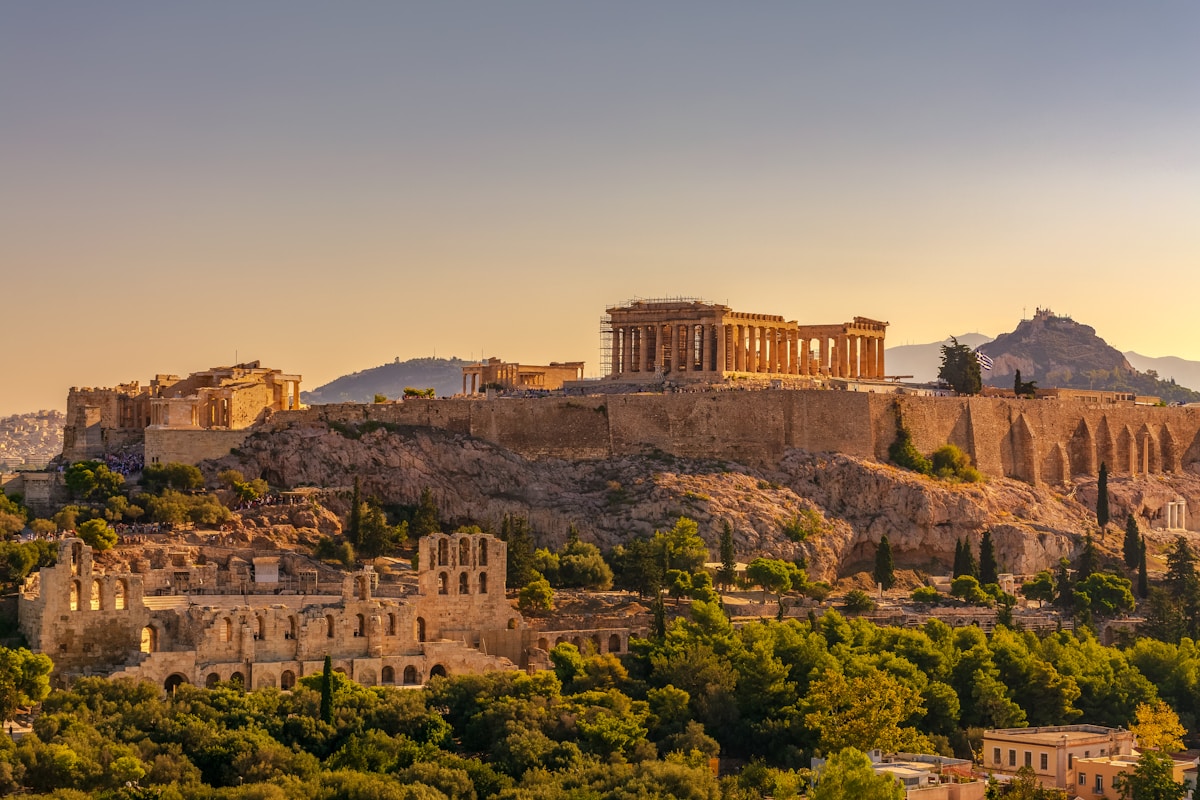
Athens in Summer: The Honest Assessment
Let's start with honesty. Athens in summer is the most popular version of Athens for a reason: the light is extraordinary, the sea is warm enough to swim in, the outdoor dining season is at full intensity, the cultural calendar is packed, and the islands are a short ferry ride away. It is also, in July, genuinely hot in a way that requires adaptation rather than just tolerance.
The average high in July is 34°C. On the days the Sirocco blows in from North Africa, it can hit 40°C. The Acropolis rock has no shade. The pavement in Monastiraki radiates heat from mid-morning. None of this is a reason not to come — it is a reason to understand what you are coming to and arrange your days accordingly.
The visitors who struggle in Athens in summer are those who have not adjusted their timing: who attempt the Acropolis at noon, who try to walk everywhere between 1pm and 4pm, who book the same schedule they would use in Paris in October. The visitors who have a transformative experience are those who front-load mornings, embrace the afternoon pause, and discover that the city truly comes alive after 9pm in a way that no other European capital quite matches.
June is the entry point and the sweet spot for many. The heat is real but not yet at its July peak, the crowds are significant but have not yet reached their August maximum, and the cultural season — outdoor cinema, rooftop concerts, the Epidaurus festival — is just warming up. If the calendar allows, late June is one of the finest times to visit Athens.
What the Weather Actually Looks Like
Summer in Athens is one of the most consistent weather patterns in Europe. Once June begins, rain becomes functionally irrelevant — the city averages fewer than two rain days across the entire three-month season. What varies is the heat: June is warm and manageable, July is hot and demanding, August is the peak. The Meltemi — the northerly wind that blows across the Aegean from July onwards — provides genuine relief when it reaches the city, which is not every day.
| Month | Avg High | Avg Low | Rain Days | Sea Temp | Crowds |
|---|---|---|---|---|---|
| June | 30°C | 22°C | 2 | 23°C | High |
| July | 34°C | 25°C | 1 | 26°C | Very high |
| August | 34°C | 25°C | 1 | 27°C | Very high → falling |
The sea temperature tells the real story of summer's reward. By late June the Aegean is warm enough to stay in for an hour without any adaptation required. By August it is genuinely bath-like — 27°C is warmer than most indoor swimming pools. The beach at Vouliagmeni, 25 minutes from central Athens, is the closest option; better still is attaching a day at a Saronic island to your Athens itinerary.
The sun rises before 6am and sets after 8:30pm in late June — this is more useful than it appears. An early Acropolis visit at 8am is cool enough to walk at pace, and the long evenings mean dinner at 9pm is barely after dusk.
The Acropolis in Summer: Doing It Right
More people attempt the Acropolis in August than in any other month. Most of them attempt it wrong, and the experience they get reflects that. Here is how to do it right.
Time matters more than anything else. The site opens at 8am in summer. Book the first or second entry slot. At 8am, the temperature on the rock is in the mid-twenties, the direct sun is oblique rather than overhead, and the crowds are a fraction of what arrives by 10am. By 11am, the combination of heat and people on the exposed limestone plateau makes the visit qualitatively worse in almost every measurable way. By noon it is genuinely uncomfortable.
Skip-the-line tickets are not optional in July and August. They are not a convenience upgrade. The standard queue on a Saturday in August can run ninety minutes in direct sun before you reach the gate. Buy skip-the-line access in advance, collect your wristband efficiently, and be on the hill before the queue forms.
The New Acropolis Museum should follow, not precede. After an early Acropolis visit — finish by 10:30am at the latest — walk down to the museum at the foot of the hill. It is fully air-conditioned. The top floor, with the Parthenon frieze sections and a glass wall looking directly at the site you have just left, is the correct place to be between 11am and 1pm in July. You can spend two hours there without once being hot.
Hire a guide. Not because the Acropolis is impossible to understand without one — the signage is adequate — but because a specialist guide knows the angles, the light, the mythology, and the off-script details that turn a monument visit into something you remember for different reasons. The best guides here are archaeologists; you can book them through tour operators or directly through the site. In August's heat, a guide who keeps the group moving efficiently and knows exactly where to stop and why is worth the cost several times over.
Island Day Trips: The Best of Both
Athens without a Saronic island day trip is an incomplete visit in summer. The islands are close — Aegina is 40 minutes from Piraeus by Flying Dolphin, Hydra is 90 minutes — and the contrast they offer is the perfect counterpoint to city heat.
Hydra is the one most people correctly identify as special. There are no cars — not reduced cars, literally no cars; the island banned them permanently. Transport is by donkey, boat, and foot. The harbour is ringed with stone mansions built by 18th-century sea captains; the lanes behind run uphill through whitewashed architecture to hilltop chapels. Swimming is off rocks and ladders rather than sandy beaches, but the water is clear to the bottom. The day-trip logistics are simple: take the Hellenic Seaways Flying Dolphin from Piraeus, arrive in time for a swim and lunch, return for late dinner in Athens. Do not leave Hydra without eating at one of the harbour-front fish restaurants.
Aegina is easier and less dramatic but has two things Hydra lacks: the Temple of Aphaia (one of the best-preserved ancient temples in Greece, completely uncrowded by Acropolis standards) and the pistachio orchards that cover the island's interior. Aegina pistachios are a designation-of-origin product — smaller and more intensely flavoured than the Iranian or American varieties that fill supermarket shelves. Buy them at the port market, roasted and still warm.
Poros is the closest island to the peninsula and the calmest. A narrow channel separates it from the Peloponnese coast — a channel you can shout across. Less visited than Hydra, no particular landmark, but quieter beaches and a genuine slow-pace afternoon for those who have been over-stimulated by the city.
The combined cruise taking in all three islands in a single day exists and is popular. It has a slightly packaged-tour quality that the individual island ferries lack, but it solves the logistics question for first-time visitors who want to see everything at once.
The Epidaurus Festival: Ancient Theatre Under Stars
The Athens Epidaurus Festival is one of the genuinely important cultural events in Europe, and it runs through the entire summer. Performances happen in two main venues: the Odeon of Herodes Atticus on the slopes of the Acropolis in central Athens, and the ancient Theatre of Epidaurus in the Peloponnese, two hours by road.
The Herodes Atticus Odeon is the Athens venue — a 5,000-seat Roman theatre built in 161 AD, with the Acropolis walls visible above the stage. In June, July, and August it hosts international ballet companies, opera, classical concerts, and Greek theatre productions. The stone seats are hard and unforgiving; bring a seat cushion. The setting makes everything happening on the stage feel elevated beyond its actual quality — a competent orchestra sounds transcendent when the Acropolis is behind the conductor. For performances with genuine artistic weight, this is among the best live music venues in the world.
The Theatre of Epidaurus is a different proposition entirely. Built in the 4th century BC, it seats 13,000 people across 55 rows of limestone benches and has acoustic properties that remain unsurpassed after 2,400 years: a whisper on the circular orchestra stage is audible in the back row. The plays performed here are Greek tragedy and comedy — Sophocles, Euripides, Aristophanes — performed in Modern Greek with English surtitles on weekend evenings in July and August. Attending a performance of Medea or Oedipus Rex at Epidaurus, watching the sky darken from blue to purple to black behind the ancient horseshoe of stone, is an experience that belongs in a category of its own.
Getting to Epidaurus from Athens involves a two-hour drive or an organised coach transfer. The performance ends around midnight; most visitors either take an organised tour that includes return transport or arrange their own hire car. A night in the nearby town of Nafplio — one of the most beautiful small cities in Greece — turns the Epidaurus evening into a worthwhile overnight.
Book Herodes Atticus and Epidaurus tickets before you travel. The festival programme releases in spring; popular productions sell out months in advance. The festival website is in English.
Outdoor Dining and Rooftop Athens
The rooftop restaurant arrived in Athens as a concept some years ago and has become so thoroughly established that the question is no longer whether to eat on a rooftop but which one and when — see the full Athens rooftop bars guide for a complete comparison by view, occasion and atmosphere. The answer to when is always after 8:30pm — the air is cooling, the Acropolis is lit, and the city below is in full evening mode.
A For Athens, the hotel rooftop bar on Miaouli Square in Monastiraki, has one of the most direct Acropolis views in the city from street level. The cocktails are serious, the food is secondary to the view, and the crowds in July are real — arrive at opening time or book a table several days ahead.
Strofi on Rovertou Galli, directly below the Acropolis hill, is the dinner option that earns repeat visits: Greek cuisine that respects ingredients and knows what it's doing, and a terrace that looks directly at the lit Parthenon at a distance close enough to see the columns clearly. It is not cheap and it is not unknown — book at least two or three days ahead in July.
Couleur Locale in Monastiraki, on a rooftop you reach through what appears to be a corner coffee shop, is genuinely useful to know about: coffee during the day, drinks in the evening, and an Acropolis view that is more immediate than you expect from somewhere with such a low-key entrance.
Garden tavernas are the alternative to rooftops and, in many ways, preferable: shaded, quieter, more relaxed about time, and typically better value. The garden at Spondi in Pangrati has two Michelin stars and an outdoor terrace that makes a summer tasting menu something to plan around. The neighbourhood tavernas in Koukaki, Mets, and Pagkrati running with their tables extended onto the pavement or into back gardens — specifically the ones without English menus posted outside — are where Athens eats summer dinner at its most genuinely pleasurable.
Managing the Heat: The Practical Reality
Athens in summer heat is manageable with the right structure. The same itinerary that would be reasonable in October becomes irrational in July if it ignores the thermal reality of the afternoon.
The practical schedule is:
Before noon: everything requiring movement. Ancient sites, markets, walking tours, ferry departures. The city before noon in summer is hot but operational. The Acropolis at 8am, the Central Market at 9am, the Monastiraki neighbourhood at 10am — these are summer Athens at its most functional and most beautiful.
Noon to 4pm: the strategic pause. Museums (the Acropolis Museum and the National Archaeological Museum are both fully air-conditioned and reward two hours of slow attention), long lunches in shaded tavernas, the hotel room, the beach if Vouliagmeni is on the itinerary. Attempting to walk Plaka in direct sun at 2pm in August is not courage; it is a choice that makes the rest of the day less enjoyable.
4pm to 8pm: recovery and transition. The light improves dramatically from around 5pm — golden and warm, the kind that makes the marble look as though it is lit from within. The Ancient Agora in late afternoon, less crowded than the Acropolis, is often the finest place in Athens to be at this hour. The cafés of Thissio and Koukaki fill from 5pm with Athenians who have judged the moment correctly.
After 8pm: the city accelerates. Dinner before 9pm is possible but slightly ahead of the local rhythm. Athens night life starts later than London, later than Paris, and significantly later than anywhere in northern Europe. The outdoor cinema in Thissio, at the Cine Thisio venue, starts screenings at 9pm and runs until midnight. The bars of Exarcheia and Psyrri get busy from 11pm. The summer is long and the nights are warm and the city has no intention of finishing early.
Practical Tips for Summer in Athens
- Book the Acropolis in advance, always: Summer tickets — especially skip-the-line — sell out days ahead. Check the official e-ticketing site before you arrive and book the earliest morning slot available.
- The midday rule is real: Do not attempt significant walking between noon and 4pm in July or August. This is not advice for the delicate. It is how Athenians structure their day, and it is the correct approach.
- Water everywhere, always: The city has public water fountains in most squares; they work and the water is clean. Carry a refillable bottle. Dehydration in July arrives faster than it feels like it should.
- Dress for stone surfaces: The Acropolis and Agora are entirely paved in unshaded marble and limestone. Wear light, breathable clothing, a hat with a real brim, and sun cream you actually apply. Sandals that have already been broken in — not new ones.
- Island ferries from Piraeus: The port is 25–30 minutes from central Athens by metro (line 1, Green, to Piraeus terminal). Tickets for Saronic island fast ferries can be bought same-day in summer for most routes, though Hydra at weekends benefits from advance booking.
- Epidaurus tickets in advance: The festival programme releases in March. Major productions — particularly international opera or a famous cast Greek tragedy — can sell out within days of release. If Epidaurus is on your list, check the programme before you finalise travel dates.
- The Meltemi is your friend: When the northerly Meltemi blows in July and August, the temperature drops 4–6 degrees and the humidity falls sharply. Days with the Meltemi are the best days to be on the Acropolis. It tends to strengthen by mid-afternoon.
- Sunsets from Philopappos Hill: The small hill across from the Acropolis, accessible via a footpath from Dionyssiou Areopagitou Street, offers a direct sunset view of the Parthenon that most visitors don't find. Go up at 7pm in July and stay until 8:30pm. No entry fee, no queue, no guided tour groups.
- Outdoor cinema is not to be skipped: Cine Thisio, Cine Dexameni in Kolonaki, and Cine Paris in Plaka are all roofless screens showing films in their original language with Greek subtitles. A cold beer, a summer night, a film projected onto a screen with the Acropolis visible above the wall — this is the version of Athens that people who've been here before tell you about.
- Late August is the return: The city is at its absolute maximum capacity in the first two weeks of August, then drops sharply as Greek families return from island holidays and schools approach. The last week of August has significantly better crowd levels at ancient sites than mid-month.
Follow along
More Athens, beyond the page
Daily places, views and ideas for your next visit.
Plan your visit
Choose the right way in
Some of these are affiliate links, so Todo Athens may earn a commission if you book. They are independent booking options: check what each price includes, especially admission, meeting point, group size and cancellation terms.
Book This Experience
Vetted options across every price point and travel style.
Acropolis Skip-the-Line Tickets and Guided Tour
In July the main gate queue starts forming before 8am. Skip-the-line access and a specialist guide means you're inside and moving when the general queue is still snaking down the hill. Book the earliest slot available — the site at 8am is a different experience from the same site at noon.
Hydra & Poros Full-Day Island Cruise from Athens
The classic Saronic island cruise: Hydra (car-free, donkeys, white-cube architecture), Poros (pine forests, naval history), and Aegina (the pistachio island, a proper temple). A full day on the water is the best possible antidote to Athens at 38°C.
Athens at Night — Evening Walking Tour of Plaka & Monastiraki
In July and August, Athens after dark is where the city actually lives. An evening walking tour of Plaka and Monastiraki takes you through the lit lanes when the air has finally cooled — the tourist experience in reverse, and the correct direction.
Epidaurus Theatre Festival — Transfer & Tickets from Athens
The ancient theatre at Epidaurus seats 13,000 people and has near-perfect acoustics — a whisper on stage carries to the back row. The Athens Epidaurus Festival runs Greek tragedy and comedy here every Friday and Saturday in July and August. The transfer from Athens is included; the drive through the Peloponnese is part of the evening.