
2 Days in Athens: A First-Timer's Itinerary
The smartest way to spend two days in Athens: the Acropolis, Ancient Agora, Acropolis Museum, Plaka, Monastiraki, and the city's best evening food.
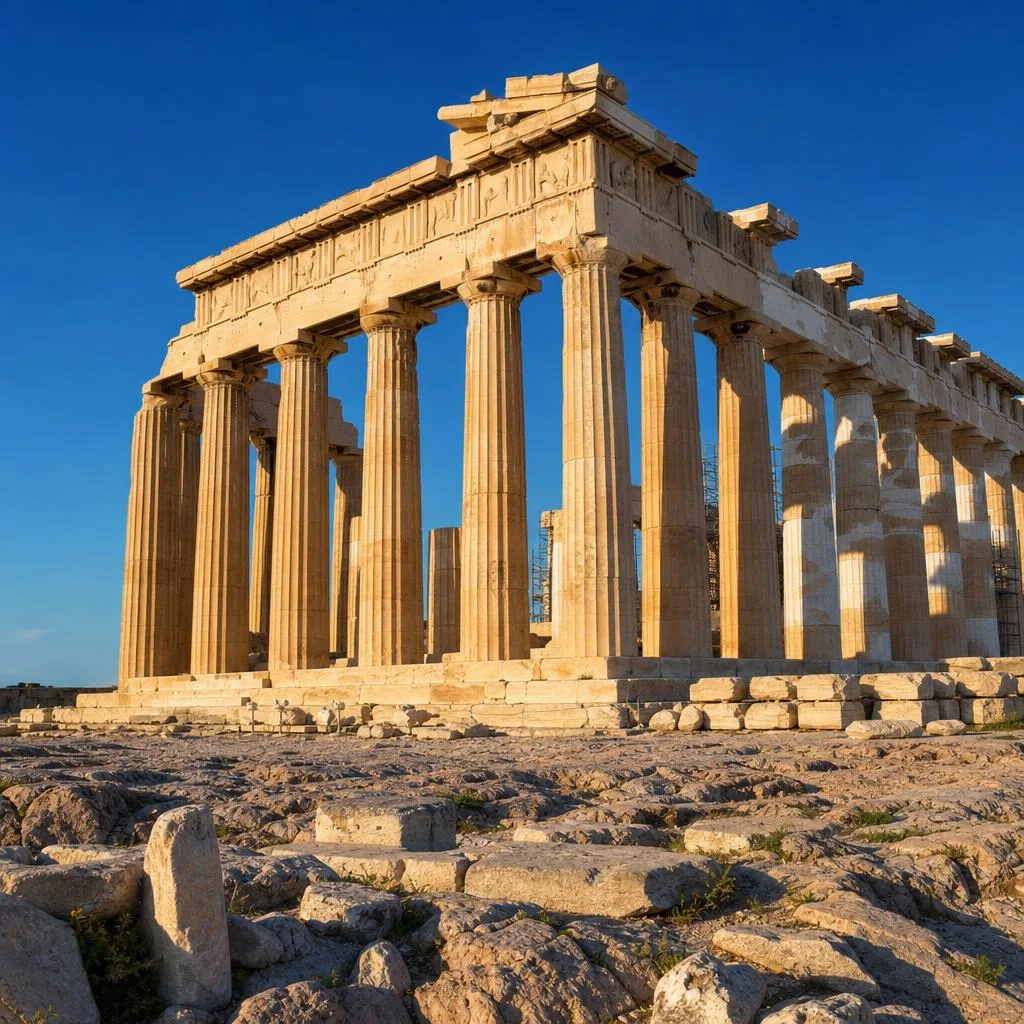
Is two days in Athens enough?
Yes — two full days can cover the ancient centre, the Acropolis and the city's best food without turning the trip into a checklist. The key is to group sights by area and put the Acropolis first, when the rock is cooler and your attention is fresh.
This plan assumes two nights and two complete sightseeing days. If your first or last day is mostly travel, use the arrival advice in the Athens airport to city guide and keep that day flexible. If you genuinely have only one day — a cruise stopover, a long layover, or a day trip through the city — use the 1-day Athens itinerary instead; it makes different trade-offs than this page.
Day 1: Acropolis, Plaka and the ancient centre
Morning — Start at the Acropolis
Book the earliest practical timed entry for the Acropolis. Allow around two hours on the rock, including the Propylaea, Temple of Athena Nike, Parthenon and Erechtheion. Wear shoes with good grip: the marble is polished in places, and the approach is steeper than it looks on a map.
The complete Acropolis guide explains the entrances, ticket choices and heat strategy in more detail. If your ticket or schedule puts the visit later in the day, use the Acropolis afternoon timing guide to choose a realistic slot. If you want the history to make sense rather than simply seeing the columns, the Acropolis guided tour is a strong use of one morning.
Late morning — Walk down through the Acropolis slopes
Leave via the pedestrian archaeological promenade toward the Acropolis Museum. Take a short break before going inside; the museum is much more enjoyable when you are not trying to recover from the climb.
Spend 90 minutes to two hours in the Acropolis Museum. Look especially for the Caryatids, the Parthenon Gallery and the excavations beneath the building. The glass gallery gives you the visual key to the temple you have just visited. For the complete one-day sequence, including ticket buffers and lunch, use the Acropolis and Acropolis Museum one-day guide.
Lunch — Koukaki or Plaka
Koukaki is the more relaxed choice for lunch. Plaka is more atmospheric, but choose a side street rather than a restaurant directly on the busiest tourist strip. Keep lunch generous but not enormous: there is still plenty of walking ahead.
Afternoon — Plaka to Monastiraki
Walk north through Plaka, past Anafiotika and the Roman-era remains, then continue to Monastiraki Square. This is a good time for small stops rather than another major ticket: the Tower of the Winds, Hadrian's Library exterior and the market streets are all close together.
Continue into the Ancient Agora, ideally with at least 75 minutes before closing. The Temple of Hephaestus is one of the best-preserved Greek temples in the city, and the Stoa of Attalos makes the political life of ancient Athens much easier to picture.
Evening — Dinner and a view
For an uncomplicated first-night meal, try a classic souvlaki at Bairaktaris or follow the stalls and tavernas through Monastiraki and Psirri. For a rooftop drink with the Acropolis in view, A for Athens is an easy option — reserve or arrive early if the view matters, or see the full rooftop bars guide for other options.
Day 2: Market, museums and modern Athens
Morning — Choose your second anchor
If you want more antiquity, visit the National Archaeological Museum. It is not beside the Acropolis, so allow extra travel time and do not combine it with another distant museum. The collection rewards a focused visit of two hours rather than a rushed attempt to see every room.
If you prefer a slower central day, begin at the Central Market and walk through Psirri. The Psirri and Monastiraki guide has a practical route for coffee, street art, food and small shops.
Afternoon — Syntagma and the National Garden
Make your way to Syntagma Square for the Parliament and the changing of the guard, then cross the National Garden toward the Panathenaic Stadium. This gives you a different scale of Athens after the compact ancient centre: broad avenues, civic buildings and the marble stadium where the first modern Olympic Games were held.
Use the Athens public transport guide if the heat, distance or your accommodation makes a Metro hop more sensible than walking. Athens is very walkable, but “walkable” does not mean every walk is pleasant at 38°C.
Evening — Your final Athens meal
Finish in a neighborhood that feels different from your first night. Pangrati works well for local restaurants and wine bars; Psirri is livelier and closer to the market. Leave enough time for a proper meal rather than trying to squeeze in one last attraction.
What to book before you arrive
- Acropolis timed entry or a guided tour.
- Your accommodation near a Metro station or within the central walking area.
- Any restaurant where you particularly want a table.
- Airport transport if you land late or depart before the Metro is running.
Two days rewards restraint. Do not add a day trip, Cape Sounion or a beach unless you are happy to remove one of the central Athens days. For a third day, use the 3-day Athens itinerary; for a slower stay, continue with the 4-day Athens itinerary.
FAQ
Should I stay in Plaka for a two-day trip?
Plaka is convenient and atmospheric, but it is not the only good base. Monastiraki, Koukaki and Syntagma can be just as practical, often with better transport connections. Compare the trade-offs in where to stay in Athens for a first visit.
Is the Athens City Pass worth it for two days?
Do the arithmetic against the exact sites you will visit. A pass can be useful when it includes the admissions you already want, but it is not automatically cheaper than separate tickets. Check current prices and inclusions before buying.
Can I visit the Acropolis and Cape Sounion in the same two-day trip?
You can, but it makes the trip rushed. Cape Sounion is a long half-day once transfers are included. Keep it for a longer stay unless the sunset temple is your main reason for visiting Athens.
Follow along
More Athens, beyond the page
Daily places, views and ideas for your next visit.