
National Archaeological Museum Athens: What to See, Tickets & Visit Guide
Plan a visit to Athens' National Archaeological Museum with the essential objects, current ticket and hours guidance, location, transport, and realistic visit lengths.
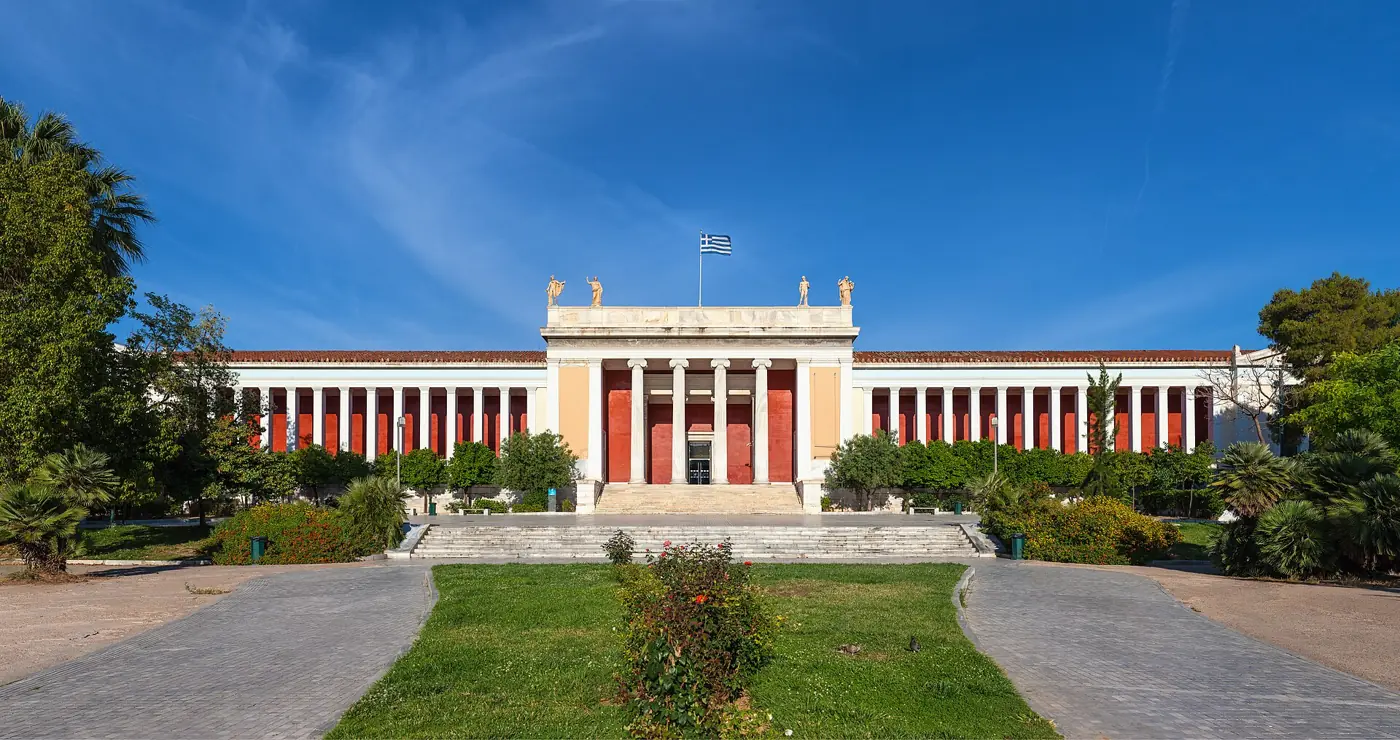
Photo: Thomas Wolf, www.foto-tw.de, CC BY-SA 3.0 de
Is the National Archaeological Museum worth visiting?
Yes, if you want the broadest possible introduction to Greek archaeology rather than a museum focused on one monument. The National Archaeological Museum gathers objects from across Greece and the wider ancient world, from prehistoric gold and Mycenaean finds to classical sculpture, Roman-era works and Egyptian collections.
Its scale is the point. This is not a quick add-on after the Acropolis. It rewards visitors who choose a route, accept that they will not see every room, and give the most important objects enough time to register.
At a glance
- Time: two to three hours for a first visit; about four if ancient history is a main reason for your trip. (Our planning estimates, not museum figures.)
- Cost: €20 standard admission at the last check, with free-entry dates and categories listed below.
- Main drawback: it is in Exarcheia, not beside the Acropolis, so it needs its own block of the day.
- Alternative: if your trip is mostly about the Acropolis, the Acropolis Museum is the better single museum.
National Archaeological Museum or Acropolis Museum?
The two museums answer different questions:
- National Archaeological Museum: What did Greek art and material culture look like across thousands of years and many regions?
- Acropolis Museum: What was found on and around the Acropolis, and how should we understand the buildings and sculptures on the hill?
The Acropolis Museum is the natural companion to an Acropolis visit. Its Parthenon Gallery, Caryatids and excavations make the hill immediately legible. The National Archaeological Museum is the deeper archaeological survey: a separate destination in Exarcheia with a much wider chronology and collection.
If you have one museum slot, choose the Acropolis Museum when your trip is mainly about the Acropolis. Choose the National Archaeological Museum when you want Mycenaean history, large-scale sculpture, ancient technology or a broader view of Greece. With enough time, visit both on separate blocks rather than trying to rush between them. For a fuller side-by-side, see National Archaeological Museum or Acropolis Museum?.
What to see first
The museum contains far more than a short list can cover. These are strong anchors for a first route:
The Antikythera Mechanism
The Antikythera Mechanism is a geared device recovered from a shipwreck, used for astronomical calculation. The official collections page places the Antikythera shipwreck finds, including the Mechanism, on the ground floor in Halls 36–39 (the Metalwork collection).
Look at it alongside the museum's wider evidence for craft, trade and navigation rather than as an isolated curiosity.
Mycenaean gold and the Mask of Agamemnon
The Mycenaean galleries are on the ground floor and cover Bronze Age tombs, weapons, jewellery and elite display, including finds from the royal tombs of Mycenae. The gold Mask of Agamemnon is the best-known object, but the name is a label, not proof that it belonged to the Homeric king.
Look beyond the most photographed case: the smaller ornaments and weapons show how wealth and status were displayed.
The Artemision Bronze
The life-size bronze figure recovered from the sea off Artemision is usually described as Zeus or Poseidon; the identity remains debated. It is a rare surviving large bronze, which is why it is a standard stop.
The Jockey of Artemision
The bronze horse and young rider show that ancient sculpture was not only calm marble gods. It is a good anchor for children because the subject is easy to read at a glance.
Classical and Hellenistic sculpture
Allow time for the larger sculpture galleries rather than moving directly from famous object to famous object. Compare idealised bodies, portraits, funerary works and figures designed for public or sacred settings. The shift from classical restraint to Hellenistic movement is easier to understand when you give the room a continuous look.
Thera wall paintings and the Egyptian collection
The collection is not limited to the classical fifth century BC. The official site lists a Thera (Santorini) collection on the first floor, Hall 48, known for its wall paintings, and Egyptian antiquities on the ground floor, Halls 40–41. Check the museum's current plan on the day, because gallery arrangements can change.
How long should you spend?
90 minutes: a highlights visit
Choose the Antikythera Mechanism, Mycenaean gold and Mask of Agamemnon, the Artemision Bronze, the Jockey and one sculpture section. This is enough for a first impression, but not enough to understand the full collection. Keep the route focused and do not cross the city immediately afterwards for another major museum.
Two to three hours: the best first visit
This gives you time for the major anchors, a wider sculpture sequence, prehistoric material and a few slower stops. It is the right target for most travellers who want substance without museum fatigue.
Four hours or more: a specialist visit
Choose four hours when you read labels carefully, want to follow one period, or treat the museum as a central part of your Athens trip. Take a break if needed; remembering ten objects well is more valuable than photographing a hundred cases.
Tickets and opening hours
All details below come from the museum's official visit page and were checked on 11 October 2026. Check again before you go; policies, strike days and seasonal hours change.
Admission: €20, sold through the museum's e-ticketing system. The only reduced single-ticket rate listed is 50% for seniors over 65 from Greece or other EU states, from 1 October to 31 May. Free-entry categories (for example EU residents under 25, non-EU children under 18, and some disability and professional categories) have document requirements listed on the official page.
Free-entry dates listed: 6 March, 18 April, 18 May, the last weekend of September, 28 October, and the first and third Sunday of each month from 1 November to 31 March. Free days are likely to be busier; allow for queues.
Opening hours, summer (4 May to 15 November 2026): Wednesday to Monday 08:00–20:00, last admission 19:30. Tuesday 13:00–20:00, last admission 19:30.
Winter: the official page lists the previous winter (16 November 2025 to 3 May 2026) as Wednesday to Monday 08:30–15:30, last admission 15:00, Tuesday 13:00–20:00. We have not found 2026–27 winter hours published, so do not assume they repeat. Check before travelling after 15 November.
Closed: 25 and 26 December, 1 January, 25 March, 1 May and Orthodox Easter Sunday.
The museum is separate from the Acropolis Museum and from the Acropolis archaeological site. A ticket for one does not automatically include either of the others.
Photography, bags and accessibility
- Photographing antiquities with a portable camera is allowed without flash. Tripods and filming need prior permission from the museum directorate.
- Items larger than 30 × 30 × 15 cm, including luggage, go in the cloakroom. Valuables, cameras and phones cannot be left there.
- There is a separate accessible entrance on Vas. Herakleiou Street, elevators to the basement and first floor, an accessible WC on the basement level, and wheelchairs on request at the information desk.
Location and how to get there
The address is 44, 28th of October (Patission) Street, Athens 106 82, on the edge of Exarcheia. The museum names Omonia and Victoria as the nearest Metro and electric-train stations, and says there is no on-site parking. It is close enough to combine with a coffee or meal in Exarcheia.
From the Acropolis area, the museum is not a natural quick detour on foot. Use the Athens public transport guide and allow time for the transfer rather than placing a tight museum slot immediately after the Acropolis. From Monastiraki, a Metro connection is usually more sensible than walking in the midday heat.
Keep the official address and entrance information open on the day. Athens traffic, demonstrations, temporary street changes and Metro service changes can affect the final approach.
A practical museum route
- Check the official hours, ticket conditions and any access notice before leaving.
- Start with the museum map or ask at the entrance which galleries are open.
- Go first to the objects that made you choose this museum: Mycenaean gold, the Antikythera Mechanism, Artemision Bronze and the Jockey.
- Follow one connected sculpture sequence instead of trying to cover every room.
- Save time for smaller objects and prehistoric material; they explain the networks behind the monumental pieces.
- Finish with a break in Exarcheia rather than adding another large indoor attraction.
Photography rules, cloakroom arrangements, gallery access and temporary displays can change. Follow the museum's current instructions rather than assuming that a previous visit or online photograph shows today's route.
Is a guided tour worth it?
A guide is useful when you want the objects to become a historical argument rather than a series of famous names. The museum spans so much time that a good specialist can explain what changed between Mycenaean burial culture, classical civic sculpture and Hellenistic naturalism.
Choose a self-guided ticket or audio guide when you prefer to stop, sketch, photograph or read at your own speed. Choose a private or small-group tour when the museum is a major reason for your trip, when you are travelling with teenagers, or when you want to connect objects to the Acropolis, Mycenae and the wider Greek world. Always confirm what the booking includes, where the meeting point is, whether admission is included and how long the visit lasts.
FAQ
What is the National Archaeological Museum in Athens best known for?
It is best known for its broad collection of Greek antiquities, including Mycenaean gold, the Mask of Agamemnon, the Antikythera Mechanism, the Artemision Bronze and the Jockey of Artemision. The collection covers much more than those highlights.
How many hours do you need at the National Archaeological Museum?
Allow 90 minutes for a focused highlights route, two to three hours for a satisfying first visit, and four hours or more for a deep museum day. The building is large, so choose a route instead of trying to see everything.
Is the National Archaeological Museum near the Acropolis?
It is in Exarcheia, north of the historic centre, not beside the Acropolis. The museum names Omonia and Victoria as the nearest stations. Allow transfer time and do not treat it as a five-minute add-on to an Acropolis booking.
Is the National Archaeological Museum free?
Not usually: standard admission is €20. The official site lists free-entry dates (6 March, 18 April, 18 May, the last weekend of September, 28 October, and the first and third Sundays from November to March) and several free categories. Check the museum's visit page for your date.
Can you visit the National Archaeological Museum and Acropolis Museum on the same day?
You can, but it is a demanding day because the museums are separate destinations. It is more enjoyable to give each a proper block and allow time for transport, food and a break. For most visitors, separate days are better.
Is the National Archaeological Museum good for children?
Yes, if you make the visit selective. The Jockey, large bronzes, gold objects and ancient technology are strong anchors. Keep the route to 90 minutes or two hours and let children choose a detail rather than expecting them to inspect every gallery.
Is the National Archaeological Museum accessible for wheelchair users?
The museum lists a separate accessible entrance on Vas. Herakleiou Street, elevators to the basement and first floor, an accessible WC and wheelchairs on request. Confirm details with the museum before your visit.
Are temporary exhibitions included?
Do not assume that a temporary exhibition, special display or event is included in the standard ticket. Check the official museum announcement and ticket conditions for your date.
Continue planning Athens
To fit the museum into a day with realistic travel time, add it to a route in the Athens itinerary planner.
Start with the Athens museums guide to compare the city's collections. The 2-day Athens itinerary and 3-day Athens itinerary show where the museum fits into a short trip, while the 4-day Athens itinerary gives it more breathing room. If the Acropolis is your main focus, compare this museum with the complete Acropolis guide.
Follow along
More Athens, beyond the page
Daily places, views and ideas for your next visit.
Plan your visit
Choose the right way in
Some of these are affiliate links, so Todo Athens may earn a commission if you book. They are independent booking options: check what each price includes, especially admission, meeting point, group size and cancellation terms.
Book This Experience
Vetted options across every price point and travel style.
National Archaeological Museum Tour
A private, object-led visit built around the museum's bronze, marble, gold, Mask of Agamemnon and Antikythera Mechanism.
National Archaeological Museum Entry + Audio Guide
A self-guided format for visitors who want to choose their own route and add interpretation without joining a group.
National Archaeological Museum Entry Ticket
An entry option with a digital Hellenic Heritage guide; confirm the current ticket conditions and date before booking.