
The Perfect 3-Day Athens Itinerary (2026): Step-by-Step
How to spend three days in Athens the right way — ancient sites, great food, real neighbourhoods, and one escape from the city. Day-by-day, hour-by-hour.
Before You Start
Three days in Athens is enough to see everything that matters — if you spend them in the right order. The structure below front-loads the most physically demanding part (the Acropolis) while the weather is still manageable, leaves the second day for the city's neighbourhoods and food at a slower pace, and saves the third for an escape so you leave with a sense of what Athens sits inside.
Book in advance: Acropolis tickets sell out by mid-morning in summer. Reserve your Day 1 tour or tickets at etickets.tap.gr the night before you arrive. If you are deciding between official admission and a guided option, compare the Acropolis tickets vs tours guide before paying.
If you have only two full days, use the more concentrated 2-day Athens itinerary. Staying for four days? Give the city more breathing room with the 4-day Athens itinerary, which leaves space for a museum day and one carefully chosen escape. If you are combining the Acropolis and its museum on Day 1, follow the dedicated one-day Acropolis and museum route instead of improvising the transfer.
Day 1: The Ancient City
07:45 — Arrive at the Acropolis entrance
The gates open at 8am. Being first in means cooler air, softer light, and almost nobody else on the rock. In July and August the midday temperature on the marble plateau regularly exceeds 38°C; avoid it.
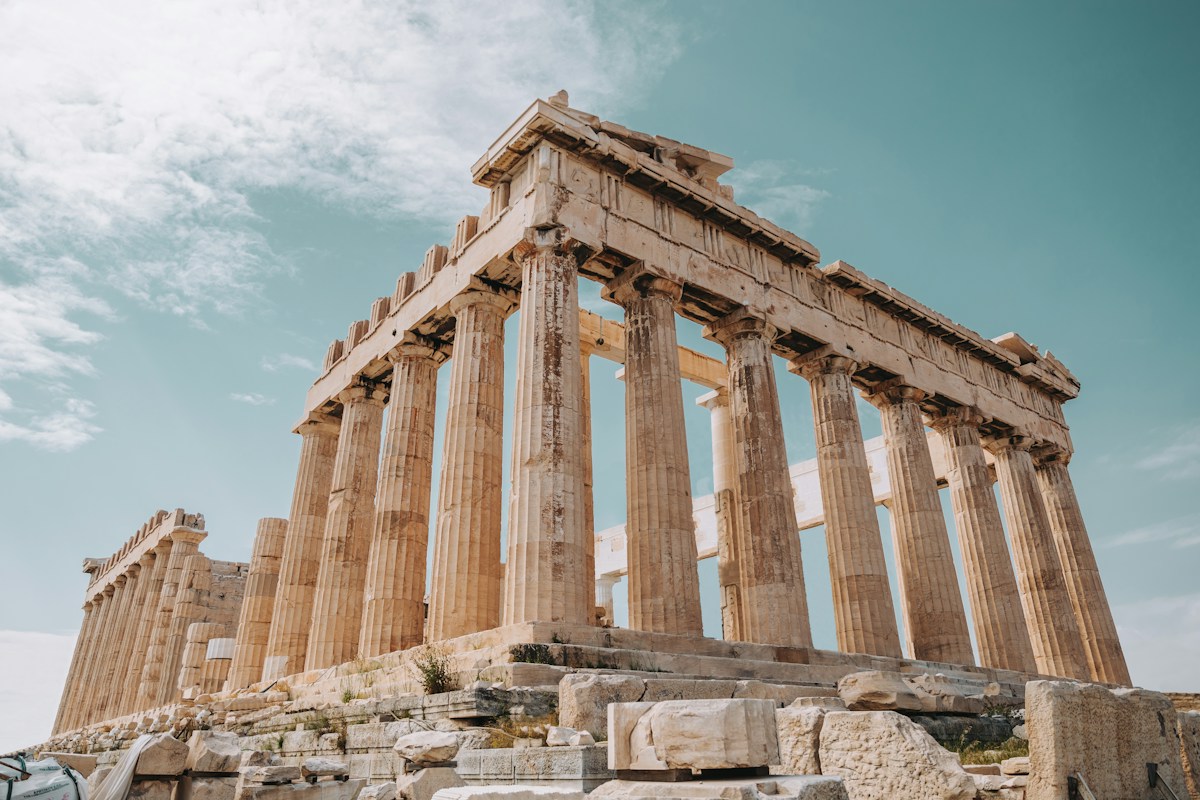
If you are going with a guide — and it is worth doing once, even if you generally prefer to explore alone — a small-group morning tour gives you the site before the crowds while an expert explains what you are actually looking at. If your available ticket is later, the Acropolis afternoon timing guide explains how to plan around heat, entry windows and the closing time. The four major structures (Propylaea, Temple of Athena Nike, Parthenon, Erechtheion) each reward fifteen minutes of unhurried attention; a good guide earns their fee here more than almost anywhere.
The combined ticket (€30) covers the Acropolis plus six other ancient sites including the Ancient Agora and the Temple of Olympian Zeus. It is valid for five days.
10:30 — The Acropolis Museum
Walk downhill from the south slope entrance and you are at the museum in eight minutes. Go immediately after the site — your mind is already full of what you have just seen, and the museum's top-floor Parthenon Gallery will make the whole thing click into place. The frieze at eye level, the missing sections shown as pale plaster casts where the British Museum holds the originals, the glass floor over the excavations below — this is one of the best museum experiences in Europe.
Allow 90 minutes. The café on the restaurant level has a direct view back up to the Parthenon and is a good place to recover before the afternoon. The Acropolis and museum one-day guide has the full timing, ticket and fallback plan for this pairing.
12:30 — Lunch in Koukaki or Monastiraki
Koukaki (five minutes south of the museum) is where Athenians who live near the Acropolis actually eat — neighbourhood tavernas on quiet streets, nothing touristy. Try Feyrouz for Middle Eastern, or find whichever restaurant has the biggest lunch crowd of locals.
Monastiraki (fifteen minutes north on foot) is busier but gives you a chance to walk through the Plaka on the way. The flea market is worth a pass-through on any day; on Sundays it spills out into the surrounding streets.
14:30 — Ancient Agora
The Agora is the ancient marketplace that functioned as the social, commercial, and political centre of classical Athens — more genuinely alive to the imagination than the Acropolis in some ways, because here you can stand where Socrates argued, where the assembly voted, where merchants sold fish beside philosophers discussing democracy. It is included in your combined ticket.
The reconstructed Stoa of Attalos houses the site museum (small, worthwhile). The Temple of Hephaestus at the far end is one of the best-preserved ancient temples on earth.
16:30 — Walk to Syntagma
From the Agora it is a 20-minute walk through Monastiraki and up toward Syntagma Square. Stop in at Hadrian's Library (combined ticket) on the way — the forecourt with its 100 columns gives a sense of Roman-era Athens that the Greek sites do not.
The Changing of the Guards ceremony happens every hour at the Tomb of the Unknown Soldier in front of the parliament building. The full Sunday ceremony at 11:00 is grander; a weekday change is quieter and equally worth watching for five minutes.
18:00 — Settle in, find dinner
Monastiraki and Psirri reward an evening wander. Both neighbourhoods have good restaurants at every price point — from hole-in-the-wall souvlaki to serious modern Greek cooking. Bairaktaris on Monastiraki Square is a reliable taverna that has been there since 1879. For something more contemporary, the Psirri streets east of Athinas have a dozen worthwhile options within a short walk.
Day 2: Neighbourhoods, Markets & Culture
09:00 — National Archaeological Museum
The National Archaeological Museum is the most important collection of Greek antiquities in the world, and it is in Exarchia rather than the tourist centre, which means most visitors skip it. Do not skip it.
The Mask of Agamemnon, the Antikythera Mechanism, the bronze Poseidon (or Zeus — nobody is certain) of Artemision, the Thera frescoes from the Minoan eruption of Santorini — these are objects that stop you mid-stride. Allow at least two hours. The museum is about 25 minutes on foot from the Acropolis area, or ten minutes on the metro (Viktoria station).
11:30 — Exarchia
Step outside the museum and walk south into Exarchia. This is Athens' historically anarchist, politically charged neighbourhood — full of street art, independent bookshops, small music venues, and the best-value coffee in the city. It is nothing like the tourist centre and that contrast is the point.
Have coffee at one of the squares. Buy something from a bookshop. Look at the murals. Exarchia is the neighbourhood most Athenians would take you to if you were their friend visiting for the first time.
13:00 — Varvakios Central Market
Walk fifteen minutes south to the Varvakios Market on Athinas Street. The market occupies two buildings: the meat and fish hall (dating from 1878, worth seeing even if you buy nothing) and the surrounding stalls selling vegetables, olives, herbs, and cheeses.
This is the best food shopping in Athens. A street food tour that covers the market is the most efficient way to taste your way through it — the guides know which stall has been there 40 years and which one opened last month.
15:00 — Monastiraki Flea Market & Afternoon Rest
Walk south through Monastiraki. The flea market runs daily but Sunday is when the surrounding streets fill with vendors. If it is a weekday, the permanent antiques and curiosity shops on Ifaistou Street are still worth a look.
Midday in summer calls for a break. Find a shaded café, order an iced Greek coffee (freddo espresso or freddo cappuccino), and sit for an hour. Athens is not a city that rewards charging through the heat.
17:30 — Kolonaki & Lycabettus Hill
Take the metro to Syntagma and walk uphill into Kolonaki — the city's wealthiest residential neighbourhood, full of embassies, galleries, and expensive cafés. It is worth walking through rather than sitting in.
From Kolonaki, the funicular (or a 20-minute walk on the path) takes you to the summit of Lycabettus Hill. At 277 metres it is the highest point in Athens. The view of the Acropolis from above, looking across the entire city to the sea, is the one photograph that makes visitors understand where they are.
19:30 — Dinner and evening
Return downhill into Kolonaki or back toward Syntagma. The restaurants around Kolonaki tend toward modern Greek and international cooking; for traditional taverna food, head back to Monastiraki or Psirri.
If you want a rooftop drink with an Acropolis view — and on a clear evening it is hard to resist — the GB Roof Garden at the Hotel Grande Bretagne or Couleur Locale above Monastiraki Square are the most reliable options; the full rooftop bars guide compares these against every other serious option in the city.
Day 3: Escape the City
On your third day, leave Athens. The city is best understood from outside it, and the two options below are the most rewarding for the time involved.
Option A: Cape Sounion (Afternoon, half-day)
The Temple of Poseidon stands on a cliff 70 kilometres south of Athens, directly above the sea at the tip of the Attica peninsula. Lord Byron carved his name into the marble in 1810 — you can still see it on the south column. The drive along the coastal road through the Athens Riviera is part of the appeal.
Go in the afternoon and arrive for sunset. The light on the white marble columns above a darkening Aegean is one of the most memorable sights in Greece. The easiest way is an organised half-day tour that departs around 14:00 and returns by 20:00.
This leaves your morning free for anything on the Athens list you have not yet done — the Benaki Museum, the Kerameikos cemetery, or a late start over coffee.
Option B: Saronic Islands Cruise (Full day)
A full-day cruise from Piraeus covers three islands — Aegina, Poros, and Hydra — in one long day. Hydra is the highlight: a car-free island where donkeys are the only transport, the harbour is lined with 18th-century stone mansions, and the water is clear enough to swim in off the rocks below the town.
The cruise departs Piraeus at 8:00am and returns around 21:00. Take the metro from central Athens to Piraeus (green line, 30 minutes) the night before to confirm the boarding point.
Practical Notes for Three Days
Getting around: The Athens metro is clean, fast, and inexpensive. A day pass (€4.50) covers unlimited metro, bus, and tram travel. The Acropolis, Monastiraki, Syntagma, and Kolonaki are all within walking distance of each other; use the metro for the National Archaeological Museum (Viktoria) and Piraeus (day 3 cruise). Read the practical Athens public transport guide before you arrive.
Accommodation: Monastiraki, Psirri, and Koukaki all put you within walking distance of the Day 1 sites. Monastiraki and Psirri are louder; Koukaki is quieter and slightly more residential. Avoid hotels on the main tourist drag in Plaka if you want to sleep past 23:00. Compare the trade-offs in where to stay in Athens for a first visit.
Food: Athens is one of the cheapest cities in Southern Europe for eating well. A souvlaki from a proper grill costs €3. A sit-down lunch at a neighbourhood taverna with house wine rarely exceeds €20 per person. The expensive restaurants are concentrated around Kolonaki and the tourist centre of Plaka — the quality does not always justify the premium.
Heat (May–September): Plan your Acropolis visit for the first thing on Day 1. After 11:00 in summer, the exposed marble plateau becomes genuinely dangerous without water and shade — neither of which exist on the rock itself.
FAQ
Is three days enough for Athens?
Yes. Three days covers the Acropolis and its museum, the ancient city and central neighbourhoods, and one escape outside Athens — without rushing any of them. Two days is tight if you want an escape day too; four days adds a museum-focused day and more breathing room, but three is the point where the core of Athens genuinely fits.
Should Day 3 be a day trip or a day inside the city?
A day trip, if you can manage it. Athens itself is largely covered by the end of Day 2, and Cape Sounion or the Saronic Islands give you a sense of the wider region that the city alone cannot. If you would rather stay local, spend Day 3 on the Benaki Museum, Kerameikos, or a slower walk through Pangrati or Kolonaki instead.
Is the Athens City Pass worth it for three days?
It depends on which sites you would visit anyway. Add up the individual admission prices for the Acropolis, the Ancient Agora, the Acropolis Museum and any other sites on your list, then compare that total to the pass price before buying — it is not automatically the cheaper option over three days.
Follow along
More Athens, beyond the page
Daily places, views and ideas for your next visit.
Plan your visit
Choose the right way in
Some of these are affiliate links, so Todo Athens may earn a commission if you book. They are independent booking options: check what each price includes, especially admission, meeting point, group size and cancellation terms.
Book This Experience
Vetted options across every price point and travel style.
Acropolis & Ancient Agora Guided Tour
The most-reviewed Acropolis tour on GetYourGuide — skip-the-line tickets, expert guide, small group. Book this before anything else.
Athens Street Food Tour — Monastiraki & Varvakios
The best way to cover Monastiraki and the central market on foot — 7–10 tastings included, a guide who knows the stalls.
Cape Sounion Half-Day Trip from Athens
The easiest way to reach Cape Sounion — afternoon departure, sunset over the Temple of Poseidon, return by evening.
Saronic Islands Full-Day Cruise
Aegina, Poros, and Hydra in one day — the classic Athens day cruise. Departs from Piraeus at 8am.