
National Archaeological Museum or Acropolis Museum? An Athens Comparison
Choosing between Athens' National Archaeological Museum and Acropolis Museum? Compare collections, location, visit length, atmosphere, accessibility and the type of traveler each suits.
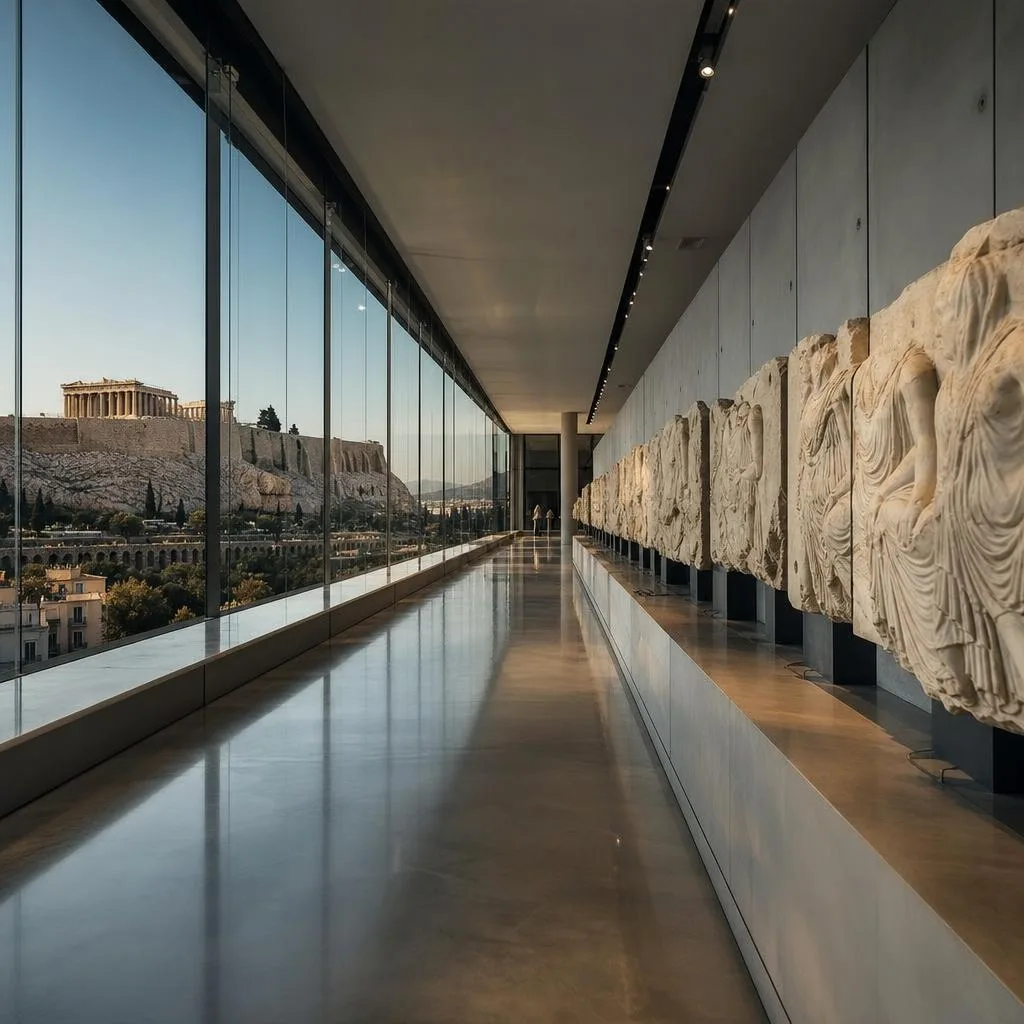
National Archaeological Museum or Acropolis Museum?
They are not competing versions of the same museum. The National Archaeological Museum is a broad survey of Greek archaeology, from prehistoric cultures through classical, Hellenistic and Roman material, with important collections from beyond Athens. The Acropolis Museum is a focused museum built around the monuments and finds of the Acropolis and the surrounding slopes.
Choose the National Archaeological Museum when you want range, chronology and objects from across the Greek world. Choose the Acropolis Museum when your Athens trip is centred on the hill and you want its sculpture, buildings and archaeology explained in one connected setting. If you have enough time, they work better as two separate visits than as a rushed museum double-header.
Both are worthwhile for different reasons. This comparison helps you decide based on collection focus, location, time, atmosphere, accessibility and travel style. It does not replace the dedicated pages for tickets, current hours or the detailed object routes.
The decision in one minute
| If your priority is... | Start with... | Why |
|---|---|---|
| The Acropolis, Parthenon and Caryatids | Acropolis Museum | Its collection and galleries are directly tied to the hill and its monuments |
| The widest archaeological sweep | National Archaeological Museum | It brings together material from many periods, regions and cultures |
| A museum beside the Acropolis route | Acropolis Museum | It sits in Koukaki, close to the pedestrian archaeological promenade |
| A substantial half-day away from the tourist core | National Archaeological Museum | It is in Exarcheia, near Victoria, and deserves its own block |
| A shorter, focused visit | Acropolis Museum | You can build a coherent visit around the Parthenon Gallery and Acropolis finds |
| Mycenaean gold, ancient technology and wider Greek archaeology | National Archaeological Museum | Its collections reach far beyond the Acropolis story |
| One museum after seeing the hill | Acropolis Museum | The buildings and landscape are still fresh in your mind |
| A second museum day in a longer stay | National Archaeological Museum | It changes the scale from one monument complex to the wider ancient world |
“Start with” is not a ranking. It is a way to match the museum to the question you want it to answer.
Collection focus
National Archaeological Museum: the long view
The National Archaeological Museum is the stronger fit for visitors who want to follow Greek material culture across time and place. Its anchors include Mycenaean finds and gold, large-scale classical sculpture, the Antikythera Mechanism, the Artemision Bronze, the Jockey of Artemision, Egyptian material and objects from different parts of the ancient Greek world.
The collection is larger than a highlights list. You can spend time with one period, compare sculpture across rooms or follow the evidence for craft, technology, trade and burial. That breadth is rewarding when archaeology is a main reason for your Athens trip, but it can feel like too much if you only have a spare hour.
For the object route, transport and practical visit planning, use the dedicated National Archaeological Museum visitor guide. Check the official museum website for current galleries, tickets, opening hours and access notices.
Acropolis Museum: the monument in context
The Acropolis Museum is the clearer fit when your main question is how the Acropolis looked, functioned and changed. The Parthenon Gallery, the Caryatids and the excavations beneath the building connect the museum directly to the hill you have just visited or are about to climb.
The museum lets you study sculpture and architectural elements at close range, then look back toward the Parthenon. That relationship is its particular strength: it does not try to tell every story of Greece, but it gives the Acropolis a richer and more physical context.
The museum is a separate institution from the archaeological site, with its own ticket, hours and entry conditions. Use the complete Acropolis guide for the hill and the official Acropolis Museum visit page for current museum information.
Location and the shape of your day
Location changes the decision more than a map suggests.
The Acropolis Museum is in Koukaki, near the Acropoli Metro station and the pedestrian archaeological promenade. It fits naturally after an Acropolis visit, before a meal in Koukaki, or alongside a walk toward Plaka and the centre. The Acropolis and museum one-day guide explains how to build in time between the hill and the museum. Do not assume that a site ticket includes the museum: they are separate visits.
The National Archaeological Museum is in Exarcheia, north of the historic centre and close to Victoria Metro. It is not an accidental ten-minute detour from the Acropolis. Give it a dedicated half-day or pair it with an Exarcheia walk, coffee or meal. The Athens public transport guide can help you plan the transfer.
If your accommodation is around Koukaki, Plaka or Monastiraki and you have only one open block, the Acropolis Museum is easier to add without reshaping the day. If you are happy to travel for a larger collection, the National Archaeological Museum gives the day a different centre of gravity.
How much time should you allow?
The right length depends on how much you read and how many objects you want to understand. Treat these as planning ranges, not promises.
| Available time | Acropolis Museum | National Archaeological Museum |
|---|---|---|
| Around 60–90 minutes | A focused route through the Parthenon Gallery, Caryatids and a few key floors | A highlights route only; choose the objects before entering |
| Two hours | A satisfying first visit with room for the excavations and slower looking | A focused first route through major sculpture and prehistoric highlights |
| Three to four hours | More time for the full building and collection connections | A better fit for the museum’s breadth and multiple periods |
| A full museum day | Possible for a deep, slow visit, especially with the hill separately | Best reserved for specialists or visitors who want to follow several sections |
Do not schedule both museums back-to-back just because the opening hours appear to allow it. Travel, security, food, fatigue and the difference between looking and merely passing through all take time. Most visitors will remember more from one properly paced museum than from two rushed checklists.
Atmosphere and visit style
The Acropolis Museum feels purpose-built and tightly connected to one archaeological story. Glass, daylight, views and the top-floor gallery make the relationship with the hill part of the experience. It suits visitors who like architecture, visual connections and a clear narrative from ruins to objects.
The National Archaeological Museum feels more like a large traditional collection. Its rooms ask you to move through a longer sequence of periods and object types. It suits visitors who enjoy comparison, labels, sculpture, material culture and the sense of a collection that cannot be exhausted in one pass.
Neither atmosphere is objectively better. A child who needs one coherent story may respond better to the Acropolis Museum, while a teenager fascinated by machines, myths or ancient technology may find a strong anchor at the National Archaeological Museum. Adults who prefer quiet, self-directed looking may enjoy either if the time is realistic.
Accessibility and physical demands
Both museums are indoor visits, but “indoors” does not guarantee the same experience for every visitor. Routes, lifts, entrances, seating, gallery access and temporary closures can change.
Before booking or setting out:
- check the official museum’s current accessibility information;
- ask which entrance and lift route is operating on your date;
- confirm whether the galleries or facilities you want are open;
- leave time for security, cloakrooms and a slower route;
- do not assume that an accessible entrance makes every surface, queue or gallery equally easy;
- plan transport and the final approach, not only the building interior.
The Acropolis Museum is generally the easier pairing for visitors already walking the Koukaki archaeological promenade, but the walk from the hill, heat and crowds still matter. The National Archaeological Museum has a more contained indoor visit once you arrive, but reaching Exarcheia and navigating a large collection may require more planning. For the hill itself, read the cautious access advice in the Acropolis guide.
Which museum suits which traveler?
First-time visitor focused on classical Athens
Start with the Acropolis Museum if the Parthenon and Acropolis are the reason you came. It gives the hill a second layer without asking you to learn the entire chronology of Greek archaeology first. Pair it with the site using the Acropolis and museum one-day guide.
Ancient-history enthusiast
The National Archaeological Museum is likely to give you more room to follow a period or theme. Choose it if Mycenaean culture, sculpture, ancient technology, Egypt or the wider Greek world interests you as much as the Acropolis.
Visitor with only one free hour
The Acropolis Museum is easier to shape into a short, focused route if you are already nearby. The National Archaeological Museum can still work, but decide on a highlights path before you enter and do not expect to cover its breadth.
Family with mixed attention spans
Either can work if you choose a few anchors and stop before fatigue takes over. The Acropolis Museum offers a more concentrated story and visible relationship to the hill. The National Archaeological Museum offers memorable individual objects, but its scale makes a short, selective route important.
Visitor staying several days
Visit both on separate blocks if they match your interests. The three-day Athens itinerary places the Acropolis Museum after the hill and the National Archaeological Museum on a separate culture-focused day. For more breathing room, use the four-day Athens itinerary.
Visitor who prefers a quieter, object-led day
Consider the National Archaeological Museum when you want to spend time with objects rather than connect every room to the Acropolis. Choose the Acropolis Museum instead if its architecture, views and close relationship to the hill are part of what you want from the day.
A sensible way to visit both
Do not treat both museums as one super-sized attraction. Give each a question:
- Visit the Acropolis and its museum together if you want the architecture, landscape and sculpture to reinforce one another.
- Visit the National Archaeological Museum on another half-day, with Exarcheia as the surrounding neighbourhood.
- Leave a meal or rest break between major indoor collections.
- Check each official site again for hours, last admission, access notices and closures.
- If your group is tired, keep the second museum for another day rather than turning it into a race.
The Athens museums guide gives a wider menu of collections, including the Museum of Cycladic Art, Benaki Museum, Byzantine and Christian Museum and EMST. You do not need to visit every major museum to have a culturally full trip.
Tickets, hours and temporary displays
The museums have separate tickets, separate operating calendars and separate entry conditions. The Acropolis archaeological site ticket does not automatically include the Acropolis Museum, and neither museum ticket automatically covers the other.
Prices, reduced admission, free-entry dates, last admission, gallery access and temporary displays can change. Confirm the current details on the National Archaeological Museum website and the Acropolis Museum visit page shortly before your visit. This guide does not make a recommendation based on a temporary exhibition or a dated price.
FAQs
Which is better, the National Archaeological Museum or the Acropolis Museum?
Neither is universally better. The Acropolis Museum suits a visit centred on the hill and its sculpture. The National Archaeological Museum suits a broader archaeological visit across periods and regions. Choose based on the question you want the museum to answer.
Which museum should I visit first in Athens?
If the Acropolis is the centre of your trip, visit the Acropolis Museum after the hill or as part of the same planned day. If you want a wide introduction to Greek archaeology and have a longer block, start with the National Archaeological Museum.
Can I visit both museums in one day?
You can, but a rushed double visit is rarely the most comfortable plan. The distance between Koukaki and Exarcheia, plus travel, food and security time, makes separate blocks more rewarding for most visitors.
Is the Acropolis Museum included with an Acropolis ticket?
No. The archaeological site and the Acropolis Museum are separate institutions with separate tickets, hours and entry conditions.
How long do I need at each museum?
Allow roughly 90 minutes to two hours for a focused first visit to the Acropolis Museum. Allow two to four hours for the National Archaeological Museum depending on how much of its broad collection you want to follow. Check current access and opening information before fixing your schedule.
Which museum is closer to the Acropolis?
The Acropolis Museum is in Koukaki beside the archaeological promenade and is the natural museum pairing for the hill. The National Archaeological Museum is in Exarcheia near Victoria and needs a separate transfer.
Which museum is better for children?
It depends on the child. The Acropolis Museum offers a concentrated story with the hill visible around it. The National Archaeological Museum offers dramatic individual objects and more variety, but its scale calls for a selective route and realistic expectations.
Are the museums accessible?
Both provide accessibility information and facilities, but routes, lifts, surfaces, queues and gallery access can change. Check each official museum’s current guidance and contact the institution about the route that matches your needs.
Should I visit the Acropolis Museum if I am not visiting the Acropolis?
It can still be worthwhile if you want the sculpture and archaeology of the Acropolis, but the relationship is richer when you have time to see the hill as well. If you have only one museum slot, use your interests and location rather than assuming one answer fits everyone.
Continue planning
Use the complete Athens Acropolis guide for the hill, the National Archaeological Museum visitor guide for the larger collection, and the Athens museums guide for other choices. For itineraries, compare the 2-day Athens plan, 3-day Athens itinerary and 4-day Athens itinerary.
Follow along
More Athens, beyond the page
Daily places, views and ideas for your next visit.