
Acropolis Entrances Guide 2026: West Gate, South Slope & Best Approach
Which Acropolis entrance should you use? Compare the western main gate and south-side route from Plaka, Monastiraki, Koukaki and the Acropolis Museum, with walking, queues and access tips.
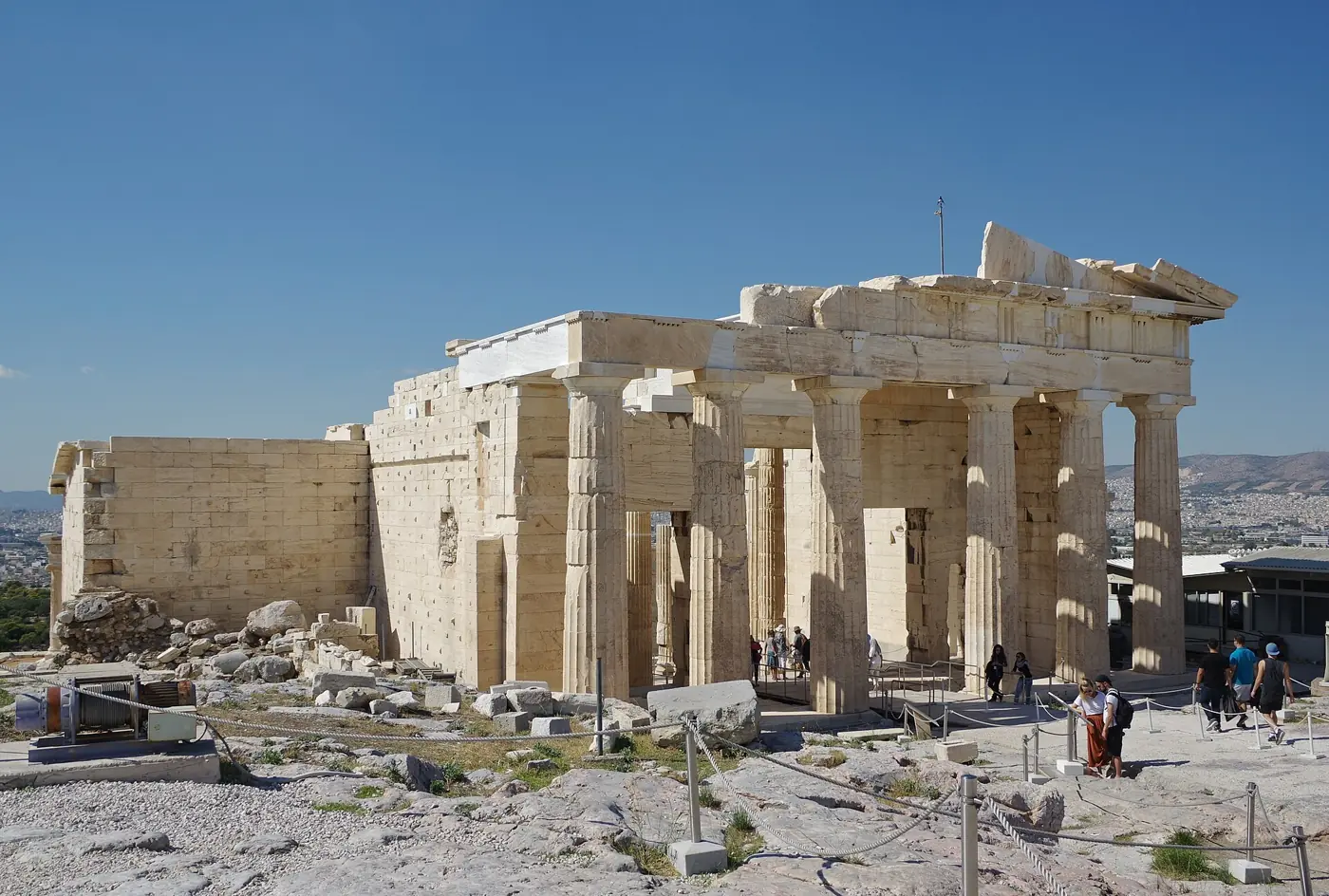
Photo: Berthold Werner, CC BY-SA 3.0
Which Acropolis entrance should you use?
The Acropolis has two main visitor approaches: the south-side entrance by Dionysiou Areopagitou and the main western approach leading towards the Propylaea. The right choice depends on where you are coming from, what your ticket or tour instructions say, and whether you are continuing to the Acropolis Museum.
The practical default is simple: visitors from Koukaki or the Museum usually find the south-side route most natural, while visitors coming from Monastiraki or Thissio often approach from the west. Plaka can work either way, with the south-side pedestrian route usually making the most sense. These are route-planning suggestions, not a promise that one gate will always have a shorter queue.
Your official ticket or tour instructions take priority. Check the named entrance, date, arrival window and meeting point before you leave your hotel. The Acropolis and Acropolis Museum are separate institutions with separate tickets.
Official hours, prices and access — checked 11 October 2026. The Hellenic Heritage Acropolis page names the main entrance at the junction of Dionysiou Areopagitou and Thrasyllou streets (South Slope) and a separate accessible entrance-exit on the North Slope. It lists adult admission at €30 and reduced at €15, last admission 20 minutes before closing, and these opening hours: 1 April–31 August 08:00–20:00; 1–15 September 08:00–19:30; 16–30 September 08:00–19:00; 1–15 October 08:00–18:30; 16–31 October 08:00–18:00; 1 November–31 March 08:00–17:00. Free admission is listed for 6 March, 18 April, 18 May, the last weekend of September, 28 October, and the first and third Sunday of each month from 1 November to 31 March. The site is closed on 1 January, 25 March, 1 May, Orthodox Easter Sunday and 25–26 December. That page does not describe timed entry or arrival windows, so rely on the slot printed on your own ticket.
Earlier access check — 30 August 2026: Hellenic Heritage currently lists the mobility elevator on the north side and describes the wheelchair-accessible South Slope route via the main entrance at the junction of Dionysiou Areopagitou and Thrasyllou streets. The Ministry's North Slope visitor information currently says that the North Slope site is open 08:30–15:30 but that the entrance on Theoria Street remains closed. Treat this as a dated operational check: confirm the official notice, ticket instructions and lift status again before travelling.
The two main approaches at a glance
| Approach | Usually suits | What the route feels like | Keep in mind |
|---|---|---|---|
| South-side entrance by Dionysiou Areopagitou | Koukaki, the Acropolis Museum, the pedestrian archaeological promenade, and many Plaka walks | A scenic uphill approach near the Theatre of Dionysus and the Odeon of Herodes Atticus | It is not guaranteed to be the fastest or the entrance printed on your ticket |
| Main western approach by the Propylaea | Monastiraki, Thissio, and tours that meet on the western side | The classic processional climb towards the monumental gateway | Allow time for the uphill walk, crowds and security |
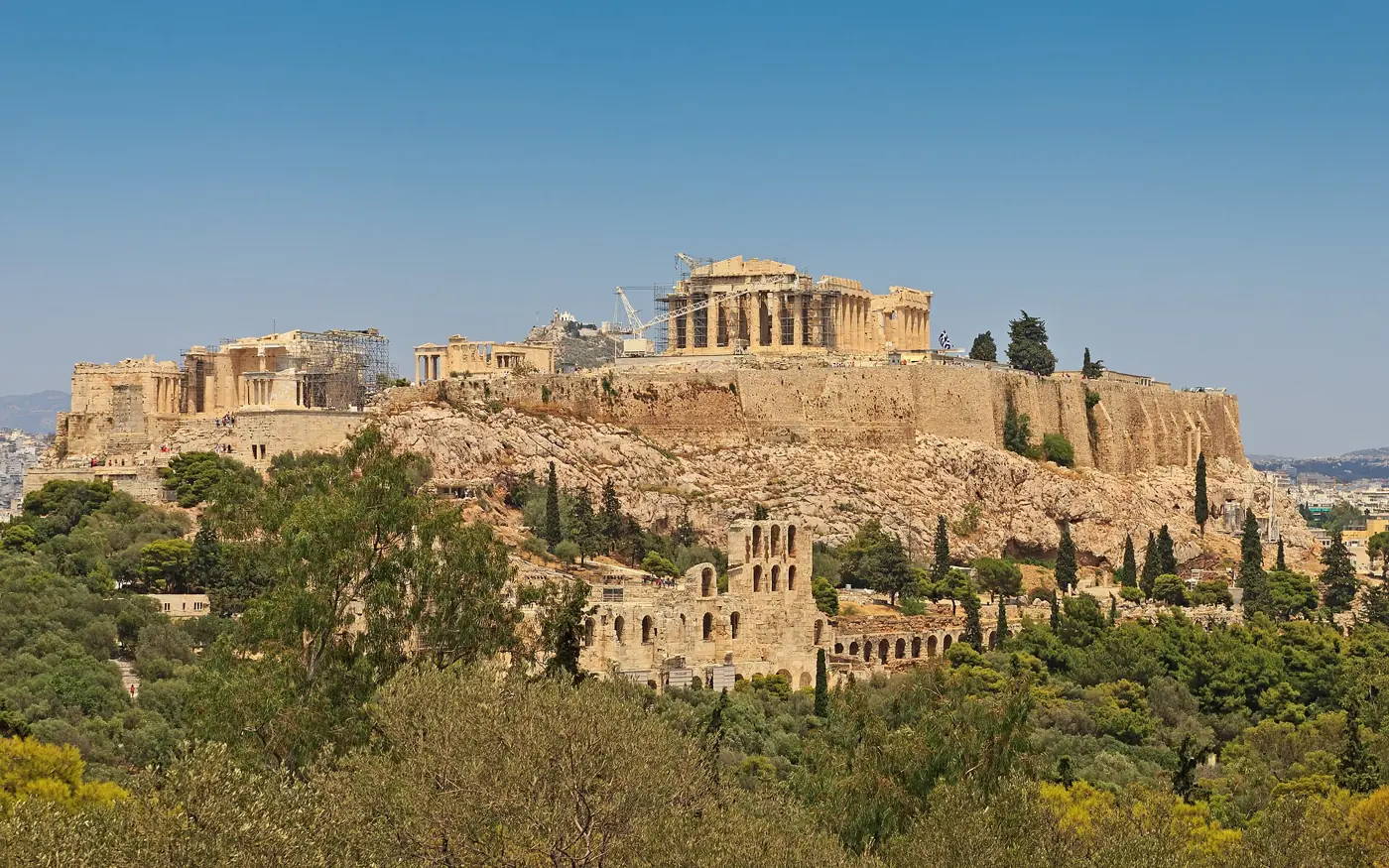
The word “entrance” can be confusing because the approach begins at street level but the archaeological site continues uphill. A taxi can bring you near the lower streets; it cannot take you onto the Acropolis plateau.
From Plaka
From Plaka, the south-side pedestrian route is often the most intuitive way to reach the Acropolis. Walk towards Dionysiou Areopagitou and follow the signs for the entrance shown on your ticket. The walk passes the archaeological landscape around the south slope and keeps the Acropolis Museum close if you are combining the two visits.
Plaka streets are easy to underestimate on a map. Marble paving, steps, uneven surfaces, summer heat and slow-moving groups all add time. Leave your accommodation earlier than the distance alone suggests, and do not book a timed window that depends on arriving at the last possible minute.
If your ticket or tour meeting point directs you to the western approach, follow it rather than changing gates because the south side looks closer. The printed instructions are more important than a generic neighborhood rule.
From Monastiraki
From Monastiraki, the western approach is often the natural direction, especially if you are walking through the old centre towards Thissio and the classic route up to the Propylaea. Use the Psirri and Monastiraki guide if you want to build food or market time into the walk.
The route from the square is not only the time shown by a map app. Allow for crowds, crossings, photographs, a possible stop for water and the uphill approach. The Monastiraki Metro station is useful for arriving in the area, but it does not put you at the Acropolis gate.
If your next stop is the Museum, a south-side exit and downhill walk may be more convenient. That is a reason to plan the whole day, not a reason to ignore the entrance printed on an official ticket or tour confirmation.
From Koukaki
From Koukaki, the south-side route by Dionysiou Areopagitou is usually the clearest starting point. It connects naturally with the pedestrian archaeological promenade and is practical for an early Acropolis visit before returning to the neighborhood for breakfast or a break.
Koukaki is close, but “close” does not mean level or queue-free. Check the walking surface, sun exposure and the pace of your group. Families and visitors with mobility concerns should build in more time than a short map distance suggests.
The where-to-stay guide compares Koukaki with Plaka, Monastiraki and Syntagma if you are choosing a base around your Acropolis plans.
From the Acropolis Museum
The Museum sits beside the south-side pedestrian route, so it is the obvious companion for visitors planning the Acropolis and Acropolis Museum in one day. The two attractions still require separate tickets, separate calendars and enough time to move between them.
If you visit the Museum first, leave a genuine buffer before your Acropolis entry window. Museum queues, security, toilets, a café stop and the walk to the gate can all take longer than expected. If you visit the Acropolis first, the downhill route to the Museum is often a comfortable continuation, but check the exit and the Museum's last-entry time for your date.
Do not assume that being outside the Museum means you can use any Acropolis gate. Follow the official ticket or tour instructions.
Queues, tickets and tour meeting points
Tickets are sold for a chosen date and, on the official ticket platform, a time slot. A route that looks shorter does not override the date and arrival window printed on your ticket. As a planning habit rather than an official rule, aim to be near the correct entrance well before the start of your slot.
Queue length changes with the hour, weather, school groups, tour departures, staffing and security. No responsible guide can promise that the south-side entrance is always quieter or that the western approach always moves faster.
Before leaving, check:
- the entrance named on your official ticket or tour confirmation;
- the selected date and arrival window shown on your ticket;
- whether the tour meeting point is outside the archaeological site;
- whether admission is included in a guided product;
- the route from your accommodation or previous attraction;
- current closure, strike, heat and access notices on the official channels.
For ticket categories, opening hours and the wider site route, use the main Athens Acropolis guide. If you are considering a later slot, compare the Acropolis afternoon guide before booking.
How to avoid the crowds at each entrance
Timing matters more than which gate you pick, but the two approaches do get busy in different patterns. For the fuller morning-versus-afternoon comparison, see the Acropolis afternoon timing guide; this is the entrance-specific version of that advice.
The western approach by the Propylaea is the classic processional route, and it is what most guided tours and tour-bus groups default to. Expect it to feel busiest from roughly mid-morning once the first big tour groups arrive, easing off again in the final hour or two before closing.
The south-side entrance by Dionysiou Areopagitou picks up its own surge once the Acropolis Museum opens, as visitors doing the site-then-museum route (or the reverse) funnel through it. A first-thing arrival, before the Museum's own queues start feeding the same street, is the quietest version of this route.
Both approaches are calmest at opening. If your ticket allows it, treat the first entry slot of the day as the real crowd-avoidance strategy — the gate you choose matters far less than how early you use it.
Accessibility, children and slower groups
Neither main approach should be treated as a guarantee that every part of the Acropolis is level, smooth or easy to navigate. The site includes uphill sections, polished and uneven surfaces, exposure, crowds and narrow areas. The current official information describes the north-side lift and a limited accessible route on the South Slope, but both the lift and route conditions can change. Confirm them before booking.
The south-side route may be the logical starting point from the Museum or Koukaki, but it is not automatically the best route for every wheelchair, stroller or mobility aid, and the closed Theoria Street entrance should not be treated as an available alternative. A western meeting point may be required by a tour. Check the exact instructions, bring only what your group can manage, and allow extra time without booking a tight connection afterwards.
With children, make the entrance part of the plan rather than treating it as dead time. Carry water, use facilities before the climb, and choose a route that leaves enough energy for the summit rather than simply the route that looks shortest.
Nearby landmarks to pair with each approach
- South side: the Theatre of Dionysus, the Odeon of Herodes Atticus, Dionysiou Areopagitou and the Acropolis Museum.
- West side: Thissio, the Ancient Agora and the Apostolou Pavlou pedestrian route.
- Plaka: Anafiotika, the Roman Forum and the lanes around the Acropolis's eastern and northern slopes.
- Monastiraki: the flea market, Hadrian's Library, food stops and the route towards Thissio.
Keep the nearby landmarks flexible. A timed Acropolis entry window is the fixed point; the walk, coffee or museum block should absorb delays rather than the other way around.
FAQs
What is the best entrance to the Acropolis?
There is no single best entrance for every visitor. The south-side entrance by Dionysiou Areopagitou is often the natural approach from Koukaki, the Museum and much of Plaka. The western approach is often practical from Monastiraki and Thissio. Your ticket or tour instructions always take priority.
Is the south entrance less crowded?
It can feel less stressful on some visits, but queue conditions change. Do not book a ticket or tour on a promise that one entrance is always faster or skip-the-line.
When is the Acropolis least crowded?
At opening, at either entrance. The western approach fills up from tour-bus groups from roughly mid-morning; the south-side entrance picks up its own surge once the Acropolis Museum opens nearby. The first entry slot of the day beats any choice of gate.
Which entrance is closest to the Acropolis Museum?
The south-side approach by Dionysiou Areopagitou is the natural connection, but the Museum and Acropolis have separate tickets and the official instructions for your Acropolis entry still control.
How do I get to the Acropolis from Monastiraki?
Walk towards the western side of the Acropolis, usually through the old centre and in the direction of Thissio, then follow the route and entrance printed on your ticket. Allow time for crowds and the uphill approach.
Can I choose a different entrance from the one on my ticket?
Do not assume you can. Follow the gate and meeting-point instructions for your ticket or tour, and ask the official staff if conditions change on the day.
Is the Acropolis entrance accessible?
Accessible routes and facilities may be available, but the lift, route and site conditions can change. Confirm the current information with the official site before booking and remember that an accessible route does not make every ancient surface easy to navigate.
How early should I arrive?
Be near the correct entrance well before the start of your ticket's arrival window; a 30-minute margin is our planning suggestion, not an official figure. Add more time if you are walking from Monastiraki, travelling with children or older visitors, carrying luggage, or connecting from the Museum.
Continue planning
Start with the main Athens Acropolis guide for tickets, hours and what to see. Use the Acropolis and Acropolis Museum one-day guide for the full route, or the 2-day Athens itinerary and 3-day Athens itinerary to place the visit in a larger trip. Compare where to stay in Athens and the neighborhood guide before choosing your walking base.
Follow along
More Athens, beyond the page
Daily places, views and ideas for your next visit.