
Athens Ancient Theatres: Koilon, Odeon & the City's Living Stage
Athens invented theatre. It still performs in the original venues — the Odeon of Herodes Atticus and the Koilon on the Acropolis south slope are both active in 2026. Here's how to attend.
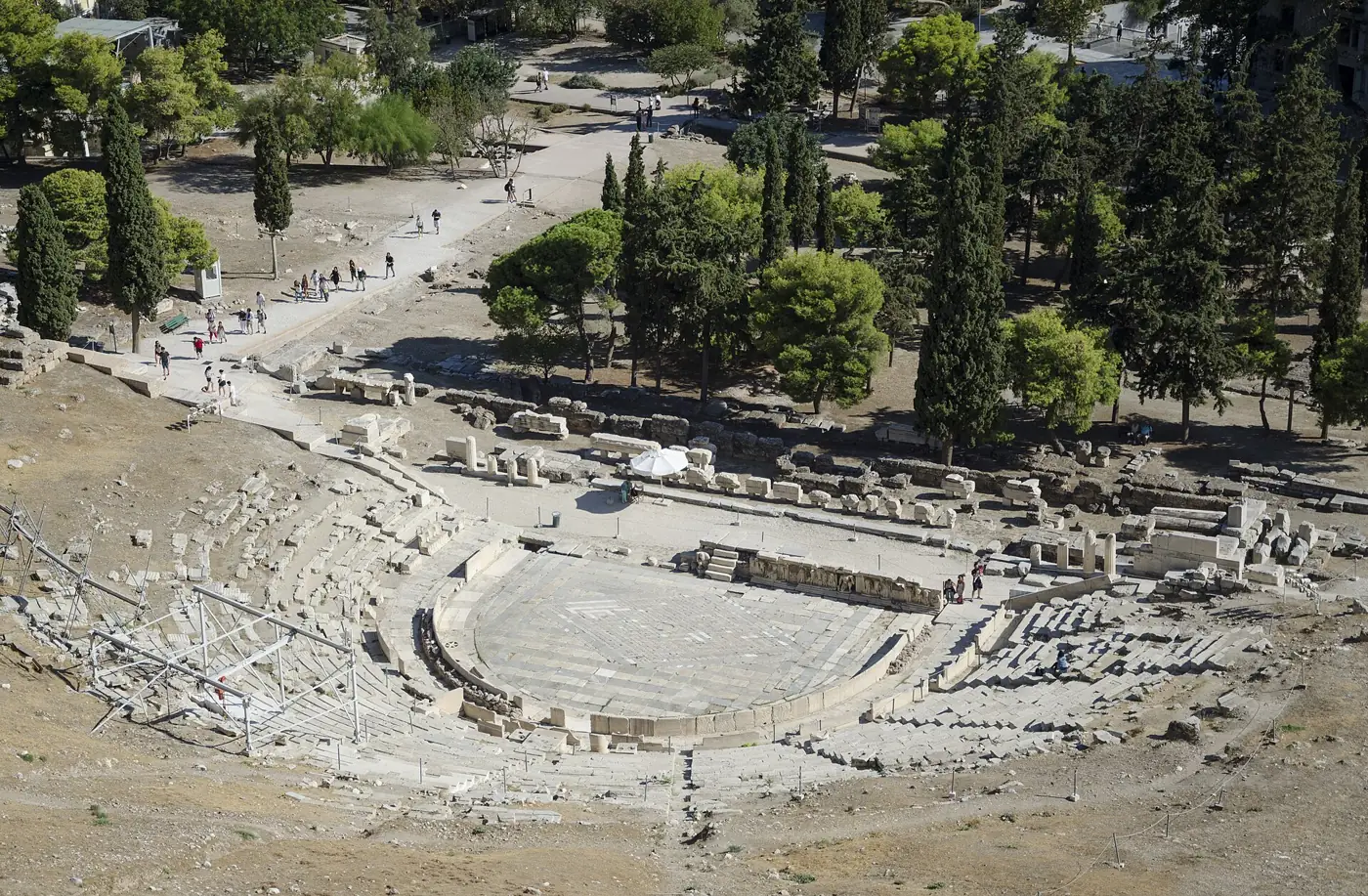
Photo: Petter Ulleland, CC BY-SA 4.0
Athens Ancient Theatres: Koilon, Odeon & the City's Living Stage
Theatre was not invented in Athens. The Greeks would not have said so — they would have said Dionysos gave it to them, which is a different claim. What happened in Athens in the 5th century BC was a formalisation: the development of tragedy, comedy, and satyr plays as a civic institution performed at festivals attended by the entire polis. The two theatres on the south slope of the Acropolis are where this happened. Both still hold performances.
The Odeon of Herodes Atticus
Built in 161 AD by the Roman consul Herodes Atticus in memory of his wife, the Odeon seats 5,000 people on marble and restored Roman brick. It was buried under debris for centuries and excavated in the 1950s. The Athens and Epidaurus Festival has used it as its main Athens venue since 1955.
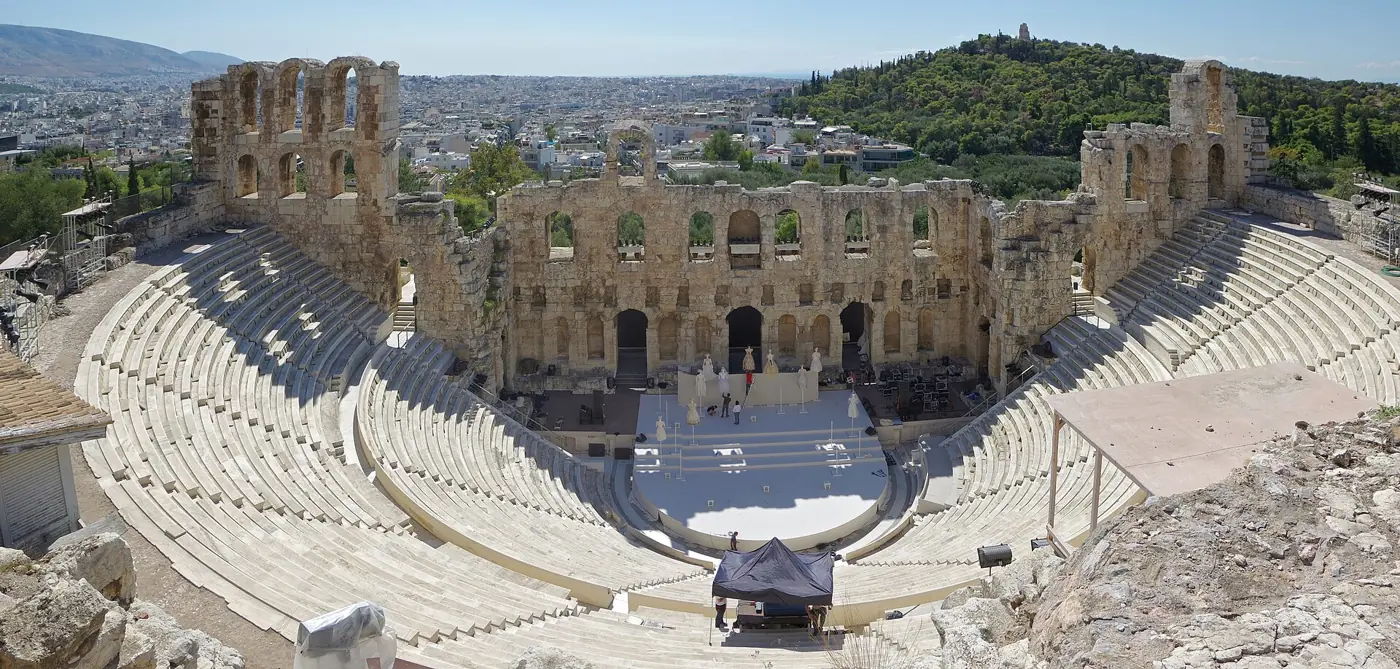
The programme runs June through September and covers classical drama, opera, ballet, orchestral concerts, and international theatre companies. The stage has hosted Maria Callas, Nana Mouskouri, Elton John, Pavarotti, and the Bolshoi Ballet — the mixture of ancient stone and contemporary performance is the point.
Tickets sell out for headline acts weeks in advance. The festival website (greekfestival.gr) opens booking in March. Attend anything: the setting transforms even middling productions. Bring a cushion — the marble seats are uncompromising.
Getting there: Walk up Dionysiou Areopagitou Street from Akropoli metro station. The entrance is on the south side of the Acropolis; performances start at 9pm. The rock is illuminated; the Parthenon is visible from the upper seats.
The Koilon
The Koilon (also called the Theatre of Dionysos Eleuthereus) is 600 years older than the Odeon and a different kind of experience. Cut into the natural rock of the Acropolis south slope in the 4th century BC, it seated up to 17,000 Athenians during the Dionysia festival — the annual event at which Aeschylus, Sophocles, and Euripides competed.
The marble proedria seats in the front row still carry the names of the priests and officials who occupied them. The seat of the Priest of Dionysos, in the centre, is the most elaborate — carved with lions, satyrs, and bulls.
Today the Koilon operates at intimate scale. The theatrical shows offered through Tiqets use the space for performances designed specifically for the venue — smaller audiences, closer proximity to the stage, and the accumulated weight of the site. At €25 per person with 4.7★ ratings from 88 reviewers, it's one of the better-value evening experiences in Athens.
Practical note: The Koilon is inside the archaeological site of the Theatre of Dionysos, which has its own entry ticket (included in the general Acropolis multi-site ticket).
What Athens Invented
The theatrical vocabulary that still operates globally came out of 5th-century Athens:
Tragedy — Aeschylus established the form; Sophocles refined it (Oedipus Rex, Antigone); Euripides complicated it. All three competed at the Dionysia festival, whose site is the Koilon.
Comedy — Aristophanes wrote political satire with dance, song, and costume at the same festival. The Clouds attacked Socrates. Lysistrata proposed a sex strike to end the Peloponnesian War.
The chorus — a group of performers who comment on, narrate, and respond to the action. Modern film scores, narrators, and Greek tragedy revivals all carry traces of this.
The masks — large, exaggerated, with megaphone-like mouths to project sound. The Tragic and Comic masks that still appear on theatre programmes globally are from this tradition.
Attending a Performance: Practical Notes
The Odeon — Buy tickets early, especially for the festival headline acts. Dress codes are relaxed but bring a layer — marble holds cold after dark. Food and drink are not sold inside; have dinner beforehand on Dionysiou Areopagitou Street.
The Koilon — Book through Tiqets with your partner-linked URL. Arrive early to explore the archaeological site in the last of the daylight before the performance begins.
Other venues — Athens has a dense network of small theatres in Exarcheia, Psirri, and Kolonaki. The National Theatre of Greece (Ethniki Skini) runs year-round in a neoclassical building near Omonia. The Megaron Athens Concert Hall (northeast of the centre) handles classical music, opera, and large-scale productions outside festival season.
The Acoustics
The Odeon is frequently cited as one of the finest acoustic spaces in the world for an outdoor venue. Clap once from the upper tiers: the sound returns cleanly. The original designers understood something about the geometry of sound that took modern acoustic engineers centuries to formalise. Whatever you attend, pay attention to the sound as much as the performance.
Follow along
More Athens, beyond the page
Daily places, views and ideas for your next visit.
Plan your visit
Choose the right way in
Some of these are affiliate links, so Todo Athens may earn a commission if you book. They are independent booking options: check what each price includes, especially admission, meeting point, group size and cancellation terms.
Book This Experience
Vetted options across every price point and travel style.
Koilon Theatrical Show
A theatrical performance inside the Koilon, the small ancient theatre carved into the Acropolis south slope. Intimate scale, original stone seats, extraordinary setting.
Athens & Epidaurus Festival — Odeon of Herodes Atticus
Concerts, opera, and classical drama at the 2nd-century Odeon — one of the most atmospheric performance venues in the world.
Acropolis Evening Tour with Theatre Context
The Acropolis south slope at dusk — visit the theatre sites in the cooler evening hours with a licensed guide.