
Athens in Spring 2027: The March, April & May Guide
Orthodox Easter, wildflower-covered cliffs at Cape Sounion, outdoor dining back in full swing, and uncrowded ancient sites in perfect weather. The complete March to May Athens guide.
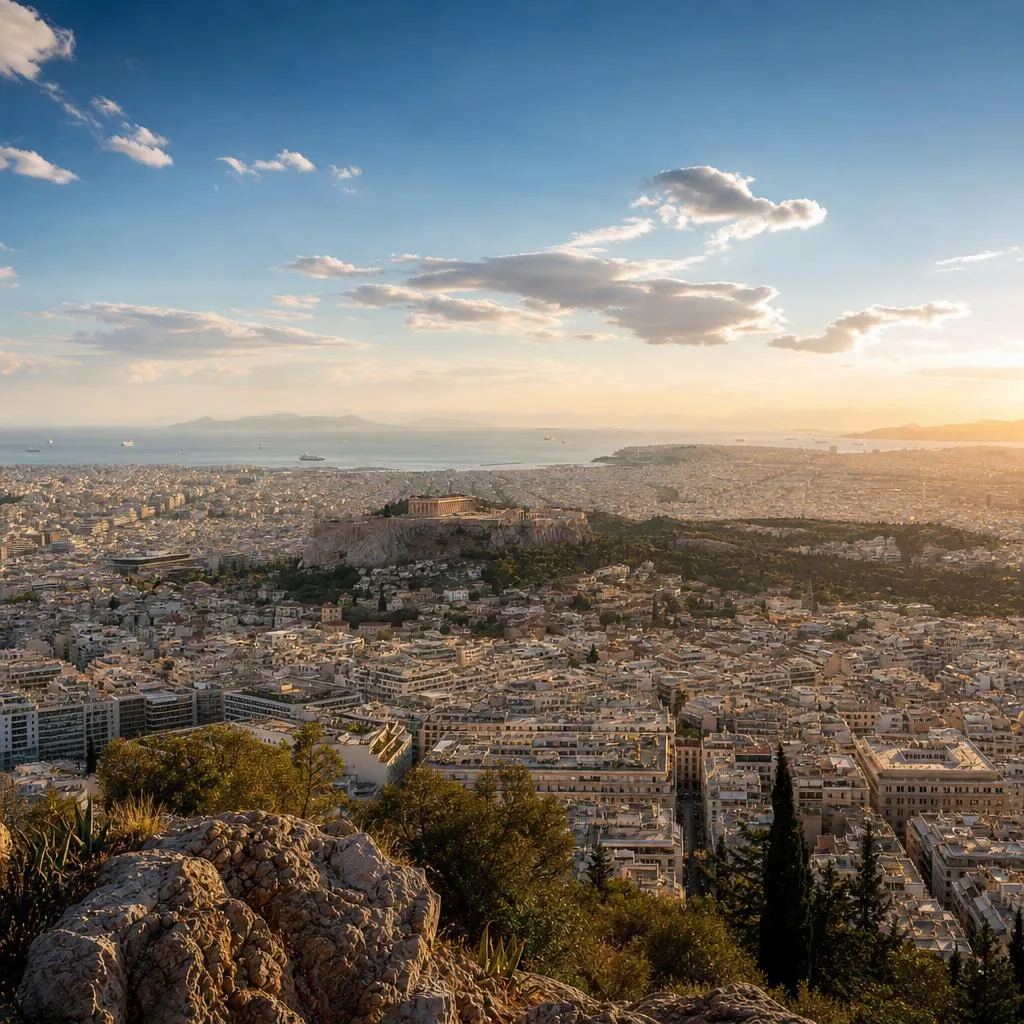
Why Spring Is Athens at Its Most Alive
Athens in summer is hot, crowded, and indisputably beautiful. Athens in spring is all of that beauty without the pressure — temperatures that let you walk for four hours without stopping, crowd levels at the ancient sites that let you actually look at things, and a city in the middle of its most important cultural season of the year.
March begins the transition. The winter rains start to ease, daylight stretches visibly from week to week, and the café terraces — which never fully closed, because this is Athens — fill back up with a different kind of energy: less the huddled-under-heaters determination of January, more the genuine pleasure of being outside again. By late March, the coastal road to Vouliagmeni has people cycling it on weekends. The mountains visible from the Acropolis, Hymettus and Penteli, still hold patches of green that will burn off by June.
April is when Athens earns its reputation. The temperatures are what summer tourists think they're booking — consistently warm without being brutal, usually in the mid-to-high twenties by midday — and the ancient sites are still running at manageable crowd levels. The Parthenon at 9am on a Wednesday in April is a fundamentally different experience from the same site at 11am on a Saturday in August. You can stand still. You can look. The city feels available to you.
May closes the spring with something close to perfection: warm enough for the beaches, not yet oppressive, the outdoor dining season in full swing, and the weeks before the main summer wave arrives. If you can go in May and you haven't before, go.
What the Weather Actually Looks Like
Spring in Athens moves faster than in most European cities. March is still genuinely mild — light layers, occasional showers — and by May the temperature is occasionally touching 30°C. The rain drops off sharply after April: March and April are the last months with meaningful rainfall before the dry Mediterranean summer sets in.
| Month | Avg High | Avg Low | Rain Days | Sea Temp | Crowds |
|---|---|---|---|---|---|
| March | 16°C | 9°C | 9 | 15°C | Low |
| April | 21°C | 13°C | 8 | 17°C | Moderate → rising |
| May | 26°C | 18°C | 5 | 19°C | Moderate |
The sea temperature is honest: March and April are for looking at rather than swimming in. By late May, the more determined swimmers are in; most people wait for June. The beach at Vouliagmeni is worth the 25-minute trip from the centre even in April, if only for the drive along the coastal road and a lunch at one of the tavernas facing the water.
Orthodox Easter: The Most Important Week of the Year
If there is one thing to understand about visiting Athens in spring, it is this: Orthodox Easter is not a long weekend. It is the most significant event in the Greek calendar — more important culturally, socially, and emotionally than Christmas — and it changes the city in ways that are hard to fully prepare for unless someone tells you.
The timing shifts every year. Greek Easter follows the Julian calendar and can fall anywhere between late March and early May, occasionally on the same date as Western Easter but more often one, four, or five weeks later. Before you book, check the specific date for your travel year — it affects everything from restaurant bookings to museum hours to whether the buses run on Saturday.
The full week builds toward Holy Saturday midnight, when the lights go out in every church simultaneously and the Holy Light — flown in from Jerusalem that same day — passes candle to candle until the whole street outside is carrying fire. For the day-by-day breakdown, where to watch the midnight service, and what to eat on Easter Sunday, see the full Orthodox Easter in Athens guide.
A practical note on Easter logistics: Athens during Holy Week is busy with domestic Greek tourism. Hotels fill earlier than at any other point in spring, and restaurants — particularly on Easter Saturday night and Easter Sunday — require advance booking. Some restaurants close for the family day on Easter Sunday; others open specifically for it. Check before you arrive.
The Wildflowers at Cape Sounion
The Temple of Poseidon at Cape Sounion is one of the defining images of Greece: a cliff edge above the Aegean, marble columns against blue sky, Byron's name scratched into a pillar in 1810. It is worth visiting in any season. But visiting it in April or May is worth it specifically, and differently.
The coastal road south from Athens runs 70 kilometres along the Attic Riviera — past the beaches of Glyfada and Vouliagmeni, through the pine forests of Sounio, and out onto the headland itself. In spring, the roadside verges and the scrub below the temple walls are covered in wildflowers: red poppies in drifts, the pale yellow of fennel coming into flower, asphodels on the rocky outcrops, and the blue-purple of wild thyme starting its season. The cliff below the temple drops straight to the Aegean, and in April the water is a green-blue that summer's haze hasn't yet washed to flat blue.
The temple itself is open by 9:30am. Getting there before the day-trip coaches from central Athens arrive — ideally by 10am on a weekday — means you'll have the site with a fraction of its later crowd. The light in morning is also better for the marble: the columns are still carrying the cool colour of overnight air rather than the bleached-out look they acquire by early afternoon.
The village of Sounio below the cape has a handful of tavernas serving fresh fish. Lunch at one of the waterfront tables after the temple, with the headland visible behind you, is about as good a midday as Athens day-tripping gets.
Spring Food: The Vegetable Season
Greek cuisine has a winter mode and a spring mode, and the transition happens visibly in the markets from late February. Walk through the Varvakios central market in April and the message is immediate: bundles of wild asparagus, the first broad beans still in their pods, artichokes stacked in improbable quantities, mountains of spanakopita-ready spinach and wild greens, fresh peas that haven't been in a freezer, and the spring lamb that is the Easter season's defining protein.
The dish most associated with spring in Athens is spanakopita — spinach and feta in pastry — but specifically the homemade kind, layers of hand-rolled pastry rather than the commercial version available year-round. Bakeries and pie shops (pita joints) in every neighbourhood have their spring versions, heavier with wild greens, sometimes incorporating wild garlic or sorrel. The Central Market has dedicated pie vendors who've been making theirs the same way for decades.
Artichokes are everywhere in April: braised with lemon and dill, served cold as a starter, cooked with broad beans in olive oil as a main, trimmed and eaten raw with a glass of white wine at a bar table in Kolonaki. The Greek approach to artichokes — generous with the olive oil, generous with the lemon — is the right approach, and spring is the window to have it done properly.
The lamb question is unavoidable in the week around Easter. Even if you aren't attending a private Easter lunch (though an invitation, if it comes, should not be declined), the tavernas in the days around Easter Sunday run lamb-heavy menus: slow-roasted shoulder, rib chops on the grill, kleftiko baked in sealed parcels until the meat falls apart. The kakavia fish soup — the original bouillabaisse, made in fishing villages along the Attic coast for centuries — starts appearing on menus in April as the fishing season picks up.
The rooftop restaurants and garden tavernas, which were cautiously open through winter, come properly back to life in April. Strofi on Rovertou Galli, looking directly at the Acropolis, starts filling again; the terraces in Pangrati and Mets take reservations with intent rather than optimism. By May, the outdoor dining season is operating at full summer intensity.
The Acropolis and Ancient Sites in Spring
The crowd data for Athens archaeological sites is unambiguous: April is dramatically more manageable than June, and May more manageable than July. The gap is not marginal — it is the difference between a queue of twenty minutes at the Acropolis main gate and a queue of ninety minutes, between a site you can walk through contemplatively and one you navigate around other people.
The practical result is that spring is actually the best time to visit the Acropolis for most people. The temperatures are comfortable enough to spend two hours on the hill without suffering. The light in April has the same quality as in autumn — warm without being flat — and the hillside below the temple walls has patches of spring colour that don't survive summer. The view south from the Parthenon on a clear April morning, across the Saronic Gulf to the islands, is the view that photographs never quite capture.
The Ancient Agora below the Acropolis is less visited than the main site and deserves more time. The Stoa of Attalos — fully reconstructed and now housing the Agora Museum — is one of the more quietly moving buildings in Athens: a two-storey colonnaded walkway where Socrates walked and argued, now displaying the objects found in the excavations. In spring, the gardens around the Agora fill with wildflowers between the ancient footings.
April also brings the Athens Epidaurus Festival's opening programme — the ancient theatre at Epidaurus (two hours from Athens) hosts Greek drama performances from late May, and the Athens portion of the festival begins at the Odeon of Herodes Atticus on the Acropolis slope. Checking the programme before you travel is worthwhile; tickets for the Herodes Atticus sell early for anything with international appeal.
Practical Tips for Spring in Athens
- Check the Easter date for your travel year: Orthodox Easter falls on a different date every year, ranging from late March to early May. The week around it is the most logistically complex time to visit Athens — busy, emotionally charged, and logistically unusual — but also one of the most rewarding. Plan ahead.
- Book Easter weekend accommodation months in advance: Athens hotels around Holy Week fill faster than at any other point in the year except August. Even mid-range accommodation gets tight. Don't leave this to the last moment.
- Holy Saturday midnight is worth staying up for: Even if you've been walking all day. The midnight Anastasi service and the candle procession into the street is one of those experiences that doesn't translate well into description — see the Orthodox Easter in Athens guide for where to watch it.
- Cape Sounion: go on a weekday, go early: The site gets coach tours from mid-morning. A Tuesday or Wednesday at 10am in April is a different visit from a Sunday at noon. The 1-hour drive each way on the coastal road is half the point.
- Wild greens and artichokes have a short season: The window for the best horta, artichokes, and fresh broad beans runs roughly March through May. Order them every time they're on a menu; they won't be there in July.
- The Athens Epidaurus Festival opens in late May: The summer cultural season starts earlier than most visitors expect. The Herodes Atticus Odeon on the Acropolis slope hosts performances from June, but the festival programme is released in March and tickets for popular shows go in days. Check the schedule if you're visiting in May.
- Jacket for March evenings, a layer for April, nothing for May: The temperature range across spring is significant. March evenings drop to 9–10°C and want a proper jacket. April evenings are comfortable in a light layer. By May, evening meals outside require nothing.
- The Sunday flea market at Monastiraki: Running every Sunday on Avyssinias Square, it is at its most pleasant in the spring months — comfortable to browse, the vendors in good temper, the surrounding streets not yet at summer capacity.
Follow along
More Athens, beyond the page
Daily places, views and ideas for your next visit.
Plan your visit
Choose the right way in
Some of these are affiliate links, so Todo Athens may earn a commission if you book. They are independent booking options: check what each price includes, especially admission, meeting point, group size and cancellation terms.
Book This Experience
Vetted options across every price point and travel style.
Cape Sounion Half-Day Small Group Tour
April and May are the months the coastal cliffs turn green and dotted with wild poppies and asphodels. The Temple of Poseidon above the Aegean at spring's peak is something you remember for a long time.
Acropolis Skip-the-Line Tickets and Guided Tour
The Acropolis in April — clear skies, comfortable temperatures, and crowd numbers that haven't yet hit their summer ceiling. The best conditions for the site that most people wait until August to visit.
Athens Street Food Tour — Monastiraki & Central Market
Spring's Varvakios market is the best version of it — artichokes, wild greens, fresh broad beans, new-season lamb. A food tour in April lets you taste the transition from winter's slow cooking to spring's lighter, vegetable-forward plates.
Delphi Day Trip from Athens — Archaeological Site & Museum
The road to Delphi in April runs through hillsides covered in almond blossom and wild flowers. The oracle's mountain site is at its most dramatic before the summer heat removes the colour from the landscape.