
Athens in Winter 2026–27: The December, January & February Guide
Athens in winter means empty sites, cheap hotels, serious food, and a city that finally has room for you. The complete December to February guide.
The Case for Athens in Winter
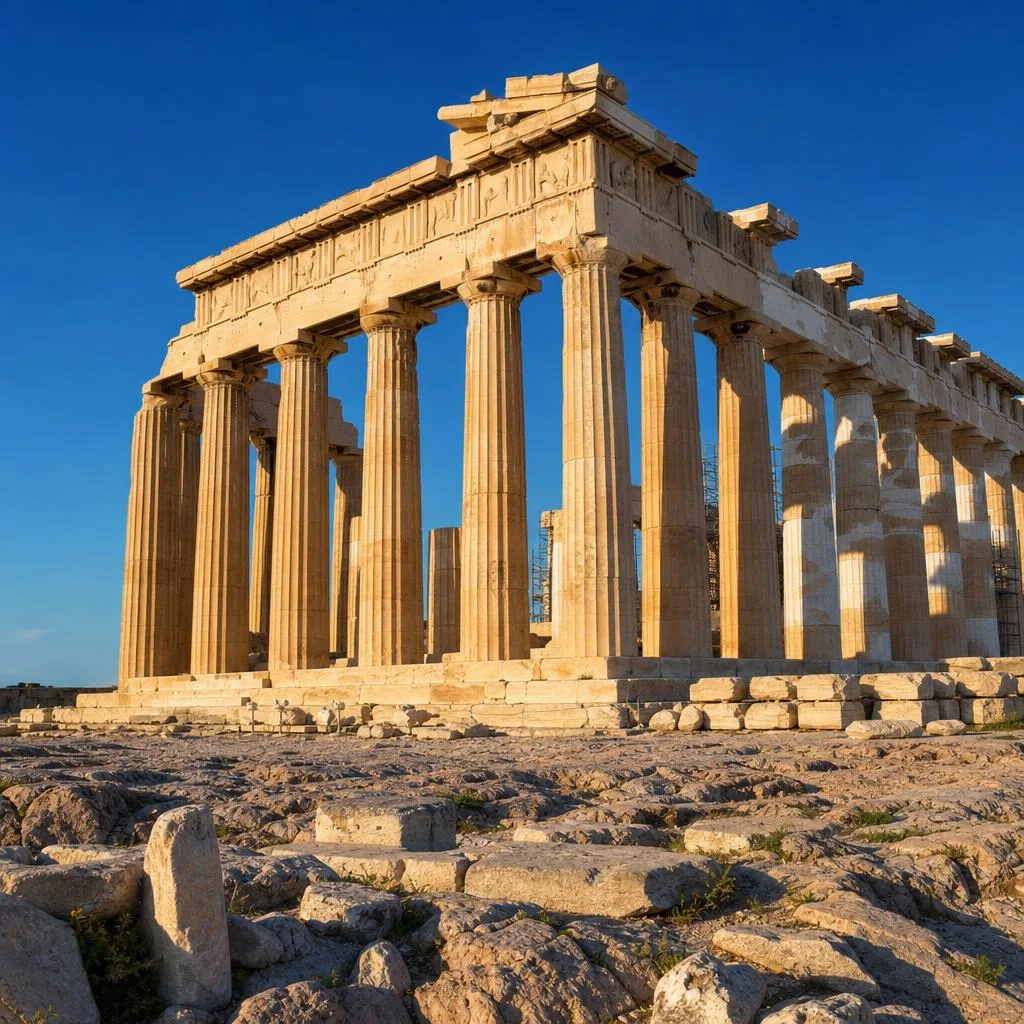
The Acropolis in January receives roughly 2,000 visitors a day. In August, that number is closer to 20,000. You can do the arithmetic, but the experience of standing in front of the Parthenon without having to navigate around a guided tour group every thirty seconds is something that statistics don't quite capture. In winter, the site is yours.
Athens in winter is the city at its most legible. The tourist infrastructure — the English menus with photographs, the souvenir shops blocking the pavement, the hotel pricing that treats the summer season as a separate economy — recedes considerably. The restaurants in Psyrri and Kerameikos and Koukaki run on local custom rather than foot traffic, which means the cooking is better and the welcome is more genuine. A table for two on a Tuesday evening in January requires no reservation and no particular effort.
The prices are the other argument. Flights and hotels in January and February run at 40 to 60 percent below summer rates. A mid-range hotel in central Athens that costs €180 a night in August might cost €80 in January. The flight from London, Paris, or Frankfurt that costs €250 return in July often goes for €90 return in January. Athens in winter is genuinely affordable in a way that the summer brochures never suggest.
December adds its own reasons. The Christmas lights go up along Ermou — the pedestrian shopping street running from Syntagma towards Monastiraki — in late November, and Syntagma Square gets its enormous Christmas tree, always controversially designed, always worth seeing. The festive atmosphere is understated by northern European standards, which makes it more pleasant rather than less.
What the Weather Actually Looks Like
Athens in winter is mild by the standards of any northern European city. Snow is genuinely rare — perhaps once or twice a decade does it settle for more than a few hours. The rain is the main weather feature, but Athens rain rarely sustains itself all day. More typically: an overnight shower, or a sharp afternoon downpour that clears within the hour. Carry a compact umbrella and get on with it.
| Month | Avg High | Avg Low | Rain Days | Daylight | Crowds |
|---|---|---|---|---|---|
| December | 15°C | 9°C | 12 | 9 hours | Very low |
| January | 13°C | 7°C | 11 | 10 hours | Very low |
| February | 14°C | 8°C | 11 | 11 hours | Very low |
The daytime temperatures are frequently warmer than the numbers suggest — Athens gets a lot of clear winter sun, and 13°C in direct sunlight with no wind feels comfortable in a mid-weight jacket. The evenings are a different matter; drop to single figures quickly after dark, so dress in layers.
December: Festive Without the Fuss
Christmas in Athens is a quieter, more domestic affair than in most western European capitals, which is largely a point in its favour. Syntagma Square has its tree, Ermou has its lights, and the shops do the usual December business. There's no sprawling, city-wide market culture on the Vienna or Munich scale, no mandatory mulled wine, no ambient pressure to perform festivity — you can do Christmas on your own terms.
The one real exception is Technopolis, the former gasworks turned cultural venue in Gazi. Its "Christmas Factory" market runs from late November to early January — stalls, an ice rink, a carousel, and a Ferris wheel over the industrial skyline, with free entry to the grounds. For a different kind of scale, the Stavros Niarchos Foundation Cultural Centre (SNFCC) in Kallithea — Renzo Piano's park and cultural complex, a 30–40 minute tram or bus ride from the centre — lights up its canal every December with a free outdoor ice rink and an annual light-installation festival by invited artists. Both are worth building an evening around if you want more than the Syntagma tree and Ermou lights.
Christmas Eve in Plaka — the oldest neighbourhood below the Acropolis — is atmospheric without being overwhelming. The small churches hold midnight services, the Byzantine-era lanes are strung with lights, the tavernas are open for families doing their own celebrations. It doesn't feel arranged for tourists.
New Year's Eve in Athens is telling: most Athenians celebrate at home or in neighbourhood tavernas with friends and family, rather than at centralised public events. This means the streets around midnight are lively but not frantic, and a reservation at a good restaurant is possible (though advisable) rather than a months-long project. Vasilopita — the New Year cake with a coin baked into it — is served on 1 January in homes and offices across the city. Finding the coin is considered good luck for the year; it's taken seriously.
On 6 January, Epiphany marks the official end of the Greek Christmas season. The blessing of the waters ceremony happens at ports and waterways across the country — at Piraeus, the Patriarch throws a cross into the harbour water and young men dive to retrieve it. It's free to watch, starts in the morning, and is one of those genuinely local rituals that hasn't been turned into a scheduled tourist event.
Winter Food: When Greek Cooking Gets Serious
Summer food in Athens is excellent but essentially simple: grilled fish, fresh salads, cold meats, the kind of cooking that requires good ingredients and very little effort. Winter is when Greek cooking becomes something more considered. The slow-cooked dishes, the legume soups, the braises that need four hours on the stove — these are winter food, and the best versions appear in the season when they make most sense.
Fasolada is the national soup: white beans cooked slowly with olive oil, tomatoes, carrots, and celery until the beans are completely tender and the broth has thickened into something substantial. Every Greek family has a version. Every mageireia has a pot of it on a Wednesday. It costs about four euros and it will be the best four euros you spend in Athens.
The mageireia themselves are worth seeking out specifically in winter. These are the ready-cooked tavernas — kitchens that cook a daily menu from early morning so that the food is ready at midday and again at dinner. In summer, the best ones often operate at reduced capacity or shift to grilled tourist menus. In winter they run at full intensity: the braised lamb with orzo, the rabbit stifado (pearl onions, allspice, red wine, time), the slow-cooked giant beans (gigantes) in thick tomato sauce. Look for the places with steamed-up windows and a chalkboard menu.
Christmas sweets circulate from early December: melomakarona, which are soft honey-soaked biscuits filled with crushed walnuts and dusted with cinnamon, and kourabiedes, which are almond shortbreads buried in icing sugar. Every bakery makes them; quality varies enormously. The best ones have been using the same recipe for thirty years. Ask locals where they buy theirs.
February is Apokries — Greece's pre-Lenten carnival season, moving every year with the Orthodox Easter calendar. Monastiraki, Thissio and Metaxourgeio each run their own version of it, building toward Tsiknopempti's city-wide grilling night and the final carnival weekend before Clean Monday. See the full Apokries and Greek Carnival guide for the calendar, where to go, and what to expect.
Museums Without the Queues
The National Archaeological Museum on Patission Street is one of the great museums of the world, and in winter you can take your time in it. The room with the Antikythera Mechanism — the 2,000-year-old mechanical computer recovered from a shipwreck — is often near-empty on winter weekday mornings. The gold funeral masks from Mycenae, the bronze statue of Poseidon mid-throw, the Minoan frescoes from Akrotiri: these are objects that deserve proper attention, and winter gives you space to provide it.
The Acropolis Museum at the foot of the hill is similarly transformed. In summer it's a managed crowd-flow exercise. In January it's a museum. The top floor, with the Parthenon frieze sections and a direct glass-wall view of the Acropolis itself, is particularly affecting in winter morning light.
The Onassis Cultural Centre on Syngrou Avenue runs a serious winter cultural programme — international and Greek theatre, dance, visual art, and music — and the building itself is worth visiting regardless of what's on. Entry to the public spaces is free. In February, the Apokries programming adds carnival-themed events to the schedule; worth checking the website before you arrive.
Practical Tips for Winter in Athens
- January and February are the cheapest months of the year: Flights from most European cities run 40–60% below summer rates. Hotels drop similarly. It's not unusual to find a well-reviewed central hotel at €70–90 per night when the same room goes for €200 in August.
- Outdoor culture continues: Athens outdoor café culture doesn't disappear in winter — most terraces add gas heaters and blankets, and Athenians carry on sitting outside throughout December and January. If you want to sit inside, you usually can; if you want to sit outside with a coffee in January, that is also entirely normal.
- Layers, not a heavy coat: Daytime temperatures in December and January frequently reach 14–15°C in direct sun. A light down jacket or a wool mid-layer plus a waterproof shell handles the range. A heavy winter coat is overdressed.
- Epiphany is a public holiday: 6 January means some shops and offices close. Museums and restaurants stay open; transport runs normally.
- Apokries dates shift each year: The carnival season is tied to the Orthodox Easter calendar, which varies. Check the specific dates for your travel year before booking around the Thirio parade or carnival events — see the Apokries and Greek Carnival guide for the full calendar and what to expect.
- Museum mornings are the right call: Most major museums open at 8 or 9am and are genuinely empty until about 11am on winter weekdays. The Acropolis Museum at 9am on a January Tuesday is a different experience from the same museum at 2pm in July.
Follow along
More Athens, beyond the page
Daily places, views and ideas for your next visit.
Plan your visit
Choose the right way in
Some of these are affiliate links, so Todo Athens may earn a commission if you book. They are independent booking options: check what each price includes, especially admission, meeting point, group size and cancellation terms.
Book This Experience
Vetted options across every price point and travel style.
Acropolis Skip-the-Line Tickets and Guided Tour
In winter you won't need the skip-the-line, but the guide makes it worth it regardless — the mythology lands differently when you're not sweltering.
Athens Food Tour — Monastiraki & Central Market
The Varvakios market in winter is all wild greens, hearty legumes, and preserved fish — the opposite of its summer tourist-souvenir mode. A guide makes sense of it.
Acropolis Guided Tour — Skip the Line
Tiqets' Acropolis guided tour — small groups, skip-the-line access, and a specialist guide for the site and the New Acropolis Museum.
Meteora Day Trip from Athens — Guided Hiking & Monastery Visit
The monasteries of Meteora perched on their rock pillars are dramatic in any season — but in winter, with low cloud and mist in the valleys, the effect is something else entirely.