
Best Day Trips from Athens (2026): Ranked by Worth the Journey
Five day trips from Athens worth taking, ranked honestly. Delphi, Meteora, Cape Sounion, Mycenae, and the Saronic Islands — what each one is actually like, and whether you need a guide.
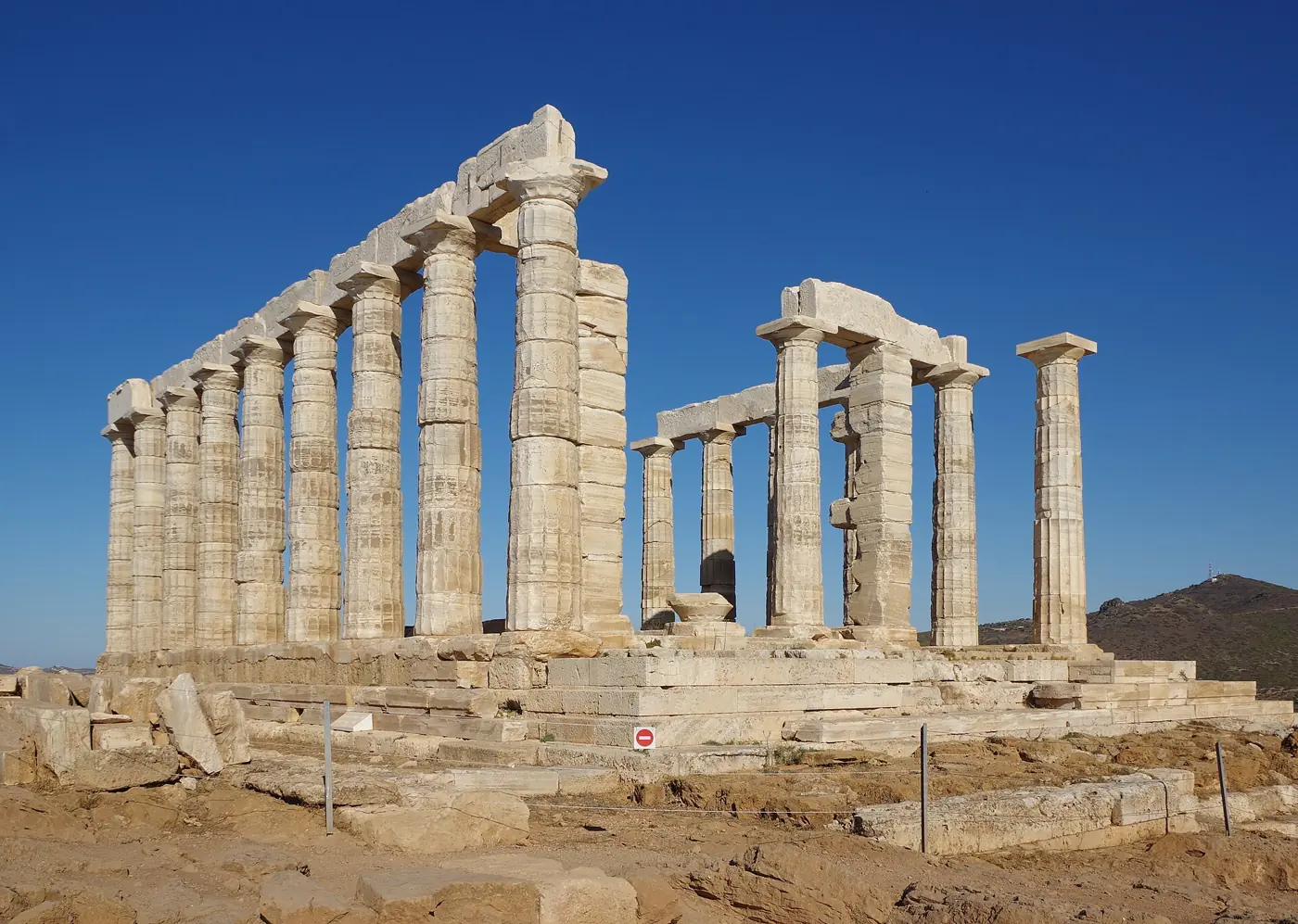
Photo: Berthold Werner, CC BY-SA 3.0
The Honest Ranking
Not all Athens day trips are worth the hours on a coach. Here is a direct ranking, based on what each destination actually delivers versus the time investment required.
| Destination | Distance | Journey | Best for | Ticket prices |
|---|---|---|---|---|
| Cape Sounion | 70km | 1.5h each way | Scenery, sunsets | €29–45 |
| Mycenae & Nafplio | 120km | 2h each way | History, architecture | €65–90 |
| Delphi | 180km | 2.5h each way | Ancient sites, mythology | €65–95 |
| Saronic Islands | Piraeus ferry | 1h by sea | Swimming, island feel | €69–90 |
| Meteora | 355km | 4.5h each way | Landscapes, monasteries | €79–120 |
1. Cape Sounion — The Closest One Worth Taking
Cape Sounion sits 70 kilometres south of Athens at the tip of the Attica peninsula, where the Temple of Poseidon stands on a cliff 60 metres above the Aegean. It is the easiest serious day trip from the city — a 90-minute coastal drive with increasingly good sea views — and consistently delivers the payoff its photographs promise.
Lord Byron carved his name into a column of the temple in 1810. The columns themselves are Doric, 6.1 metres tall, slightly tapered to compensate for optical distortion — the same engineering logic as the Parthenon. Sixteen of the original 34 remain standing.
The route down from Athens follows the coast road through Glyfada, Vouliagmeni, and Varkiza — the Athens Riviera, where the city's beaches are. Coming back in the late afternoon, the sun is behind you and the sea is lit.
Go independently or on a tour? Cape Sounion is one of the few day trips that works well independently. Bus X1 from central Athens runs to Sounion (2 hours, €6.50). A rental car gives you more flexibility to stop along the coast. The guided half-day tour (from $28) adds a knowledgeable commentary and saves the logistics.
Best time: Late afternoon light in summer, any clear morning in spring or autumn. The sunset from the temple is genuinely spectacular.
2. Mycenae & Nafplio — The Underrated One
This is the most overlooked day trip from Athens and arguably the best value. The route takes in three distinct stops: the Bronze Age citadel of Mycenae, the ancient theatre at Epidaurus, and the Venetian harbour town of Nafplio.
Mycenae is where Heinrich Schliemann excavated in 1876 and found the gold burial masks now in the National Archaeological Museum. The citadel sits on a commanding hill above the Argive plain: the Lion Gate (3,200 years old), the Treasury of Atreus (a corbelled stone tomb with a 14-metre-high chamber), the grave circles where the Mask of Agamemnon was found. This is the world of the Iliad, and the site has the physical weight to match the mythology.
Epidaurus has the best-preserved ancient theatre in Greece — a 14,000-seat limestone semicircle where the acoustics are still precise enough that a coin dropped on the stage is audible from the top row. Standing at the top, looking down at the circle, is one of the more arresting experiences available in the country.
Nafplio is the reward at the end: a harbour town of Venetian-era neoclassical buildings, cobbled lanes, and seafront tavernas. Greece's first capital after independence in 1823. An hour here — a walk up to Palamidi Fortress, a coffee on the Syntagma Square (Nafplio's own), an ice cream from one of the shops on the waterfront — is worth the journey on its own.
The guided tour (from $65) fits all three sites into a long day. Recommended over independent travel here because the sites are spread across the Peloponnese and public transport connections between them are poor.
3. Delphi — The One Most Worth Taking
For eight centuries, no Greek leader went to war, founded a colony, or made a major decision without first consulting the Oracle at Delphi. Delphi was the navel of the world — the omphalos stone marking the exact centre of the earth, agreed by all Greeks. Standing in the sanctuary now, on the shoulder of Mount Parnassos above the valley of olive trees running down to the Gulf of Corinth, the site earns the mythology.
The route from Athens takes 2.5 hours through the mountains of central Greece — increasingly dramatic as the road climbs through Boeotia and the landscape turns alpine. The site itself takes 3 hours properly: the Sacred Way, the Temple of Apollo (where the Oracle spoke), the ancient theatre above, the stadium at the top, and then the Delphi Archaeological Museum, which holds the original bronze Charioteer (474 BC) and the Sphinx of the Naxians.
What makes it different from other Greek ancient sites: The physical setting. Delphi is built into a steep hillside with the Phaedriades cliffs above and the Pleistos valley below. The Parthenon is extraordinary; Delphi is dramatic in a way that requires the landscape to work.
Guided tour vs. self-guided: The sanctuary's meaning is considerably harder to read without context — the Oracle's mechanism, the pneuma theory, which city-states dedicated which treasuries and why — making a guided tour more useful here than at most sites. The Headout audio guide version is a good middle ground if you prefer to walk at your own pace.
Overnight option: Delphi village (directly above the site) has good tavernas and simple hotels. Staying overnight means you have the site nearly to yourself at opening and can visit Arachova (a traditional mountain village 8km away) in the afternoon.
4. Saronic Islands — The Easiest Island Day
The Saronic Gulf islands — Aegina, Hydra, Poros, Spetses — are a 1–2 hour ferry ride from Piraeus, which is 30 minutes from central Athens by metro. They are the fastest way to shift from city to island mode without flying.
Aegina is the most accessible: half an hour from Piraeus, with the Temple of Aphaia (better preserved than any Athenian temple, rarely visited), a functioning fishing port, and the pistachios that Greece is rightly famous for. The town has neoclassical mansions from the period when Aegina was Greece's first capital.
Hydra is the beautiful one: no motorised vehicles, donkeys carrying luggage up the lanes, a horseshoe harbour of stone mansions rising from the waterfront. Hydra was an artists' colony in the 1960s (Leonard Cohen lived here) and has been preserved accordingly. The island costs more than Aegina but delivers more.
The cruise option (from $69) handles transport, visits multiple islands, and includes lunch — the most efficient way to experience the gulf if you have one day. Going independently gives more time on each island at the cost of logistics.
5. Meteora — The One Worth the Distance
Meteora requires the most commitment: 350 kilometres from Athens, 4.5 hours each way. The question is whether a full day of driving is worth it for a few hours at the destination. The answer is yes — but only on a clear day.
The monasteries of Meteora were built in the 14th century on top of sheer sandstone pillars rising 400 metres from the Thessaly plain. At peak count there were 24 monasteries; six survive and remain active. From a distance they look like something that should not physically exist: stone buildings perched on rock columns that should not be climable. Up close they still look that way.
The most practical approach from Athens is the overnight tour: depart in the morning, spend the afternoon at the monasteries, stay one night in Kalambaka (the town at the foot of the rocks), and return the following morning. This splits the driving into reasonable segments and gives you time at the site rather than a windshield day.
The full-day return trip from Athens (from $79) works if time is the constraint — you arrive in early afternoon, have 3–4 hours at the monasteries, and return to Athens by midnight. Not ideal, but the site at sunset and in the early evening is genuinely extraordinary.
Best months: Spring (April–May) when the rocks are green and the light is clear, or autumn (October–November). Midsummer is hot and the site is crowded.
Practical Notes for All Day Trips
- Book in advance: Day trips from Athens fill weeks ahead in peak season (June–August). Cape Sounion is the only one where walk-up availability is reliable.
- Travel insurance: All guided tours are covered if you book through major platforms and your flight is delayed or cancelled.
- Driving yourself: Renting a car gives flexibility for Cape Sounion, Delphi, and Mycenae. The road to Meteora is straightforward but long. Greek motorways are well-maintained; the toll road to Corinth costs around €3.
- What to bring: Comfortable walking shoes for all sites. Water (refill options are limited at ancient sites). Cash for site entry if buying tickets on arrival (Mycenae and Epidaurus entry desks often don't take cards reliably).
Follow along
More Athens, beyond the page
Daily places, views and ideas for your next visit.
Plan your visit
Choose the right way in
Some of these are affiliate links, so Todo Athens may earn a commission if you book. They are independent booking options: check what each price includes, especially admission, meeting point, group size and cancellation terms.
Book This Experience
Vetted options across every price point and travel style.
Cape Sounion Half-Day Tour — Temple of Poseidon
Half-day trip down the Athens Riviera coast to the Temple of Poseidon — the closest serious day trip from Athens and consistently one of the most beautiful.
Delphi Day Trip from Athens — Small Group
The Oracle's sanctuary, the Sacred Way, the ancient theatre, and the Delphi Museum — all in a full-day guided group trip through the mountains of central Greece.
Athens to Meteora — Full-Day Guided Tour
The monasteries of Meteora perched on sheer rock pillars, 5 hours from Athens. The most photographed landscape in Greece after the Acropolis.
Mycenae, Epidaurus & Nafplio Day Trip
Three stops in one day: Mycenae's Bronze Age citadel, the ancient theatre at Epidaurus, and the Venetian harbour town of Nafplio — one of Greece's most beautiful.
Saronic Islands Cruise — Aegina, Moni & Agistri
A full day on the Saronic Gulf — three islands, lunch on board, swimming stops, and the seafront at Aegina. The easiest way to experience Greek island life from Athens.