
Athens Beaches: Where to Swim Near the City (No Islands Required)
A practical guide to swimming near Athens — the tram to the Athenian Riviera, Vouliagmeni's thermal lake, Varkiza's free and paid sections, and which beach actually suits your day.
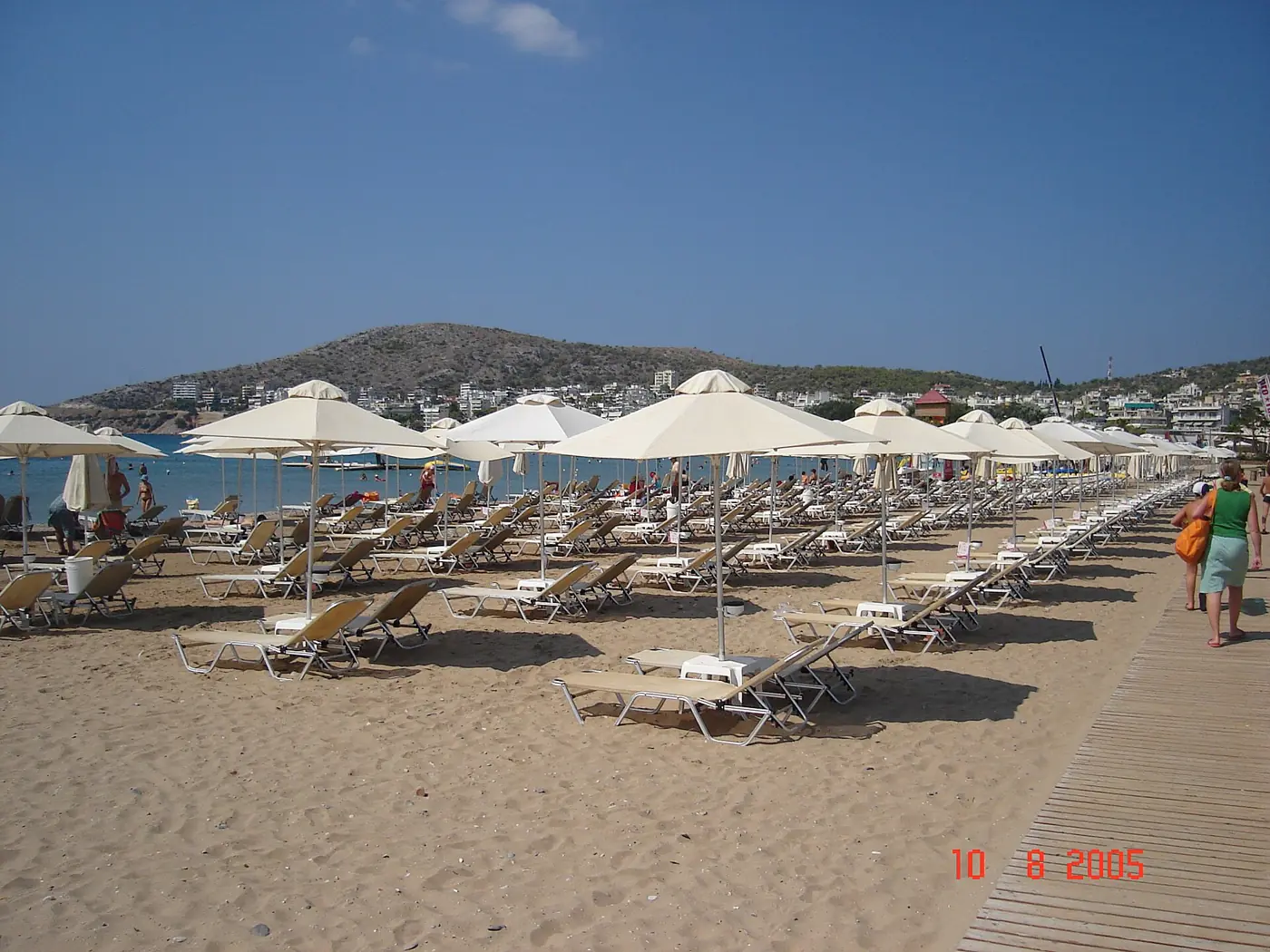
Photo: Μυρμηγκάκι, CC BY-SA 3.0
Most first-time visitors plan around the Acropolis, Plaka and a day trip to Delphi or the islands, and never realise Athens has a real coastline of its own. For the public transport basics that get you there, or a longer coastal day, compare this with the best day trips from Athens.
Athens Has a Beach Scene. Here's How to Use It.
Information checked 11 September 2026. Tram schedules, bus connections and admission prices change with the season — confirm current details before you go, especially outside the June–September swimming season.
South of the city centre, the coast road (Poseidonos Avenue) runs past a string of beaches collectively known as the Athenian Riviera — Glyfada, Voula, Vouliagmeni and Varkiza, each with a different character. None of them require a ferry, a rental car or a full day set aside. A tram ride and, for the furthest ones, a short bus connection is enough.
The short answer
Want a proper sandy beach, free, no fuss? The non-organized side of Varkiza is the best free option this close to the city — a wide cove with clear Saronic Gulf water and minimal facilities.
Want something unusual — warm mineral water, half-cave, half-lagoon? Lake Vouliagmeni is a thermal lake rather than a sea beach, warm year-round, and genuinely unlike anything else near a major European capital.
Want sunbeds, a beach bar and full facilities, willing to pay? The organized side of Varkiza, or one of Glyfada's beach clubs, gets you loungers, food and a changing area for a fixed entry price.
Short on time or budget? The tram itself runs along the coast — even the ride is a scenic, cheap alternative to a formal excursion if a full beach stop doesn't fit your day.
Getting there by tram
Athens' tram (not the Metro) is the way to reach the coast. Line services run from Syntagma south along Poseidonos Avenue to Voula, a journey of roughly 50 minutes for a standard city transport fare (the same ticket used on the Metro and buses, valid for 90 minutes of transfers).
The tram does not reach Vouliagmeni or Varkiza directly. From the Voula or Asklipieio tram stop, bus 122 continues south along the coast to Vouliagmeni and on toward Varkiza. Budget 60–80 minutes total from Syntagma to Vouliagmeni, and a little longer to Varkiza. Confirm the current bus 122 timetable before you go — coastal bus frequency drops outside summer.
A taxi or rideshare directly from central Athens is faster (roughly 30–40 minutes to Vouliagmeni in light traffic) and worth considering as a group, especially outside tram operating hours. See the Athens taxi and rideshare guide for how that actually works day to day.
Lake Vouliagmeni: the thermal lake
This is the one visitors are least likely to expect. Lake Vouliagmeni sits where a limestone cave partially collapsed into the sea, creating a naturally warm, mineral-rich lake — reported around 22–29°C (roughly 72–84°F) year-round, which is why locals swim here in winter as well as summer. Small fish in the lake (Garra rufa, the same species used in "fish spa" pedicures) will nibble at your skin; this is normal and harmless.
Lake Vouliagmeni operates as a paid facility with sunbeds, changing rooms and a café. Check current pricing on the official Lake Vouliagmeni site before you go — admission has run in the high teens of euros for a weekday adult ticket, with a higher weekend rate and reduced pricing for children, in past seasons. Prices, hours and any seasonal closures change; do not rely on a number from an old blog post.
This is not the place for serious lap swimming or big waves — it's calm, enclosed and shallow-to-moderate depth, which also makes it a comfortable choice for less confident swimmers.
Varkiza: the free option that's actually good
Varkiza, a little further south than Vouliagmeni, is split into two distinct sections:
- The free, non-organized stretch — a genuine public beach with no entry fee, minimal shade and no rented sunbeds. Bring your own towel, umbrella and water. It gets crowded on summer weekends, but the sand and water quality are a real step up from what "free beach" usually means this close to a capital city.
- The organized section (currently run as Varkiza Resort) — a paid area with sunbeds, umbrellas, beach bars and simple food, plus some water-sports and sports facilities. Weekday pricing has generally undercut weekend pricing, with sunbeds sometimes bundled free into weekday admission and charged separately on weekends. Confirm current prices directly with the operator rather than trusting a fixed number here.
Both sections share the same stretch of coastline, so a mixed group — some wanting a sunbed, some happy on a towel — can genuinely split up and still be a five-minute walk apart.
Which beach for which day
| You want | Go to |
|---|---|
| A completely free beach day | Varkiza (non-organized side) |
| Something you won't find at home | Lake Vouliagmeni (thermal lake) |
| Full beach-club comfort, willing to pay | Varkiza organized side, or a Glyfada beach club |
| The shortest trip from Syntagma | Voula or Glyfada — first stops on the tram line |
| A calm, enclosed swim for kids or nervous swimmers | Lake Vouliagmeni |
| To combine the coast with Cape Sounion | Continue south past Varkiza on the coast road — see the Cape Sounion guide |
Practical notes
- Swimming season. Late May through September is when facilities, sunbeds and food stands are reliably open. Lake Vouliagmeni operates year-round because of its constant water temperature; sea beaches thin out considerably from October.
- Sun exposure. Athens summer sun is genuinely strong by midday. Most locals treat 11:00–16:00 as the window to avoid direct exposure, at the beach as much as anywhere else.
- Getting back. The last tram and the last useful bus 122 run earlier than you might assume, especially outside summer. If you're staying until sunset, check the return schedule before you settle in, or plan on a taxi back.
- Water quality. Athens' southern coast is generally reported as meeting EU bathing-water standards in official monitoring, but conditions can vary after heavy rain, which is rare but not impossible even in summer.
Frequently asked questions
Can I go to the beach near Athens without a car?
Yes. The tram reaches Voula directly from Syntagma, and bus 122 continues to Vouliagmeni and Varkiza. No car or organized tour is required for any of the beaches on this list.
Is Lake Vouliagmeni a sea beach or a real lake?
It's a genuine inland lake, formed where a limestone cave collapsed and connected to the sea underground, which is why the water is warm, mineral-rich and slightly brackish rather than open Saronic Gulf seawater.
Is there a free beach near Athens?
Yes — the non-organized section of Varkiza is a real, free public beach, not a narrow strip beside a paid club. Bring your own shade and water.
How long does it take to get from central Athens to Vouliagmeni?
Budget 60–80 minutes by tram and bus from Syntagma. A taxi or rideshare takes roughly 30–40 minutes in light traffic.
Is Lake Vouliagmeni open in winter?
Yes — its water temperature stays roughly constant year-round, so it operates through the winter unlike the open sea beaches, which quiet down from October.
Sources
Follow along
More Athens, beyond the page
Daily places, views and ideas for your next visit.