
Athens Food Markets: Varvakeios Central Market & Where Locals Shop
The Varvakeios central market is Athens' most unfiltered food experience — fish, meat, spice, and noise in equal measure. This guide covers what to see, buy, and eat, plus the weekly neighbourhood produce markets.
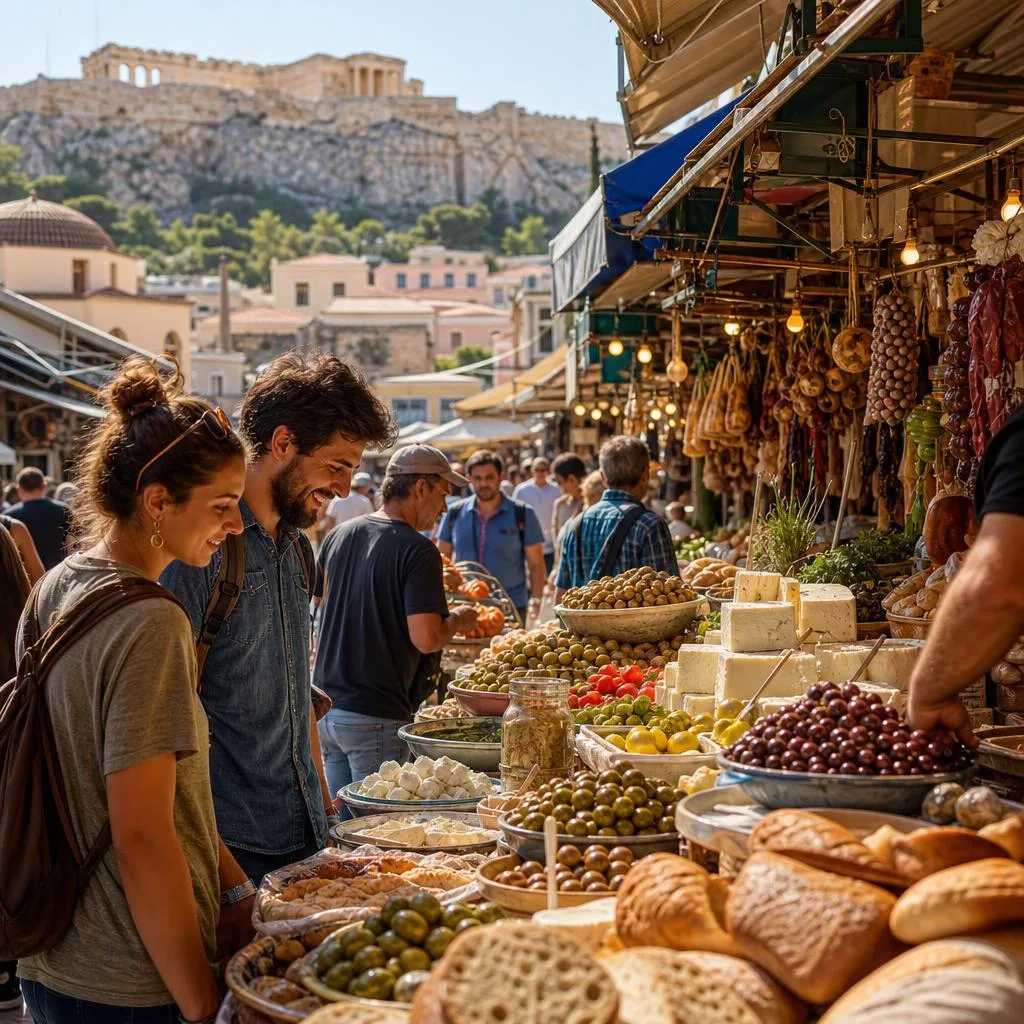
Athens Food Markets: Varvakeios Central Market & Where Locals Shop
The Varvakeios Agora — Athens' central market — opened in 1886 and has not substantially changed since. It occupies a large neoclassical building on Athinas Street, five minutes' walk north of Monastiraki Square, and it is the closest thing Athens has to an unfiltered look at how the city eats.
Varvakeios Agora
The Fish Hall (West Wing)
Enter from Athinas Street and bear left. The fish hall is the most dramatic section — whole octopus hung from hooks, enormous tuna displayed on beds of crushed ice, crates of live shellfish. The smell is pronounced. The theatre is considerable.
Greek fishing culture distinguishes sharply between fresh-catch (ψάρι / psari) and imported farmed fish, and the stallholders will tell you which is which if you ask. The best time to visit is early morning (7am–9am) when the previous night's catch is being laid out.
The Meat Hall (East Wing)
Less photographed and more confrontational — whole carcasses, offal displays, lamb heads. The butchers here are also fast and informal retailers: they will trim, cut, and portion while you wait. Kokoretsi (offal roasted on a spit) is assembled and sold here on weekends and major holidays.
The Mezanine
The upper floor of the Varvakeios contains a series of small, extremely cheap lunch tavernas that have been serving the market workers since the building opened. The menus are oral, the tables are communal, and the food — usually a daily special of whatever was surplus from the market floor — is honest and good.
Lunch here costs €6–€10 and is one of the better meals you will have in Athens if you can sit without a menu being an expectation.
Food Stalls Around the Flea Market
Monastiraki's flea market itself is antiques, bric-a-brac, and tourist goods rather than food — for that side of it, see the Athens vintage markets guide. But the market is surrounded by food.
The streets immediately south and east of Monastiraki Square contain a dense cluster of souvlaki shops, dried fruit and nut vendors (particularly on Pandrossou Street), and spice merchants who stock saffron, dried oregano, mountain tea, and Mastic products from Chios. These are worth stopping for:
- Greek oregano (rigani) — the dried variety sold here is substantially more fragrant than anything available exported
- Mastiha (mastic) — a crystallised resin from Chios with a distinctive piney flavour, used in liqueurs, sweets, and cooking
- Thyme honey (meli thymari) — Greek thyme honey has a flavour profile distinct from any other varietal; the stalls near Monastiraki Square carry several grades
Kapnikarea (Small Produce Stalls)
The pedestrianised streets around the Byzantine Kapnikarea church in central Monastiraki have a cluster of small produce stands selling seasonal fruit and vegetables at prices well below supermarket rates. This is where the neighbourhood cooks shop.
Laiki Agora (Weekly Street Market)
Each Athenian neighbourhood has a weekly open-air farmers' market (laiki agora) that runs on a fixed weekday, typically morning to early afternoon. The best near the centre:
- Monastiraki / Psirri area — Friday morning on Normanou Street
- Exarcheia — Saturday morning
- Kolonaki — Friday morning on Xenokratous Street
These are predominantly Greek-produce markets: seasonal vegetables, olives, cheese, fresh herbs, and occasionally live poultry. Prices are low. Haggling on the last hour before close is accepted.
What to Buy
To eat immediately: loukoumades (honey doughnuts) from the stalls near Monastiraki Square; bougatsa (custard pastry) from any bakery before 11am; fresh almonds (if in season, spring).
To take home: dried mountain tea (tsai tou vounou), olive oil in sealed tins (glass bottles are airport risk), saffron, mastiha crystals, dried oregano.
Worth inspecting: local cheeses — graviera (hard, slightly sweet), kasseri (mild and melting), and manouri (soft, tangy) are all produced domestically and taste different here than exported versions.
An account to browse before eating out
Ryotei 118
Browse @ryotei118’s latest posts as an additional reference while planning a food stop in Athens.
Another food reference to check
Yogu Greece
Browse @yogu_greece’s latest posts as an additional reference for Athens food and café planning.
A local reference for food planning
Topa Athens
Browse @topa.athens’s latest posts for another perspective when planning where to eat in Athens.
For a souvlaki stop
Tylixto
Browse @tylixto for the latest menu and visit updates from its Monastiraki and Vouliagmeni locations.
Plan your visit
Choose the right way in
Some of these are affiliate links, so Todo Athens may earn a commission if you book. They are independent booking options: check what each price includes, especially admission, meeting point, group size and cancellation terms.
Book This Experience
Vetted options across every price point and travel style.
Athens Food Tour: Varvakios Agora Market
A food historian leads you through the Varvakeios — past the fish stalls, the spice merchants, and into the neighbourhood tavernas. Small group, opinionated, essential.
Traditional Greek Cooking Class with Market Visit
Market visit in the morning, cooking class in the afternoon — moussaka, spanakopita, baklava. Consistently the highest-rated cooking experience in Athens.