
Saronic Islands Day Trips from Athens: Hydra, Aegina & Poros Guide
Three islands, one day, no car required. How to choose between Hydra, Aegina, and Poros for your Athens ferry day trip — and how to make the logistics work.
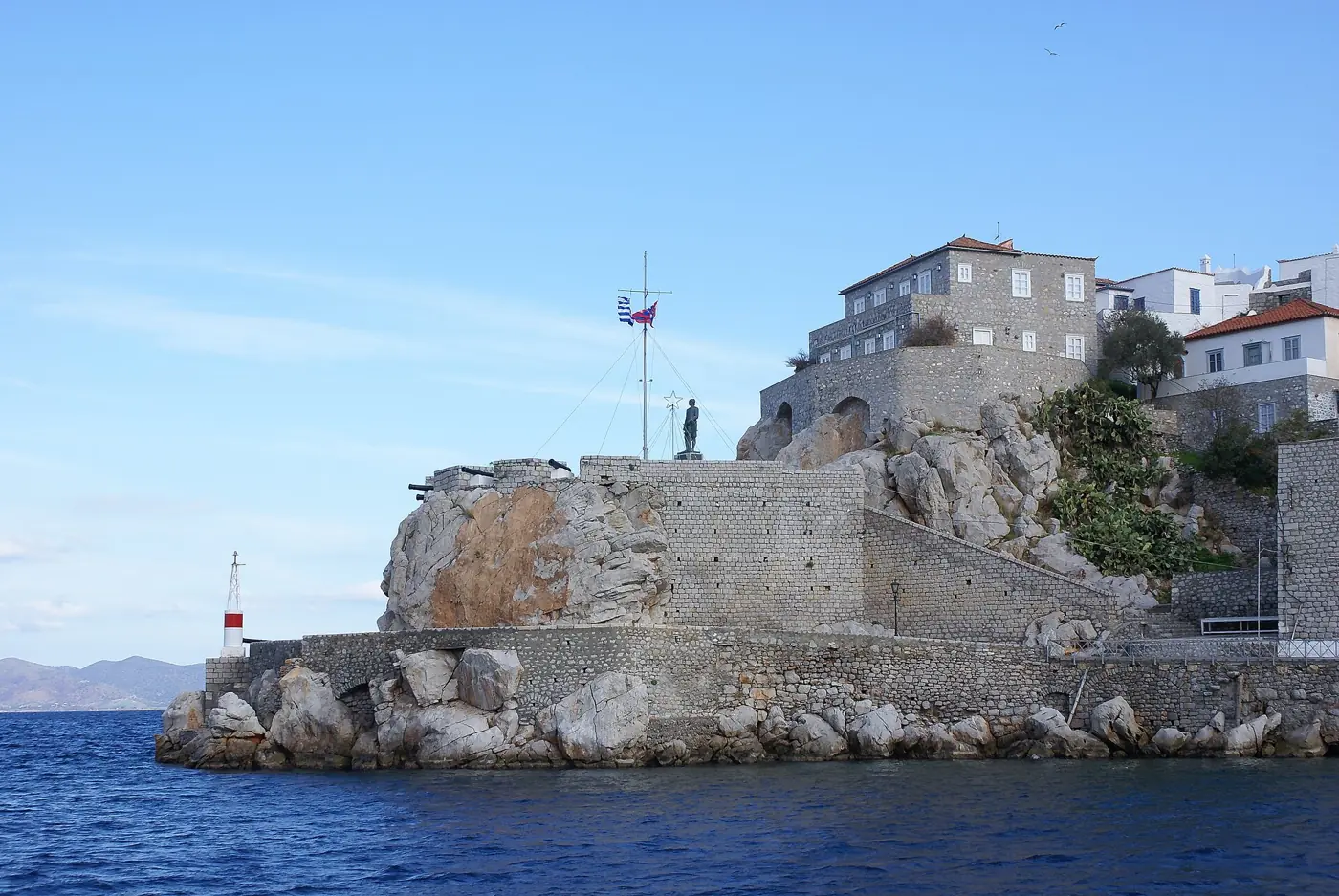
Photo: Matti Blume (MB-one), CC BY-SA 3.0
Three Islands, One Ferry Port, One Day
The Saronic Gulf holds a cluster of islands within reach of Athens by fast ferry — and a day on one of them is among the best things you can do with a summer day in Greece. Hydra, Aegina, and Poros are the three that most visitors consider. They are distinct enough that choosing the right one matters. They are close enough that the choice is available on almost any day of a city trip.
The ferry port is at Piraeus, 25 minutes from central Athens by metro. The fast services — Flying Dolphins and Flying Cats operated by Hellenic Seaways — take 40 minutes to Aegina, 65 minutes to Poros, and 90 minutes to Hydra. You can have breakfast in Monastiraki, be swimming off a rock on Hydra by midday, and be back for dinner in Athens at the harbour that evening.
Here is what each island is, what it is good for, and how to choose.
Hydra: The Island That Banned Cars
Hydra is the correct answer to the question "which Saronic island?" for most visitors, most of the time. Not because it is the closest or the easiest, but because it is completely unlike anywhere else — and unlike anything you will find by staying in Athens.
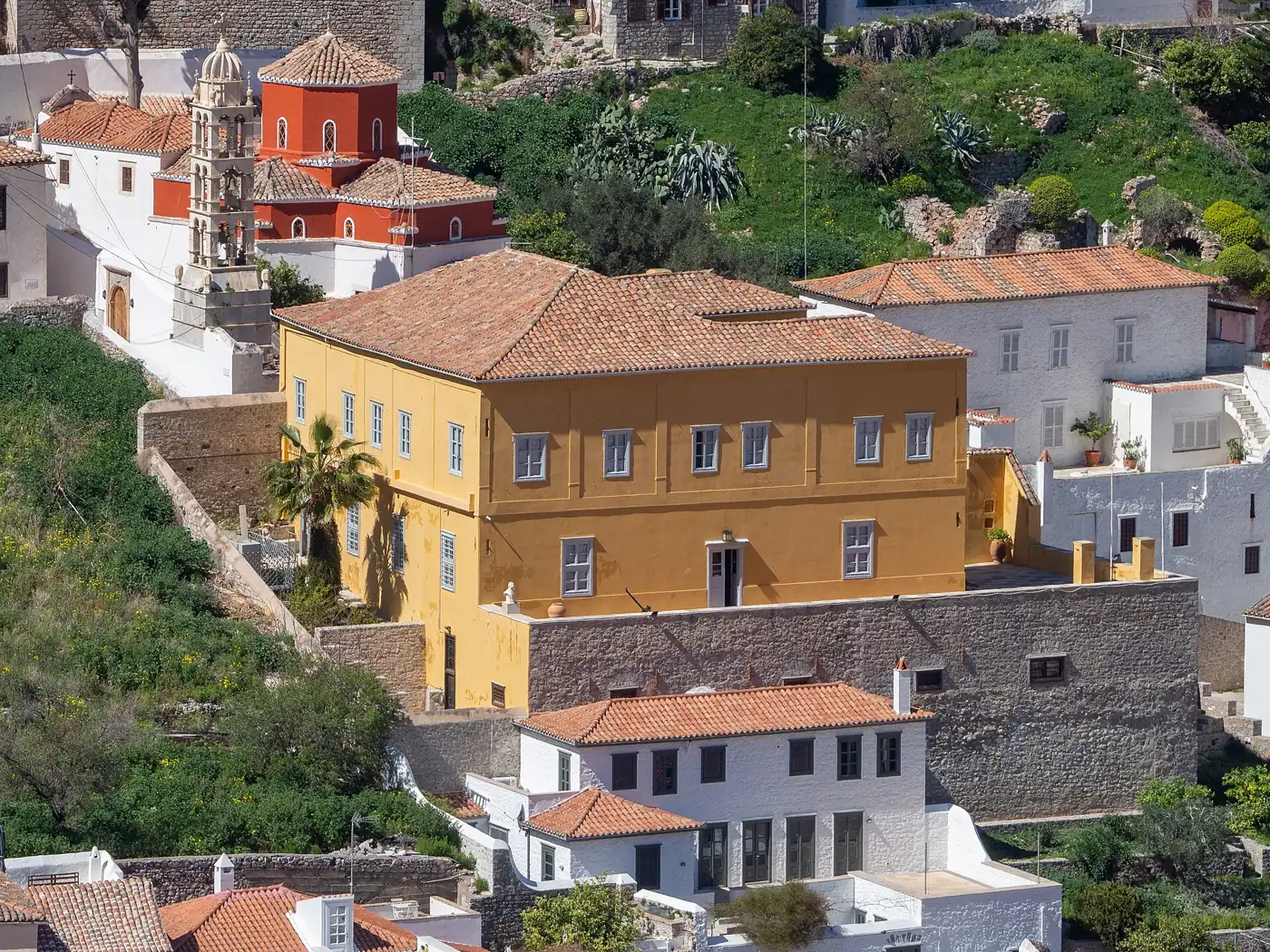
There are no cars on Hydra. Not limited cars, not reduced traffic, not a car-free centre with service vehicles allowed at the edges. The island voted to ban all motor vehicles permanently, and the ban has held for decades. Transport is by donkey, boat, and walking. The harbour is ringed with stone mansions built by 18th-century sea captains who grew wealthy trading cotton and grain during the Napoleonic wars. Behind the harbour, narrow lanes climb steeply through whitewashed houses and bougainvillea to hilltop chapels and the Monastery of the Prophet Elias, which looks across the Aegean on a clear day to the Peloponnese coast.
What you actually do on Hydra:
The harbour gives you about twenty minutes on foot before you have either bought something or sat down for a coffee. What the island rewards is walking uphill into the lanes behind the waterfront, where the residential character of the place asserts itself quickly — laundry between buildings, cats in doorways, a cheese shop, a bakery where a line has formed. The climb to the monastery takes about forty minutes at a pace that allows stopping to look back at the harbour below; it is steep and worth it for the view.
Swimming on Hydra is off rocks and ladders rather than sandy beaches — the island has almost no sand. The rocks on the eastern side of the harbour, at Kamini and at Vlychos, are the main swimming points. The water is clear to the bottom. In July the Aegean at Hydra is 26°C, which means you can stay in for an hour without considering getting out.
The harbour restaurants are a mixed proposition: the ones with tables directly on the water are priced accordingly, and the quality varies. Walk back one lane from the front to find the places where locals actually eat. Order fresh fish, not grilled meat. The fish at Hydra is the point.
What Hydra is not good for: Travellers who want a sandy beach, who don't like walking, or who are bringing small children will have a harder time. The island is built on a steep hill and has no flat terrain worth mentioning. If a beach day is the priority, Aegina or Poros serve it better.
Aegina: The Temple Island with the Best Pistachios in Greece
Aegina is the island closest to Piraeus and the most straightforwardly useful for a day trip that wants to include something ancient alongside something to eat. It has a proper archaeological site, a working port town with a real market, and an interior covered in pistachio orchards that produce a designation-of-origin product.
The Temple of Aphaia stands on a pine-covered hill in the island's northeast, looking across a triangular line of sight toward the Acropolis of Athens and the Temple of Poseidon at Sounion — the three temples form a perfect equilateral triangle across the Saronic Gulf, a coincidence that generations of classicists have found too neat to accept as accidental. The temple itself, built around 500 BC, is one of the best-preserved in Greece: 23 of its original 32 outer columns still stand to full height, the pediment sculptures were carved at a level of detail that puts them in the Louvre and the Munich Glyptothek rather than on the island. What remains on site is still impressive. The hilltop setting, with pines all around and the sea visible in three directions, would be worth the trip without the archaeology.
The site is consistently under-visited by the standards of the Acropolis. On a Tuesday morning in June, you can walk through it with fewer than thirty other people visible. The absence of the crowds that define ancient site visits in Greece makes Aphaia feel like a genuine discovery even though it is 40 minutes from the largest ferry port in the country.
The pistachio market at the port is the other reason to come to Aegina. The island's pistachios — sold here as fystiki Aeginis — are smaller, more intensely flavoured, and significantly better than the commercial pistachios available elsewhere. The difference is real enough that Greek cooks treat the two things as categorically different. The market stalls along the port sell them roasted, salted, in sugar, in pastry, in ice cream, in oil. Buy a bag still warm from roasting. They do not survive the return journey to Athens intact.
What Aegina is good for: A day trip that wants both archaeology and a proper market experience. The island is flatter than Hydra and easier to get around; the port town is a functioning Greek market town rather than a tourist resort. Good for families, good for anyone who wants to spend less time walking uphill.
Poros: The Calm Island
Poros is separated from the Peloponnese mainland by a channel so narrow you can shout across it. The town climbs a small hill above the channel, its clocktower visible from the ferry as you come in, the mainland almost close enough to touch on the other side of the water. It is the calmest of the three Saronic islands and the least visited by international tourists, which is not a criticism.
There are no particular landmarks on Poros. The Temple of Poseidon on the island's eastern plateau is a field of scattered stones rather than standing columns. The beach at Neorion on the north coast is a proper sandy beach — unusual for the Saronic islands — with calm shallow water and pine trees down to the shoreline. The waterfront cafés and tavernas in the town serve at a pace and price level that reflects the absence of cruise ship day-trippers.
What Poros is good for: Visitors who have had two days of museum-level attention in Athens and want a day with no agenda — a beach, a long lunch, a boat in the harbour. Also the right choice if you are travelling with children who need sand and shallow water rather than rocks and swimming ladders. The narrow channel between the island and the mainland has its own visual appeal: the view across to the Peloponnese, only 200 metres away, is the kind of geography that makes Greece feel specifically and pleasurably unreal.
How to Choose
| Hydra | Aegina | Poros | |
|---|---|---|---|
| Journey from Piraeus | 90 min Flying Dolphin | 40 min Flying Dolphin | 65 min Flying Dolphin |
| What you go for | Architecture, swimming, walking | Temple of Aphaia, pistachios | Slow beach day, the channel |
| Beach quality | Rocky swimming off ladders | Sand at some beaches | Sandy at Neorion |
| Crowds | High in summer weekends | Moderate | Low |
| Best for | First-time Saronic visitor | History + food day | Relaxed beach day |
| Walking required | Yes — significant hills | Moderate | Low |
If you have never been to the Saronic islands before and have one day: Hydra.
If you want an ancient site plus a Greek market: Aegina.
If you want a beach day with minimal walking: Poros.
If you want to see all three: the combined cruise exists and solves the logistics, at the cost of less time on each island (typically 90 minutes per stop). It is a reasonable introduction to all three, with the understanding that 90 minutes on Hydra is a taste rather than a visit.
Ferry Logistics from Piraeus
Getting to Piraeus: Metro Line 1 (green line) runs from central Athens — Monastiraki, Thissio, Petralona — to Piraeus terminal in about 25 minutes. The cost is a standard metro ticket. Taxi or Uber from the centre is €12–18 depending on traffic, which is slower and more expensive during morning peak hours. The metro is the correct answer.
Operators and vessel types by island: The services vary depending on which island you are going to.
Hydra and Poros are served exclusively by high-speed passenger vessels — no conventional car ferry runs these routes from Piraeus. Hellenic Seaways operates Flying Dolphin hydrofoils and Flying Cat catamarans on both routes. Aegean Flying Dolphins runs an additional high-speed service to Hydra. All of these are enclosed passenger vessels; you sit inside, though the catamarans have a small open stern area. Journey time is approximately 90 minutes to Hydra and 65 minutes to Poros.
Aegina has both options. Saronic Ferries operates a conventional car ferry from Piraeus that takes around 70 minutes and has open upper decks — the slower, cheaper, and for many people the more pleasant crossing. Hellenic Seaways also runs its fast Flying Dolphin/Flying Cat service to Aegina in 40 minutes. The car ferry is not faster, but the open-deck crossing in July — spray, open sea, the island appearing ahead — is worth the extra half hour if you are not in a hurry.
Tickets: Available at the ticket booths at the port, at travel agencies in central Athens, and online via Hellenic Seaways and Saronic Ferries websites. For most routes on weekdays, same-day tickets are available. On weekend mornings in July and August, the fast ferries to Hydra sell out — book at least two or three days ahead. The early morning boats (7–9am) fill first; the 9–11am departures on a Saturday in peak summer can go within 24 hours of travel. Aegina and Poros services have more capacity and fill less predictably.
Which gate at Piraeus: The port is large and not always clearly signposted. The Saronic island fast ferries depart from Gate E8 (Hellenic Seaways) and Gate E9 (Saronic Ferries) at the far eastern end of the port, not from the main passenger terminal. Allow yourself fifteen minutes to find the correct pier, especially on your first visit. The taxi drop-off point at the main entrance is a ten-minute walk from the E8/E9 gates. If you are coming by metro, exit at the Piraeus station and walk east along the waterfront.
Return timing: Leaving Hydra at 5–6pm catches the last peak-crowd boats back, and returns you to Piraeus by 7:30–8pm with time for dinner in Athens. Leaving at 7pm gives you the best light of the afternoon on the water and returns you to Piraeus around 8:30–9pm — tight if you have a dinner reservation but manageable. Check the last departure time before you go; services to Hydra finish earlier than most visitors expect, with the last boat typically around 7–8pm in summer.
Practical Tips
- Book weekend Hydra ferries in advance: The Saturday 8am Flying Dolphin to Hydra from Piraeus in July is legitimately sold out if you try to buy the ticket the morning of. Mid-week is more forgiving. If you have a flexible schedule, Tuesday through Thursday allows same-day booking for almost all routes.
- Wear walking shoes for Hydra: The island is cobblestones and stairs from the moment you step off the ferry. Flip-flops are a mistake you will notice within the first ten minutes of walking uphill.
- Cash on the islands: The smaller tavernas and market stalls on all three islands prefer cash. Bring enough for lunch and a market purchase; the port-adjacent restaurants take cards but the lanes behind them often don't.
- Sun protection on the ferry: The open-deck ferries have no shade on the upper level. In July the crossing to Hydra — 90 minutes in direct sun on the open Aegean — will burn you if you are not prepared. Hat, sun cream, and a seat that doesn't face directly south.
- Aegina pistachios: buy at the port, not at the terminal shops: The market stalls along the Aegina port waterfront sell fresh-roasted fystiki from the island's orchards at considerably better prices than the packaged versions sold at Piraeus. Buy more than you think you need.
- The combined cruise quality varies: The three-island cruise boats vary from well-organised day trips with good food to cramped ferry-bus hybrids that rush you through each stop. Check reviews before booking. The Viator-listed cruise options have vetted operator quality; random port-side vendors are less predictable.
- Swimming: Hydra rocks, not sand: If swimming is the main objective of the day, bring water shoes for Hydra. The rock-and-ladder entry points are not difficult but they are uncomfortable in bare feet. Poros and some Aegina beaches offer conventional sandy entry.
- Carry water from Athens: The islands have cafés and restaurants that sell drinks, but prices on Hydra in particular are significantly above Athens levels. A bottle of water from the supermarket before you board costs a fifth of the price at a Hydra café.
Follow along
More Athens, beyond the page
Daily places, views and ideas for your next visit.
Plan your visit
Choose the right way in
Some of these are affiliate links, so Todo Athens may earn a commission if you book. They are independent booking options: check what each price includes, especially admission, meeting point, group size and cancellation terms.
Book This Experience
Vetted options across every price point and travel style.
Hydra, Poros & Aegina Full-Day Island Cruise from Athens
The classic Saronic circuit: Hydra (car-free, donkeys, white-cube architecture), Poros (pine forests, calm harbour), and Aegina (the Temple of Aphaia, the pistachio island). A full day on the water with stops at all three is the fastest way to understand why Athenians head for the islands every summer weekend.
Hydra Island Full-Day Tour from Athens
A full day on Hydra rather than a quick circuit stop. More time in the harbour lanes, a proper swimming stop off the rocks, lunch at a fish taverna, and the chance to walk up to the Monastery of the Prophet Elias above the town. The island repays slow attention in a way a 90-minute cruise stop cannot.
Aegina Day Trip from Athens — Temple of Aphaia & Pistachio Villages
Aegina in a day: the ferry from Piraeus, the Temple of Aphaia on its pine-covered hilltop with an unobstructed view of the Saronic Gulf, and the port market where you can buy fresh-roasted pistachios direct from the orchards that cover the island's interior. Home by early afternoon with time for the rest of Athens.
Athens Riviera & Saronic Gulf Sailing Cruise
A sailing catamaran from Athens along the Attic Riviera and out into the Saronic Gulf — swimming stops in open water, lunch on deck, and the islands on the horizon. Less structured than the ferry day-trip circuit and closer to what an Athenian summer afternoon on the water actually feels like.